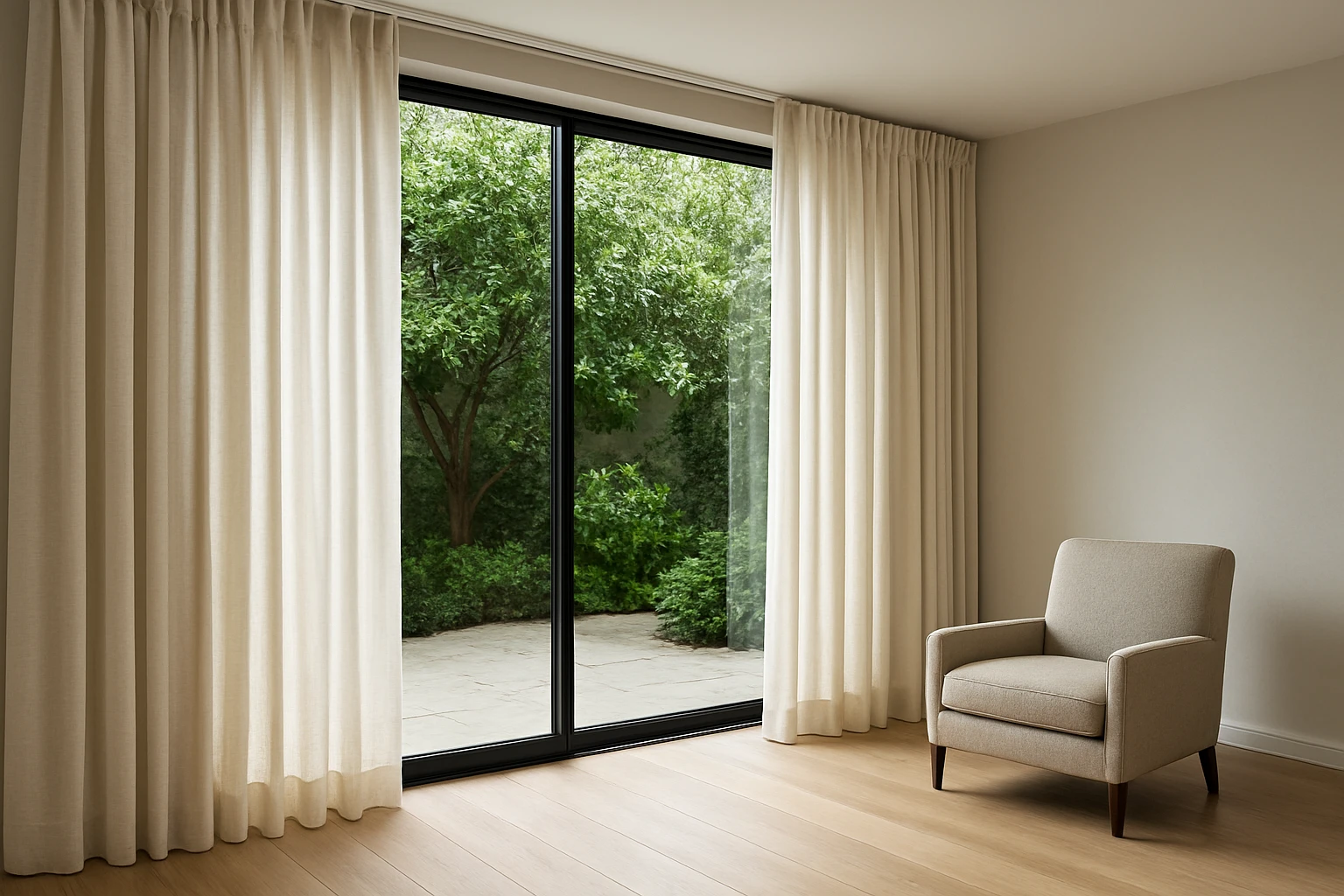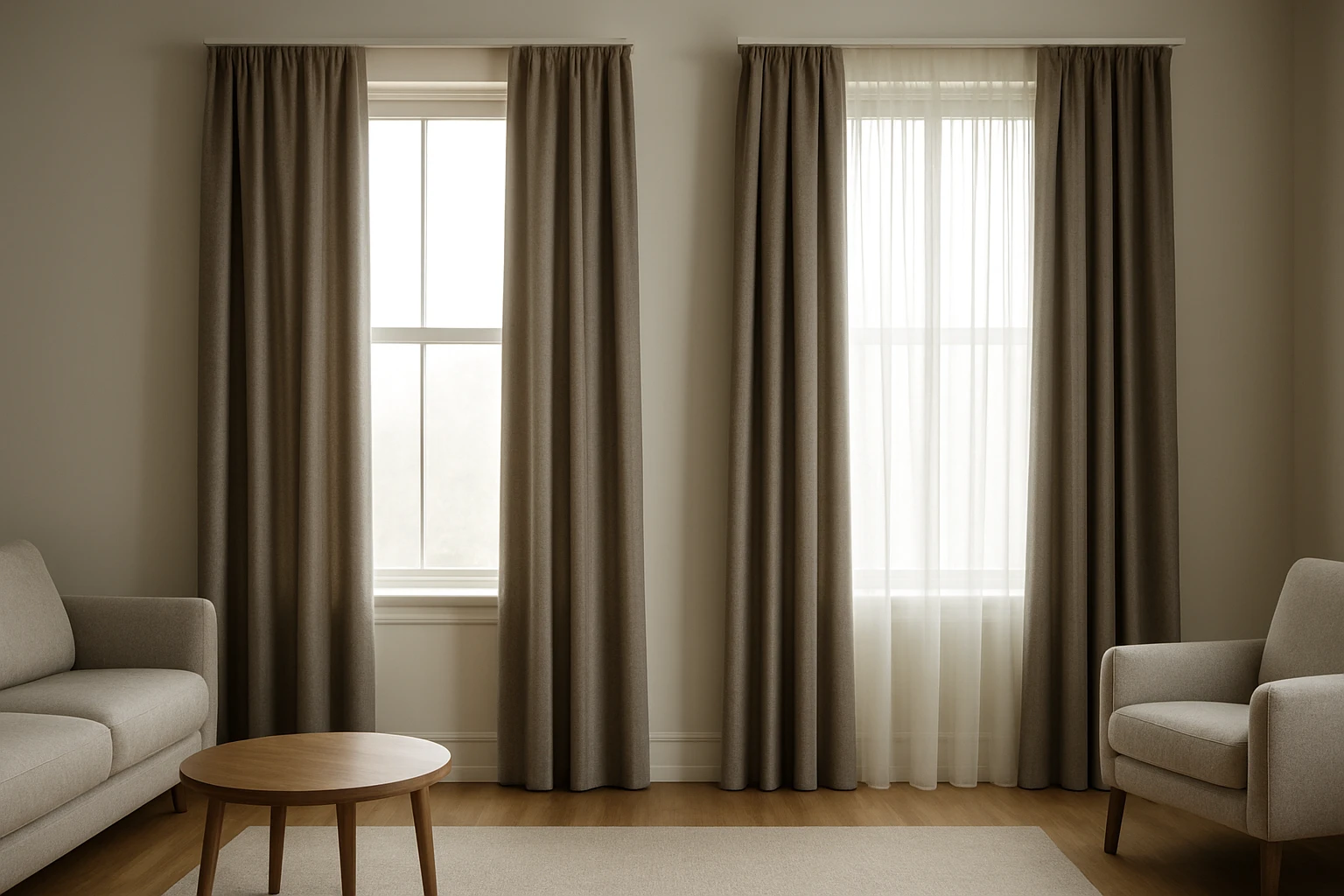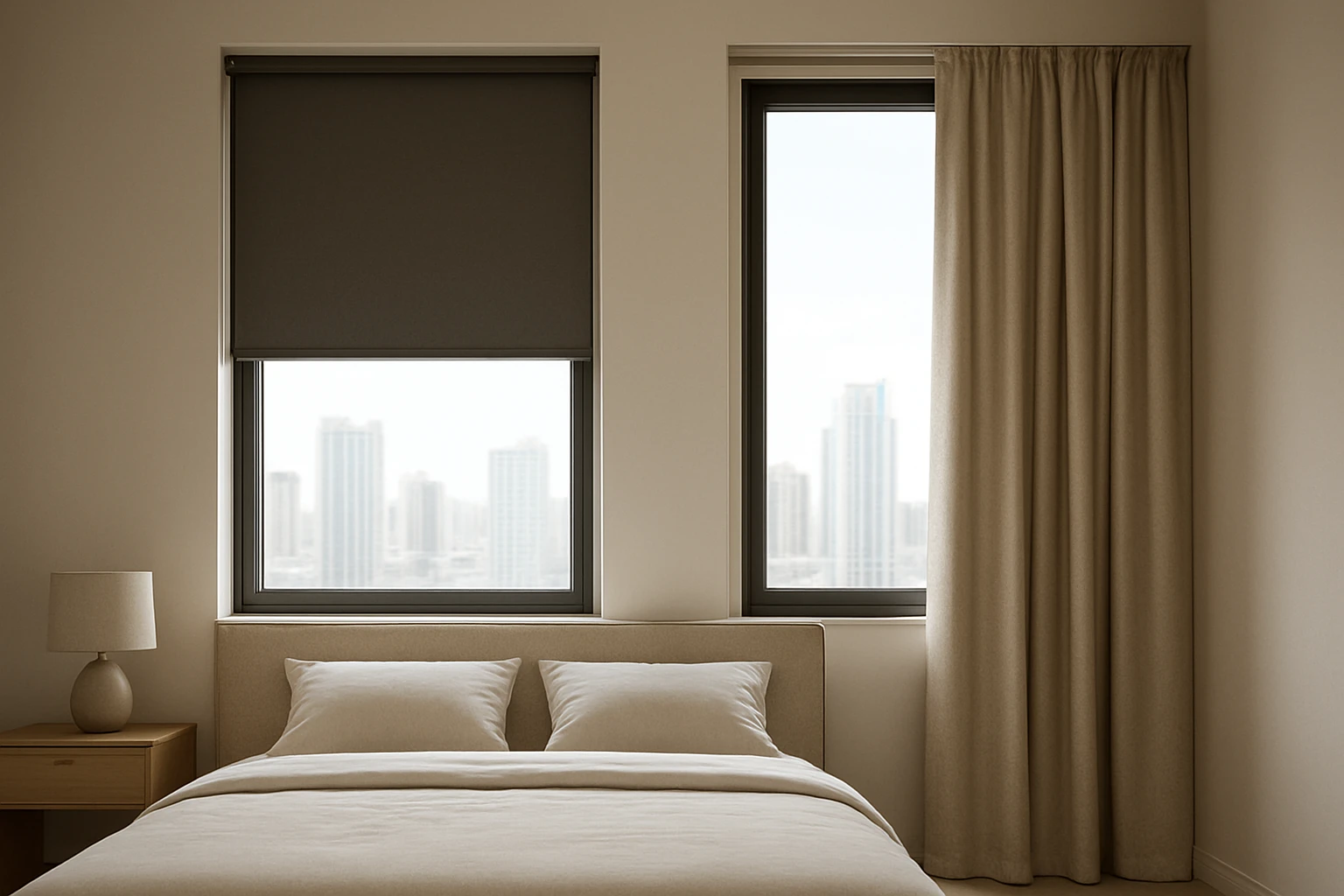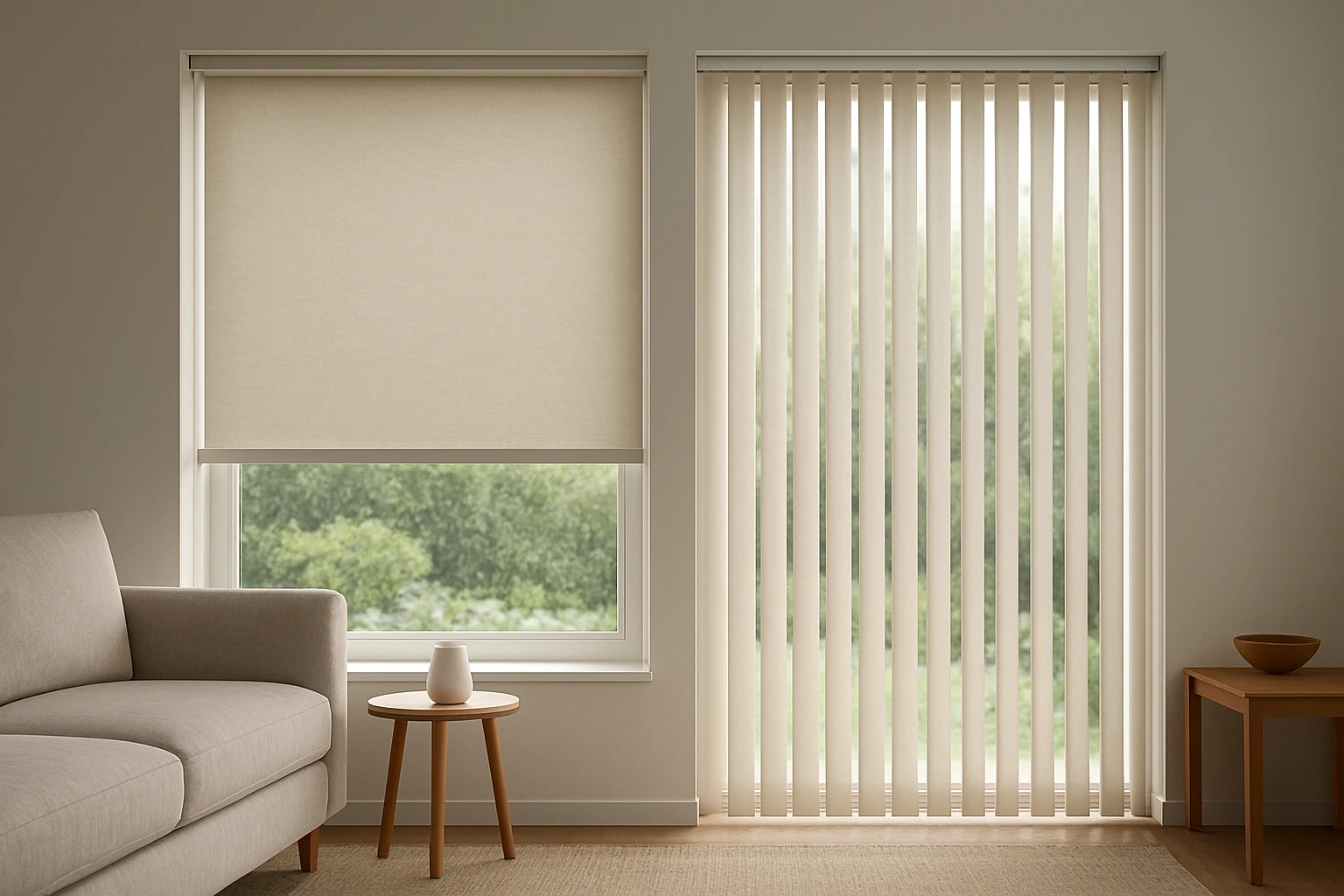

The 15 different types of blinds for windows covered here are aluminium Venetian, wooden, faux wood, vertical, roller, Roman, cellular, pleated, zebra, sheer horizontal, panel track, woven wood, blackout, solar, and motorized blinds. Slatted blinds let you tilt the slats to control light, while fabric blinds offer choices from soft daylight to room darkening. Some names describe the material or shape, while others describe a feature, so one blind can fit more than one category.
Choosing a blind is easier when you separate how it looks from what it needs to do. This guide from Design Furniture explains which styles suit different rooms, what can go wrong with a poor fit, and which details to check before ordering.
How the Different Types of Window Blinds Compare
Window blinds differ in three main ways: how they move, what they are made from, and how much light they block. Choose how the blind opens first, because one that catches on a door or window handle will be awkward no matter how good it looks.

Strictly speaking, blinds have slats or vanes, while shades use fabric or another continuous material. Shops often sell both as window blinds, which is why roller, Roman, and cellular shades belong in a practical buying guide.
The names also overlap. A roller blind can have blackout fabric and a motor, while a Venetian blind can use aluminium, real wood, or faux wood. These are useful shopping categories, not 15 completely separate systems.
| What the Name Describes | Examples | What to Check |
|---|---|---|
| Movement or structure | Venetian, vertical, roller, Roman, panel track | Opening direction, stacked size, and handle clearance |
| Material | Aluminium, wood, faux wood, woven wood | Moisture resistance, weight, and cleaning needs |
| Fabric construction | Cellular, pleated, zebra, sheer horizontal | Privacy, folds, and how the fabric handles light |
| Light control | Blackout, solar | Light gaps, glare, and privacy after dark |
| Operation | Motorized | Power supply, controls, and access for servicing |
Start by matching the blind to the way you use the opening. A sliding balcony door often works better with a side-opening blind, while a small window above a desk may suit a roller blind that lifts clear of the glass.
15 Different Types of Blinds for Windows Explained
The best blind type depends on the room, the window, and the level of privacy you need. Use the details below to narrow your choice, then compare actual samples in the room rather than choosing from a screen alone.
1. Aluminium Venetian Blinds
Aluminium Venetian blinds have horizontal metal slats that tilt to control light and lift into a stack at the top. They suit offices, kitchens, and smaller windows where easy wiping matters more than a soft fabric finish.
The slats can direct daylight towards the ceiling while reducing the view into the room. They do not create full darkness, because light can pass around the edges and through cord holes.
Thin aluminium slats can crease if bent during cleaning, so support each slat rather than pressing hard against it. Near a cooker, grease can collect on the many narrow surfaces and make cleaning slower than you might expect.
2. Wooden Blinds
Wooden blinds are horizontal slatted blinds made from real timber, and they suit dry living rooms, studies, and bedrooms. Their natural grain adds warmth without the folds or bulk of fabric.
Wood is not the best choice beside a shower or on a window that often gets wet. Moisture and repeated changes in humidity can affect the finish or cause the slats to change shape.
For a large window, ask about the weight of the complete blind and the space it takes up when raised. Splitting a wide opening into two wooden blinds may make daily use easier, though the join leaves another light gap.
3. Faux Wood Blinds
Faux wood blinds use PVC or a composite material to give the look of painted wood. They are usually a better fit than real timber for humid rooms, though you still need to check the exact material and fittings.
Faux wood can be heavy, especially across a wide window. A product that looks ideal as a small showroom sample may be tiring to raise at full size, so ask to try a similar-sized display.
For a bathroom, check that the whole blind is suitable for moisture, including the headrail and brackets. Moisture-resistant slats do not make every metal fitting rust-resistant, and no indoor blind should sit in direct shower spray unless approved for that use.
4. Vertical Blinds
Vertical blinds have hanging vanes that turn to adjust light and slide sideways for access. They are useful for wide windows and sliding doors because you can move the blind in the same direction as the opening.
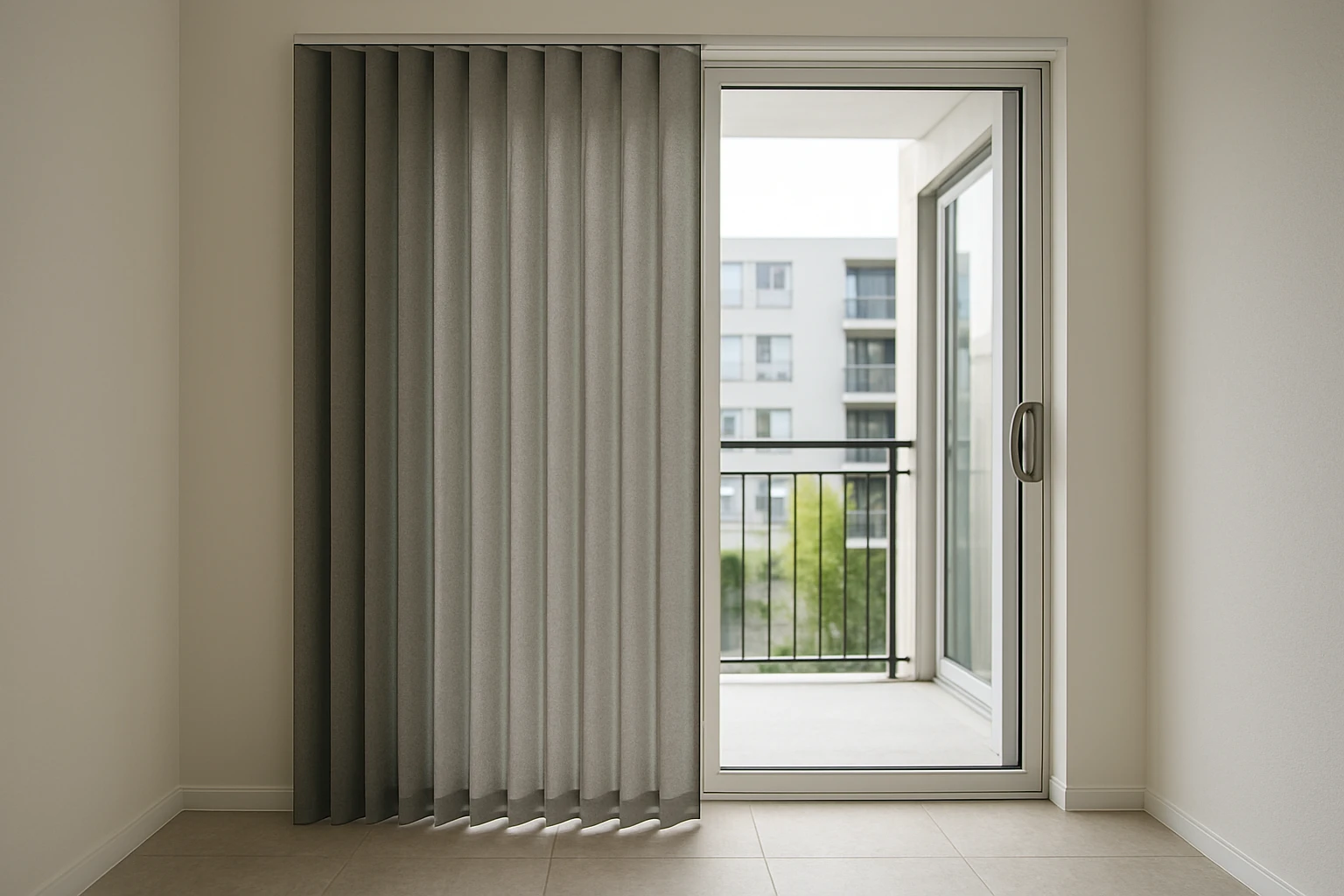
Decide which side the vanes should gather on before ordering. A stack beside the moving door panel can block the handle or leave fabric in the walking route.
Vertical blinds can also work well when separate windows sit within one broad opening. If you are unsure which style to choose, this guide to horizontal versus vertical window blinds explains the layout differences.
5. Roller Blinds
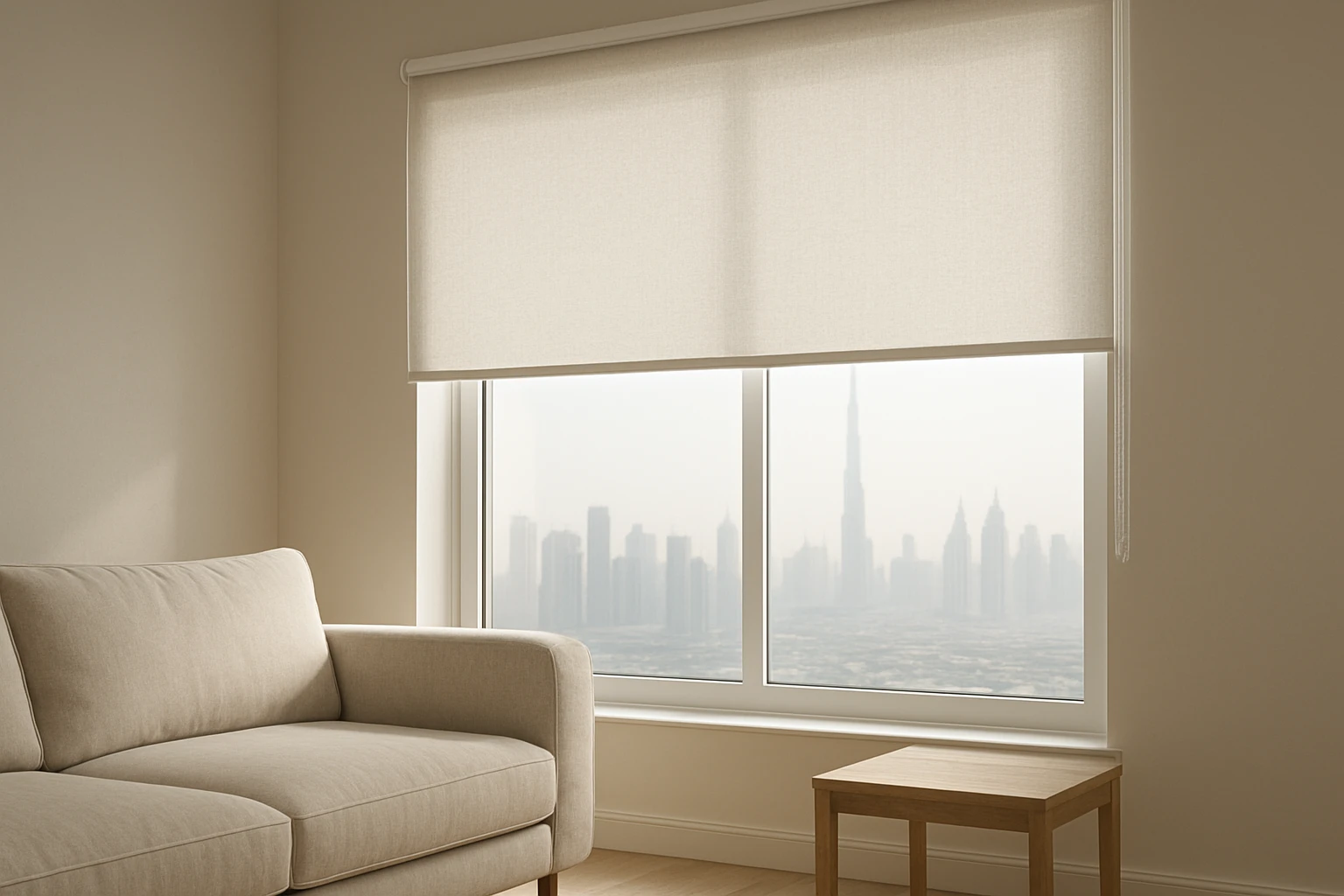
Roller blinds use one sheet of fabric that winds around a tube, which makes them a neat choice for most rooms. You can choose sheer, light-filtering, or blackout fabric without changing the basic shape.
The fabric is usually narrower than the full bracket-to-bracket width because the operating parts need space. That matters in a bedroom, where a neatly fitted blind can still leave bright strips beside the glass.
For a wide window, ask whether the tube and fabric are suitable for the span. A weak tube may bow, while poorly aligned fabric can roll unevenly. Compare roller blinds by the quality of the whole system, not fabric colour alone.
6. Roman Blinds
Roman blinds are fabric shades that form horizontal folds as they rise. They suit rooms where you want the softness of curtains but have little space beside the window.
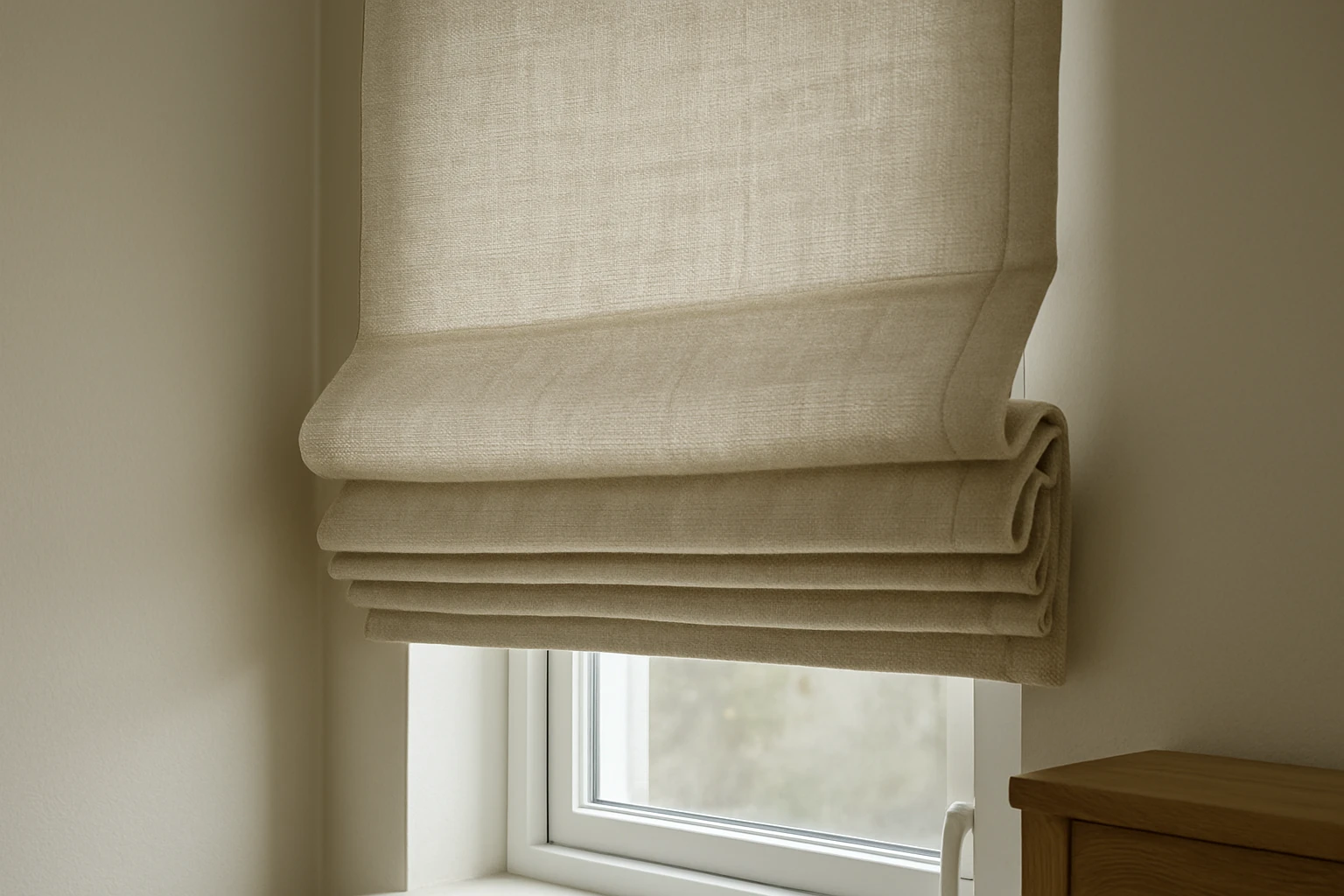
The main fitting issue is the folded stack. If a Roman blind sits inside a shallow recess, the raised folds may cover a noticeable part of the glass or prevent the window from opening fully.
Mounting above the recess can keep more glass clear, provided there is room above it. A lining can improve privacy and protect the outer fabric, but Roman blinds still need enough coverage at the sides if you want a dark room.
7. Cellular Blinds
Cellular blinds, also called honeycomb shades, use fabric pockets that hold still air. They are worth considering when you want soft light and a window covering that can help slow heat transfer.
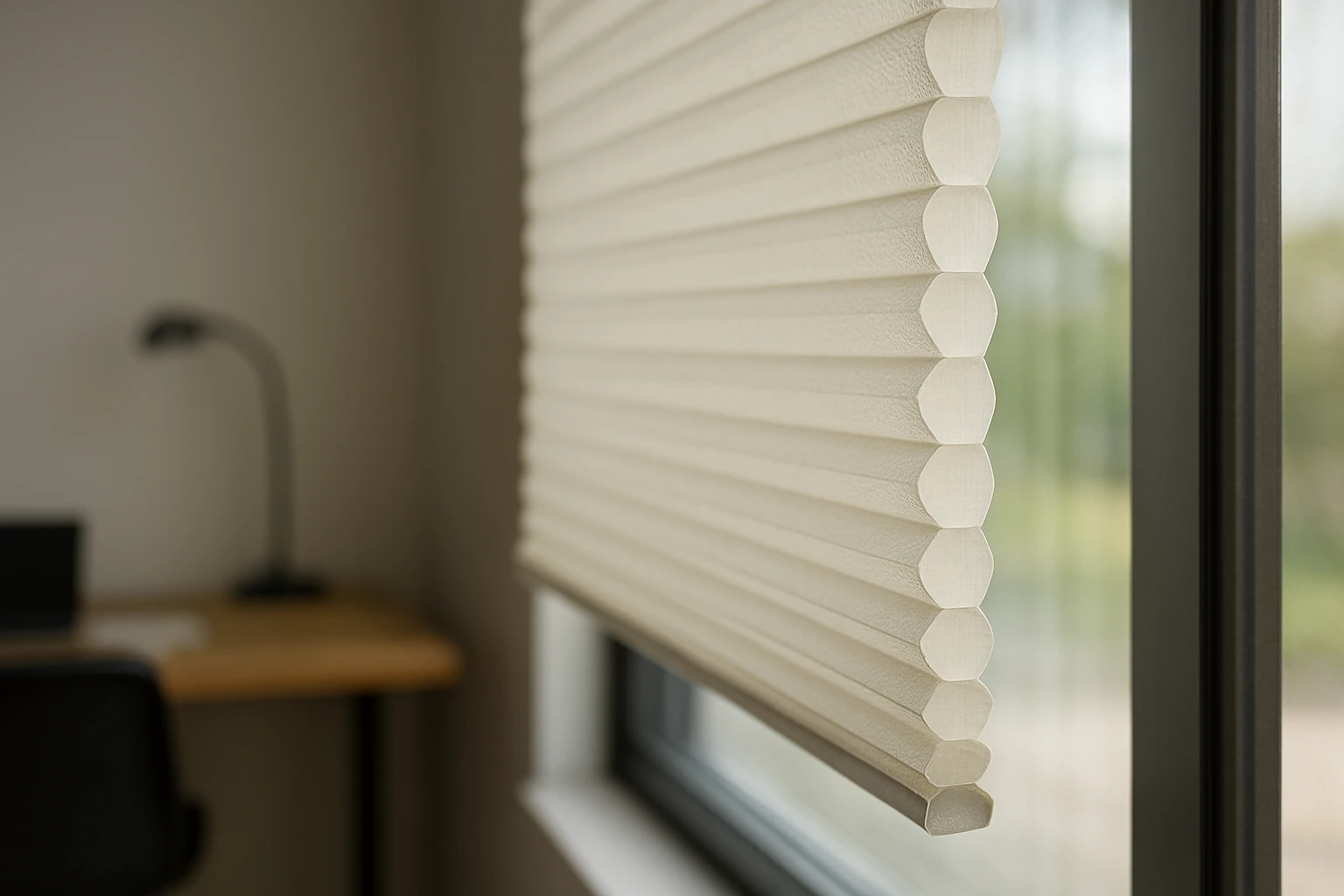
Cell size, fabric layers, fit, and glazing all affect performance, so the word “honeycomb” alone does not tell you how well a product insulates. Ask for the manufacturer’s performance information for the exact model.
Some systems open from the top as well as the bottom, which helps on ground-floor windows that people can see into. Check the cleaning instructions before buying, since dust inside the cells can be harder to remove than dust on a flat roller fabric.
8. Pleated Blinds
Pleated blinds use a single layer of fabric folded into a concertina shape. They can provide a light, compact finish, and suitable systems are available for some skylights and shaped windows.
Unlike cellular blinds, standard pleated blinds do not have enclosed honeycomb pockets. The two may look alike from the front, but their construction is different.
A sloping roof window needs a system designed to hold the fabric against the glass. A normal free-hanging blind may sag away from the frame, so check the frame angle, fixing method, and how you will reach the controls before choosing the fabric.
9. Zebra Blinds
Zebra blinds use two layers of fabric with alternating sheer and solid bands. Moving one layer changes how the bands line up, allowing you to switch between filtered daylight and greater privacy.
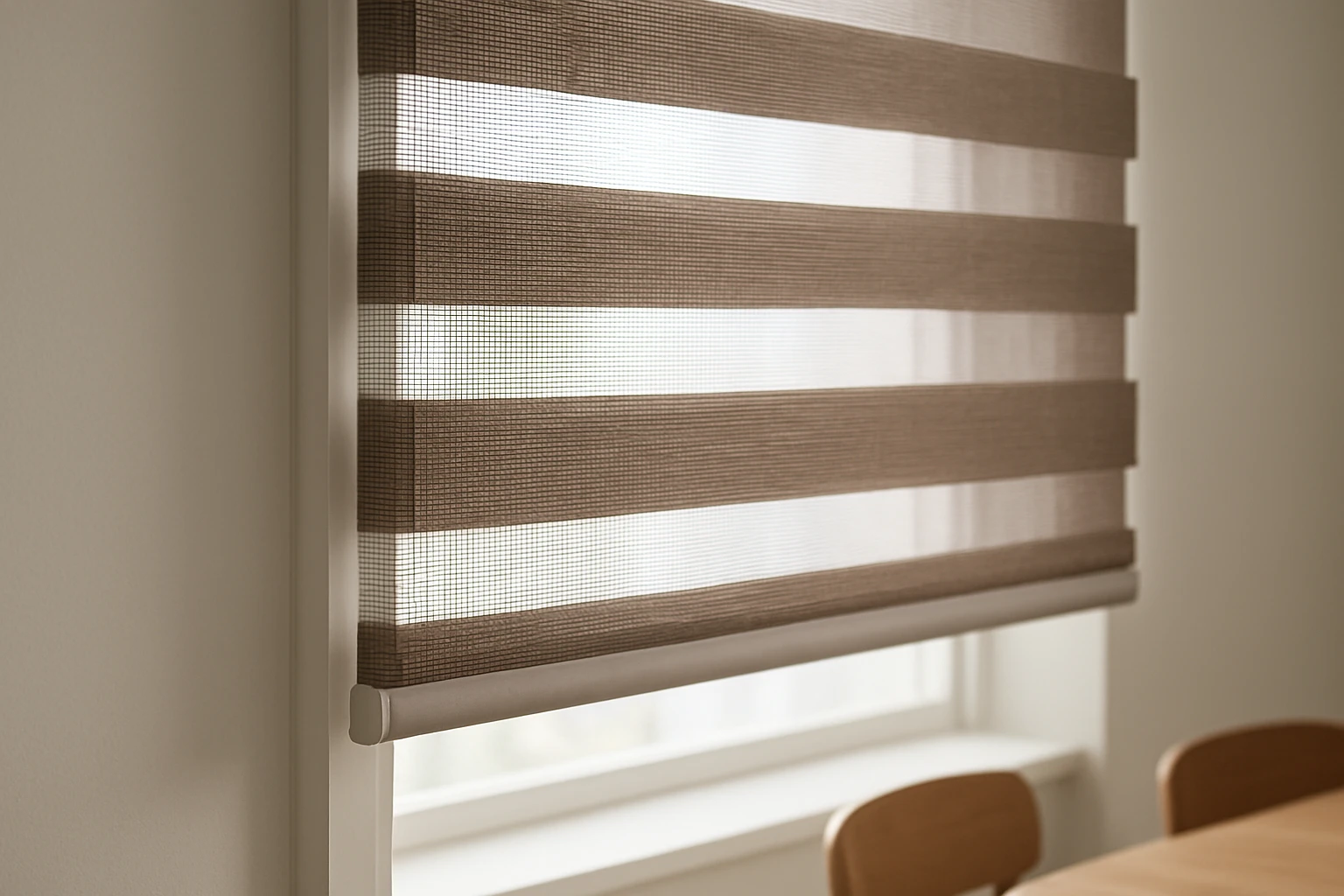
They work well in living rooms where light changes through the day, but the sheer bands do not provide privacy after dark when the room is lit. Check the closed setting using an actual sample held against a light source.
A zebra blind sold as room-darkening may still let light through the fabric arrangement or around the edges. If light disturbs your sleep, ask how the complete fitted blind performs rather than relying on the fabric description.
10. Sheer Horizontal Blinds
Sheer horizontal blinds suspend soft fabric vanes between sheer fabric layers. The vanes tilt to soften daylight or give more privacy, creating a gentler look than exposed metal or wood slats.
They suit living rooms where soft, filtered light matters more than full darkness. The layered fabric can soften a bright view, but the sheer setting will not hide a lit room from outside at night.
These blinds need careful handling because the fabric vanes can crease or lose shape if treated roughly. Ask how they should be cleaned and whether the whole blind needs specialist care, especially on windows close to cooking grease or open balcony doors.
11. Panel Track Blinds
Panel track blinds use broad fabric panels that slide along separate tracks. They suit large glazed openings where narrow slats would look busy, and they can match roller fabric elsewhere in the room.

The drawback is the space needed for the panels when pushed aside. Even when open, a panel system may cover part of the glass, so check how much clear doorway width remains.
For example, broad panels may block too much of a narrow balcony doorway, while a wide opening has more room for the stack. The track position and stacking side matter as much as the chosen fabric.
12. Woven Wood Blinds
Woven wood blinds use strips of bamboo, reeds, grasses, or similar natural materials. They bring visible texture to a room and are often made with a Roman-style lifting action.
Small gaps in the weave allow light through, so an unlined woven blind should not be relied on for bedroom privacy. Look at the sample with a bright light behind it rather than judging it against a solid display board.
A separate privacy or blackout lining can change the result, though it also changes how the blind folds and how much light reaches the room. Keep natural woven materials away from persistent damp unless the supplier approves the product for that setting.
13. Blackout Blinds
Blackout blinds use material designed to block light through the fabric itself. Blackout describes a light-control feature, not a single blind shape, so roller, Roman, and cellular products can all have blackout versions.
The key difference is between blackout fabric and a dark room. Light can still enter beside the fabric, above the roller, or beneath the bottom edge.
To make the room darker, compare blackout blinds with suitable side channels or a cassette, which is a cover around the roller. Another approach is to layer the blind with overlapping bedroom curtains, especially where light from the sides would fall directly across the bed.
14. Solar Blinds
Solar blinds use screen fabric that reduces glare while keeping some outward view. They suit living rooms and offices where direct sun makes screens hard to see but you do not want to block the view completely.
A fabric’s openness factor describes how much of its surface is open space. Manufacturer specifications may list options such as 1%, 3%, or 5%. Within a comparable range, a lower percentage generally gives less outward view and stronger screening.
Solar blinds do not provide reliable privacy at night, because a lit room can be visible from outside. For a west-facing office in Dubai, consider solar fabric for daytime glare control with a second covering for privacy after sunset. Ask for the exact fabric’s heat and glare data before choosing.
15. Motorized Blinds
Motorized blinds use an electric motor to raise, lower, or tilt the blind. They are useful for high windows, several blinds used together, or rooms where reaching a control is difficult.
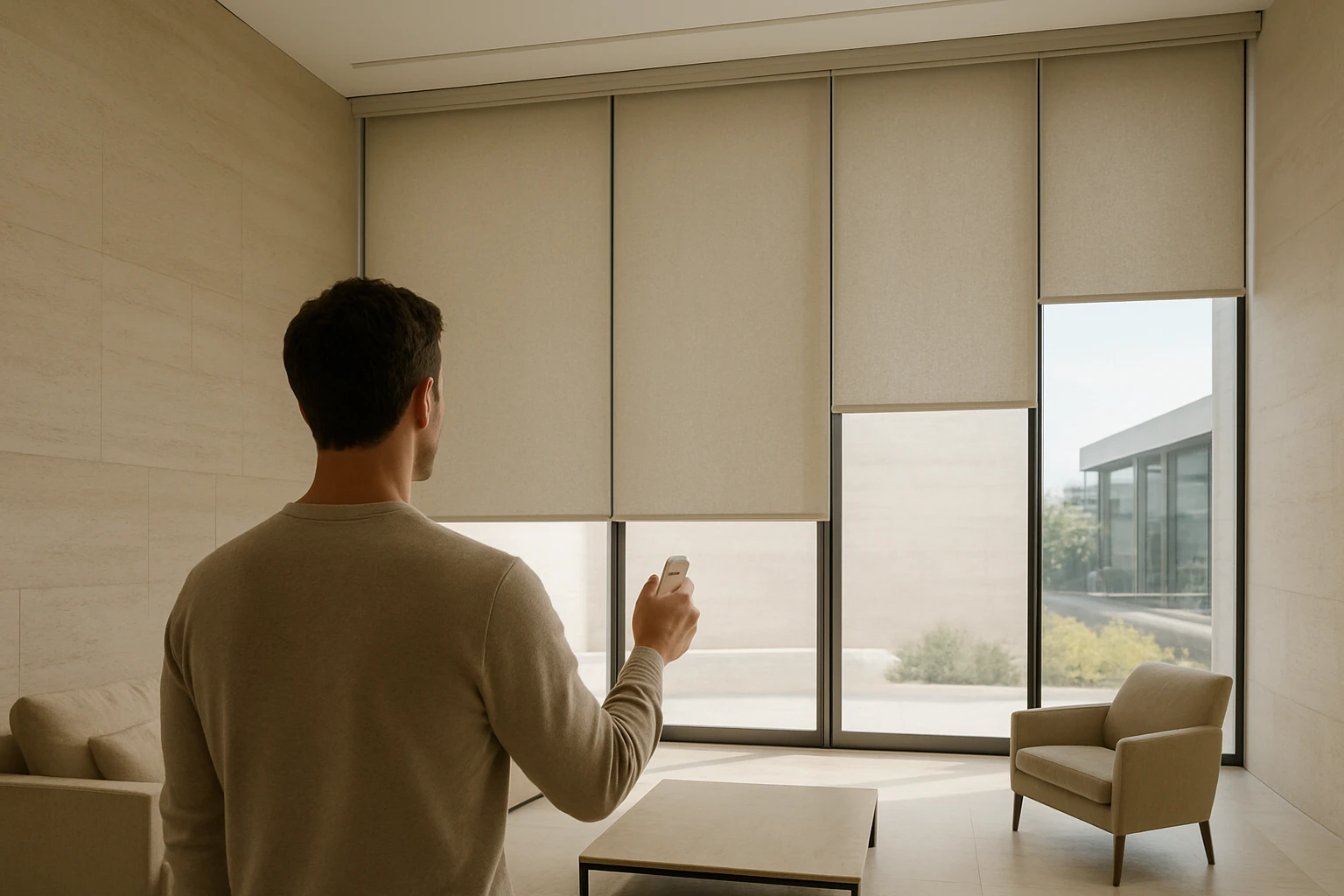
Motorization is a way to operate a blind rather than a fabric type. Motorized blinds may use replaceable batteries, rechargeable batteries, or a wired power supply, and each needs a different plan for access and maintenance.
Check how you will reach the charging point and what happens during a power cut. Do not assume a motor works with every smart-home system or lets you operate the blind by hand if power fails. Both features depend on the exact product.
Which Blinds Work Best in Each Room?
Choose blinds for each room based on privacy, moisture, access, and light rather than style alone. A matching set throughout the home can look tidy, but the same fabric may not suit a damp bathroom or keep a bedroom dark enough.

| Room or Window | Good Starting Choices | Main Check Before Buying |
|---|---|---|
| Bedroom | Blackout roller, lined Roman, blackout cellular | Edge gaps and light reaching the bed |
| Living room | Roller, wooden, zebra, sheer horizontal | Daytime glare and nighttime privacy |
| Kitchen | Aluminium, suitable faux wood, wipeable roller | Grease, splash exposure, and heat sources |
| Bathroom | Moisture-suitable faux wood, aluminium, suitable roller | Full-system moisture rating and ventilation |
| Home office | Solar roller, Venetian, cellular | Glare on the screen at working hours |
| Sliding balcony door | Vertical or panel track | Stack location and clear walking width |
| High window | Suitable motorized blind | Power, charging access, and servicing |
| Bay window | Separate rollers, Venetians, or Romans | Corner clashes and usable window handles |
For a desk facing west, a solar roller can reduce afternoon glare while keeping a view. If people in nearby flats can see into the room at night, add a separate privacy covering rather than choosing solar fabric alone.
In a bay window, neighbouring headrails and folded fabric can meet at the corners. Measure the depth of each system before ordering, and use this guide to blinds for bay windows to think through the layout.
Cleaning should influence the choice too. A blind next to a frequently opened balcony door may collect more dust than one in a closed bedroom, so removable or wipeable parts can matter. Follow advice for the specific material when cleaning vertical blinds, since not every fabric vane can be soaked.
How to Measure and Fit Window Blinds Correctly
Measure for the exact blind system and mounting method, not just the glass. Inside-mounted blinds sit within the window recess, while outside-mounted blinds overlap the opening on the wall or frame.

An inside mount gives a neat finish, but it needs enough depth for the blind and its moving parts. An outside mount can cover more of the opening, which helps with light control, though the fabric must still clear handles and other fittings.
- Decide whether the blind will sit inside or outside the recess, then get the supplier’s measuring instructions for that product.
- For an inside mount, measure the width at the top, middle, and bottom, and measure the height at the left, centre, and right. Record every reading and follow the supplier’s rule for which dimensions to submit.
- Check the recess depth, window handles, opening direction, vents, and any inward-opening panes.
- Confirm whether the order form asks for recess size, finished blind size, or fabric width. These are not the same measurement.
- For an outside mount, allow suitable overlap and enough space above the window for the roller, headrail, or raised fabric stack.
- Check the fixing surface and choose brackets and fasteners suited to the wall, ceiling, or frame.
As a simple example, a recess measuring 1,200 mm wide does not mean a roller blind will have 1,200 mm of fabric. If the supplier uses the full width for the brackets and mechanism, the cloth will be narrower. Do not subtract anything from your measurements unless the measuring guide tells you to.
For awkward openings, a blind installation service in Dubai can help you work out bracket positions, handle clearance, and suitable fixings before the blind is made.
Cord Safety and Clear Access
Cordless blinds avoid exposed operating loops, which makes them a sensible choice in homes with young children. Where a blind has a chain or cord loop, use the supplied safety device exactly as instructed and keep beds, cots, and furniture children can climb away from the window.
Do not leave a chain loose because the tensioning device looks untidy. It is a safety part, not optional trim, and it needs a suitable fixing point. Motorized blinds can remove the operating loop, but all parts of the chosen product still need correct installation.
What to Check Before Ordering Your Blinds
Compare complete blind systems with the same size, fabric grade, controls, and fitting service. A low quote may leave out installation or use a different mechanism, so the headline price alone is a poor comparison.
Ask for an itemized quote showing the fabric or slat material, finished size, operating system, fitting, and any extras. A cassette, side channels, lining, motor, or electrical work can change the total, while a minimum charge can affect smaller windows.
| Check | Why It Matters |
|---|---|
| Fabric or slat sample | Colour and privacy can change when backlit |
| Full blind width and fabric width | The covered area may be smaller than expected |
| Raised or parked size | Folded fabric and stacked panels can block glass or access |
| Maximum size for the system | Large blinds may need a stronger mechanism or separate sections |
| Cleaning instructions | Some fabrics cannot be washed or scrubbed |
| Motor and control details | Charging, smart-home support, and backup vary by model |
| Warranty and spare parts | Fabric, mechanisms, motors, and fitting may have different cover |
For timber products, this guide to the cost of wooden Venetian blinds explains the main points to consider before buying. Use a current quote for your own window size rather than expecting to pay the same as someone with a different home.
If you want softness as well as adjustable light, pairing a blind with curtains may work better than asking one product to do everything. Check that the curtain track leaves enough space for the blind to move and that the two coverings do not catch each other.
For most homes, start with roller blinds for a clean finish, Venetian blinds for adjustable daylight, and vertical or panel track blinds for wide sliding openings. Choose blackout coverage for sleep, moisture-suitable materials for wet rooms, and motorization where access is difficult. When requesting a quote through the contact page, include window photos, rough sizes, room use, and the direction of strong sunlight so the suggested system meets your needs.
Frequently Asked Questions
Can I Fit Blinds in a Rented Apartment Without Drilling?
Some blinds use no-drill brackets, but they must suit the exact window frame and blind weight. Clamp-fit systems often need an opening window sash, while tension systems need suitable recess surfaces. Get your landlord’s approval where needed, and avoid adhesive-only fittings unless the manufacturer approves them for the size, surface, and conditions.
Are White Blinds Better Than Dark Blinds for Sunny Windows?
Neither colour is best for every sunny window because glare control, outward view, and heat performance are different concerns. Dark solar fabrics often give a clearer outward view, while a light outward-facing surface can reflect more sunlight. Compare the manufacturer’s figures for the exact fabric and consider a separate lining or backing where available.
Can Blinds Be Fitted to Tilt-and-turn Windows?
Blinds can be fitted to tilt-and-turn windows, but the system must allow the sash to tilt and open without catching. Frame-mounted or guided designs may suit these windows better than a free-hanging blind across the recess. Check handle clearance and the fixing method, and confirm that fitting will not affect the frame warranty.
Can I Replace Blind Fabric Without Replacing the Whole Blind?
You can replace the fabric on some blinds, but it depends on the mechanism, fabric attachment, and availability of compatible parts. Roller and vertical systems may allow replacement fabric or vanes when the hardware is sound. Ask the supplier to check the tube, track, controls, and sizing before ordering, because replacement parts are not universal.
Which Blinds Help Reduce Condensation on Windows?
No blind reliably solves window condensation on its own because condensation depends on moisture, ventilation, and glass temperature. A close-fitting blind can reduce air movement around the glass, so inspect behind it during cooler weather. Keep vents clear, manage indoor moisture, and follow any ventilation advice supplied with the window or blind system.