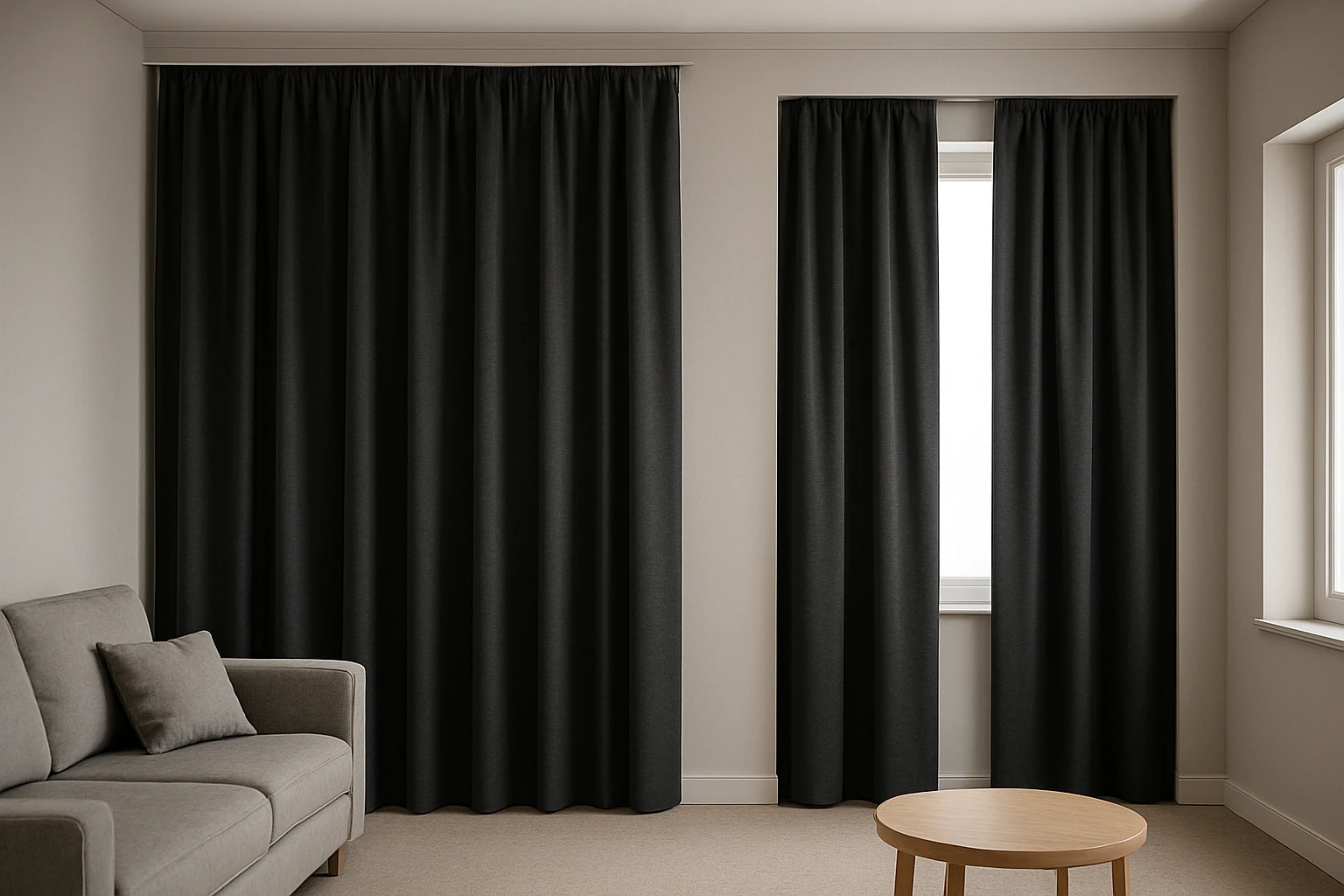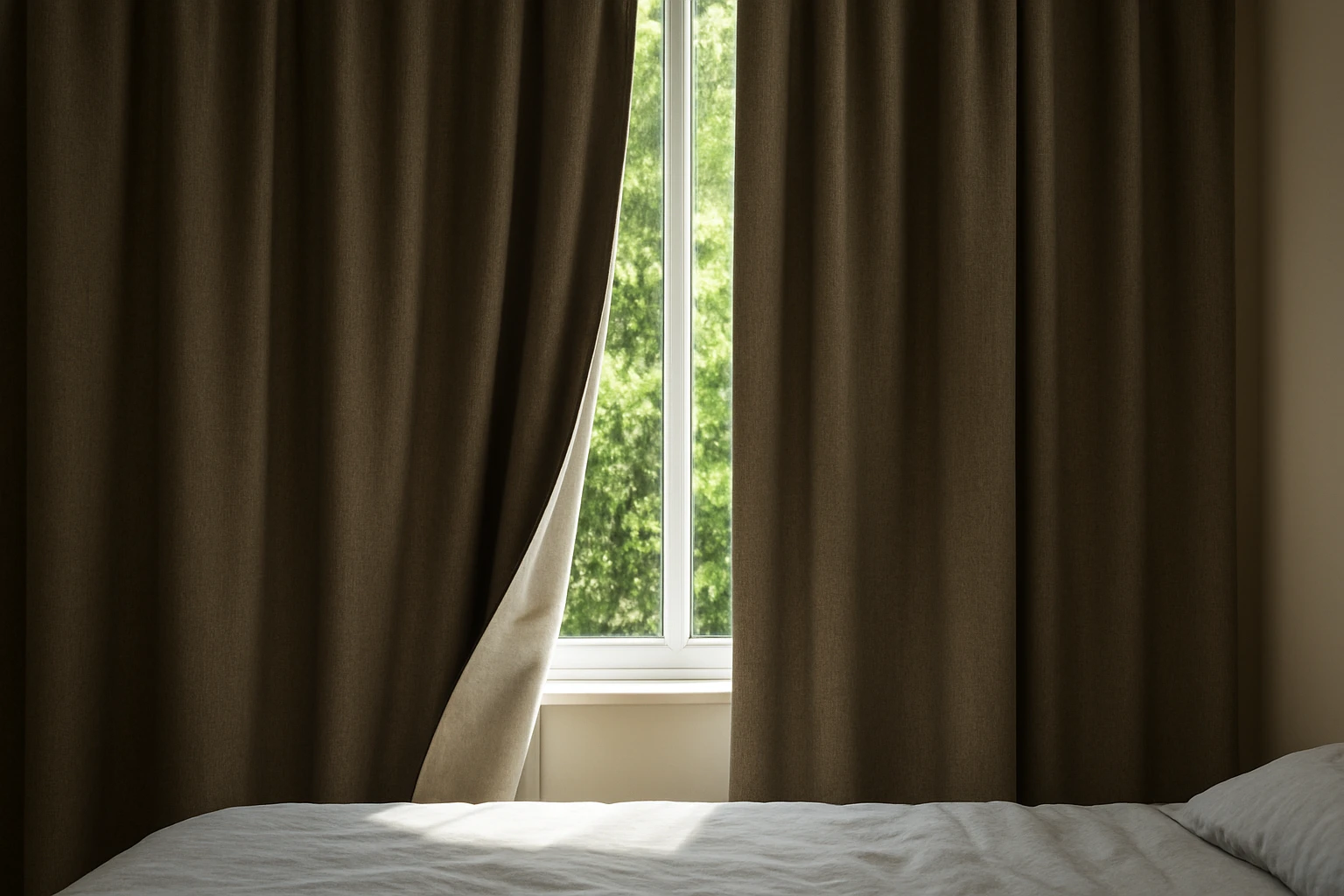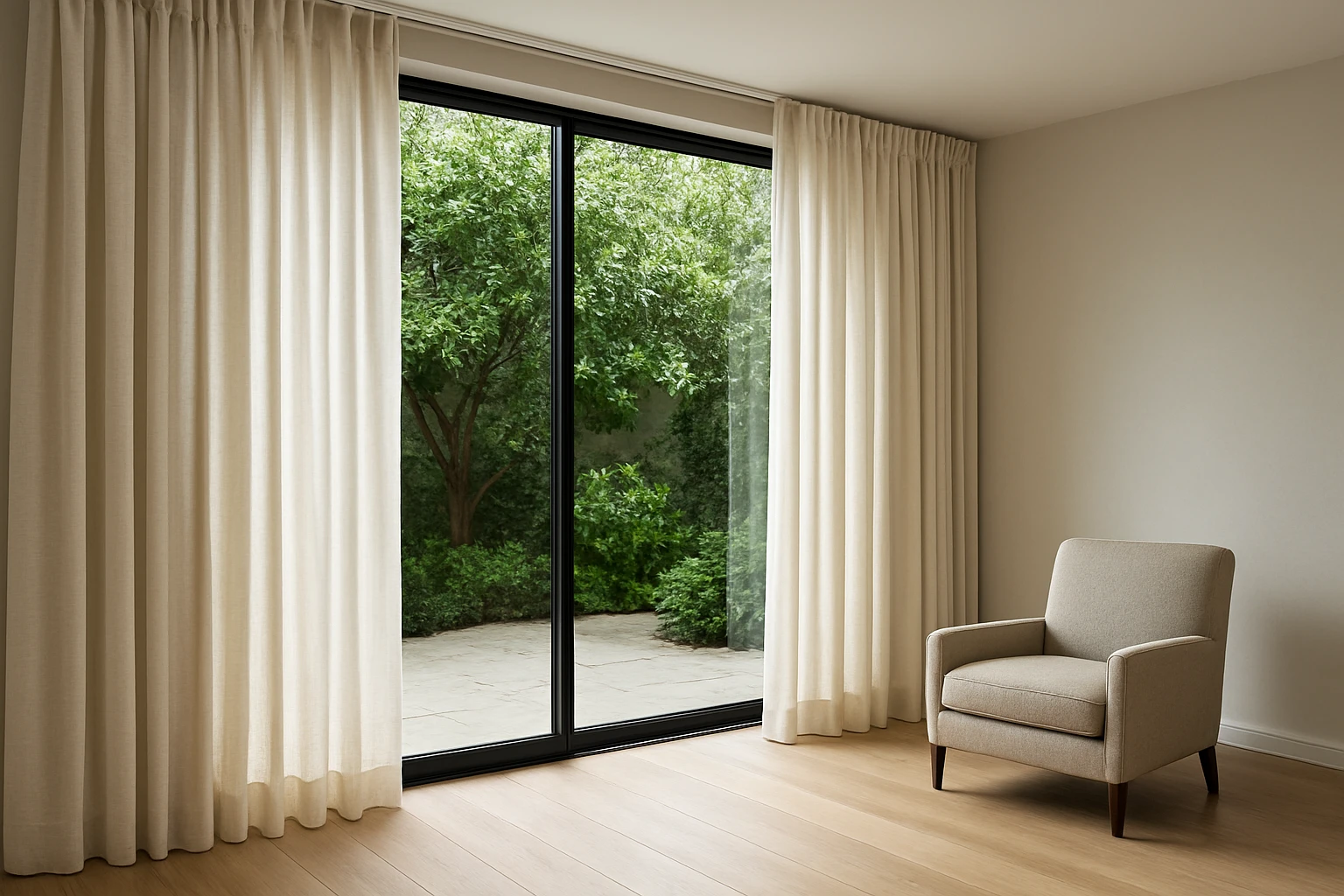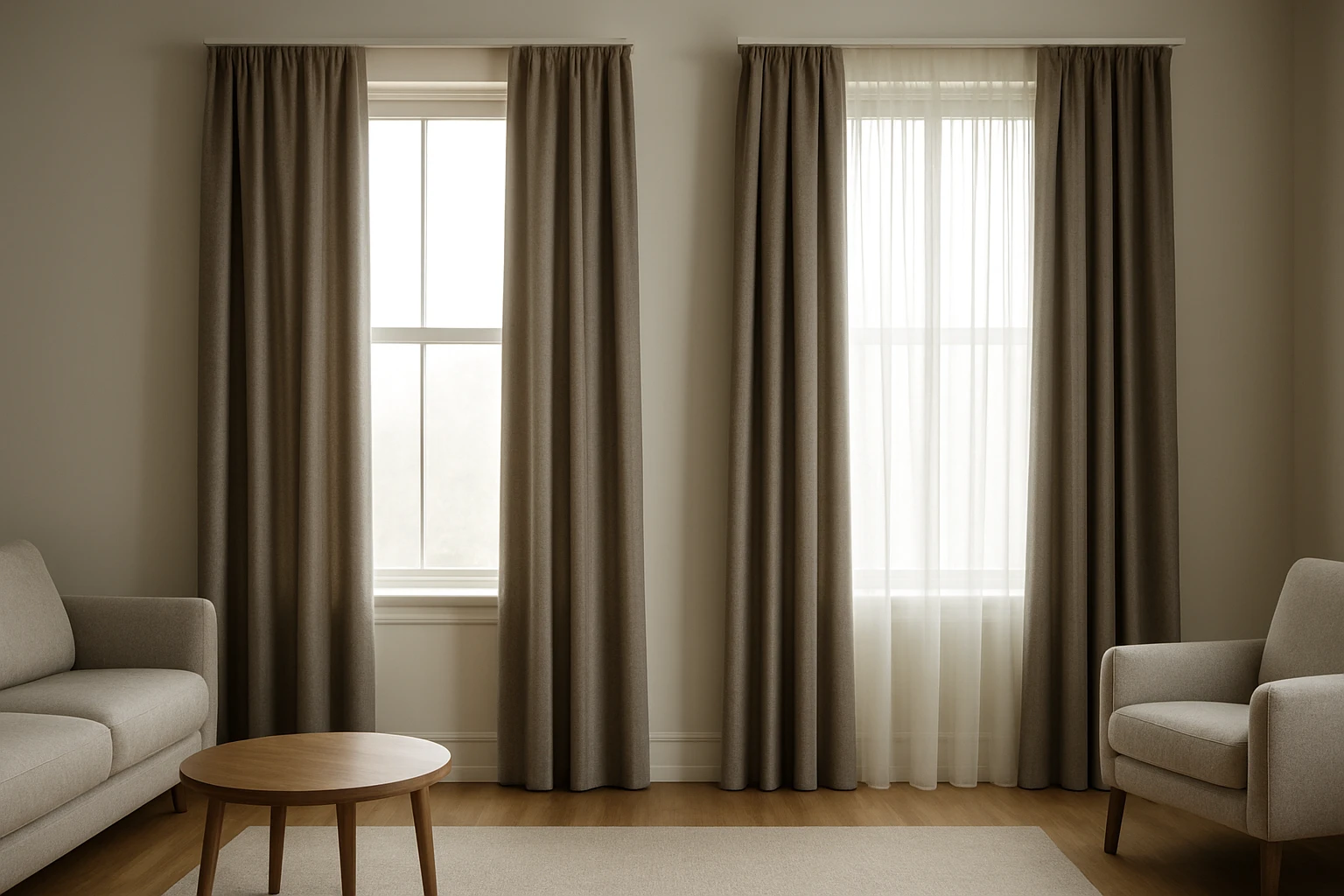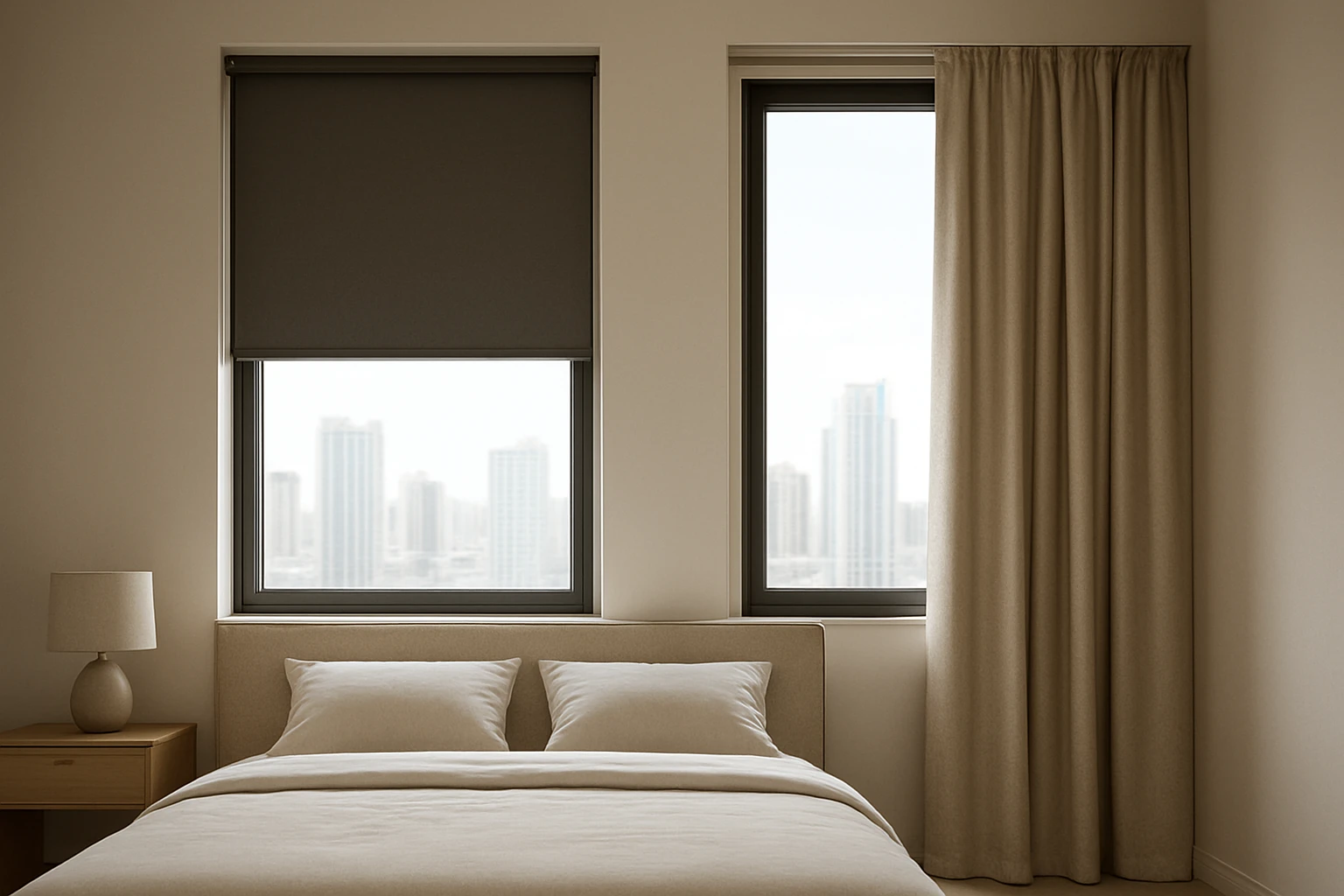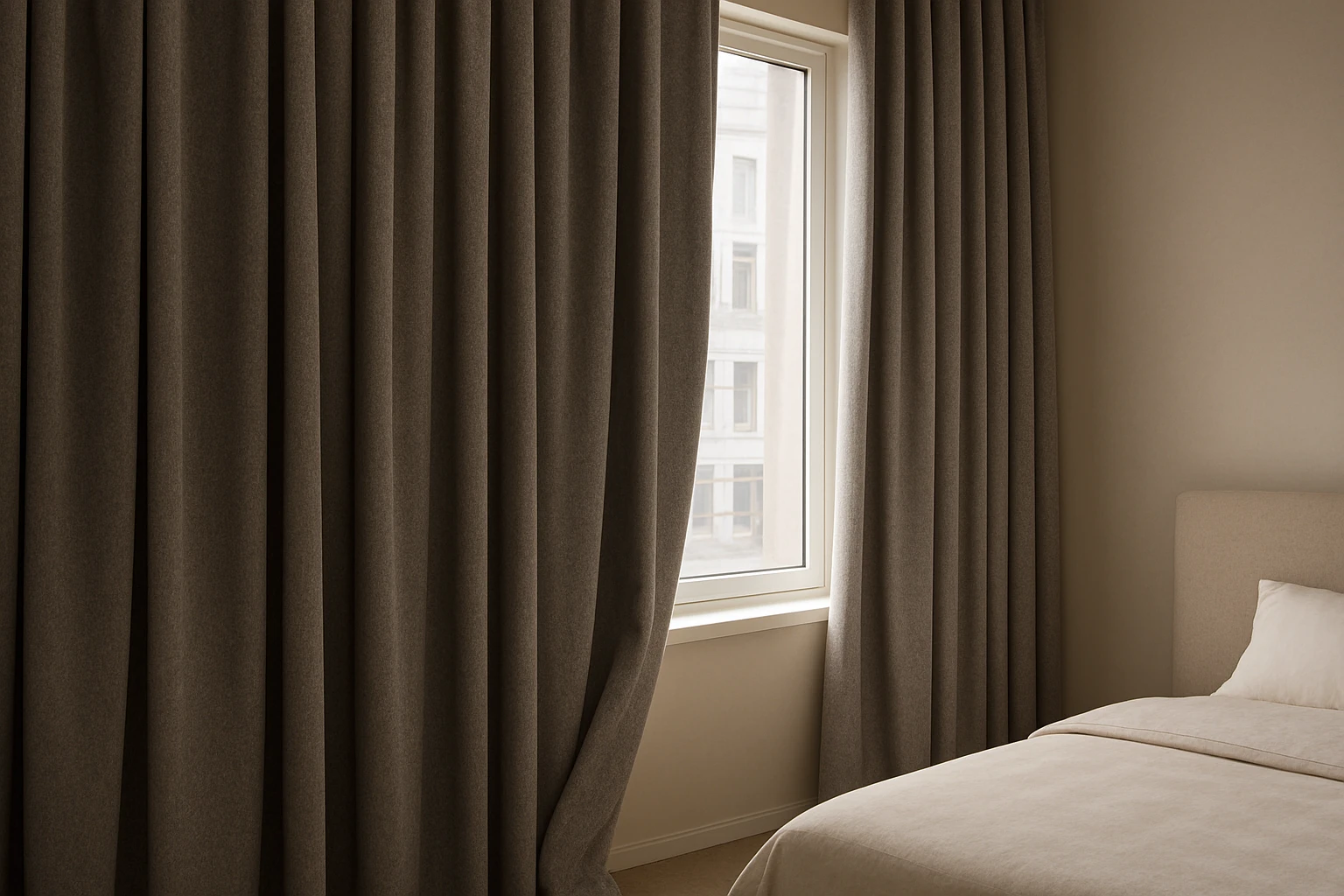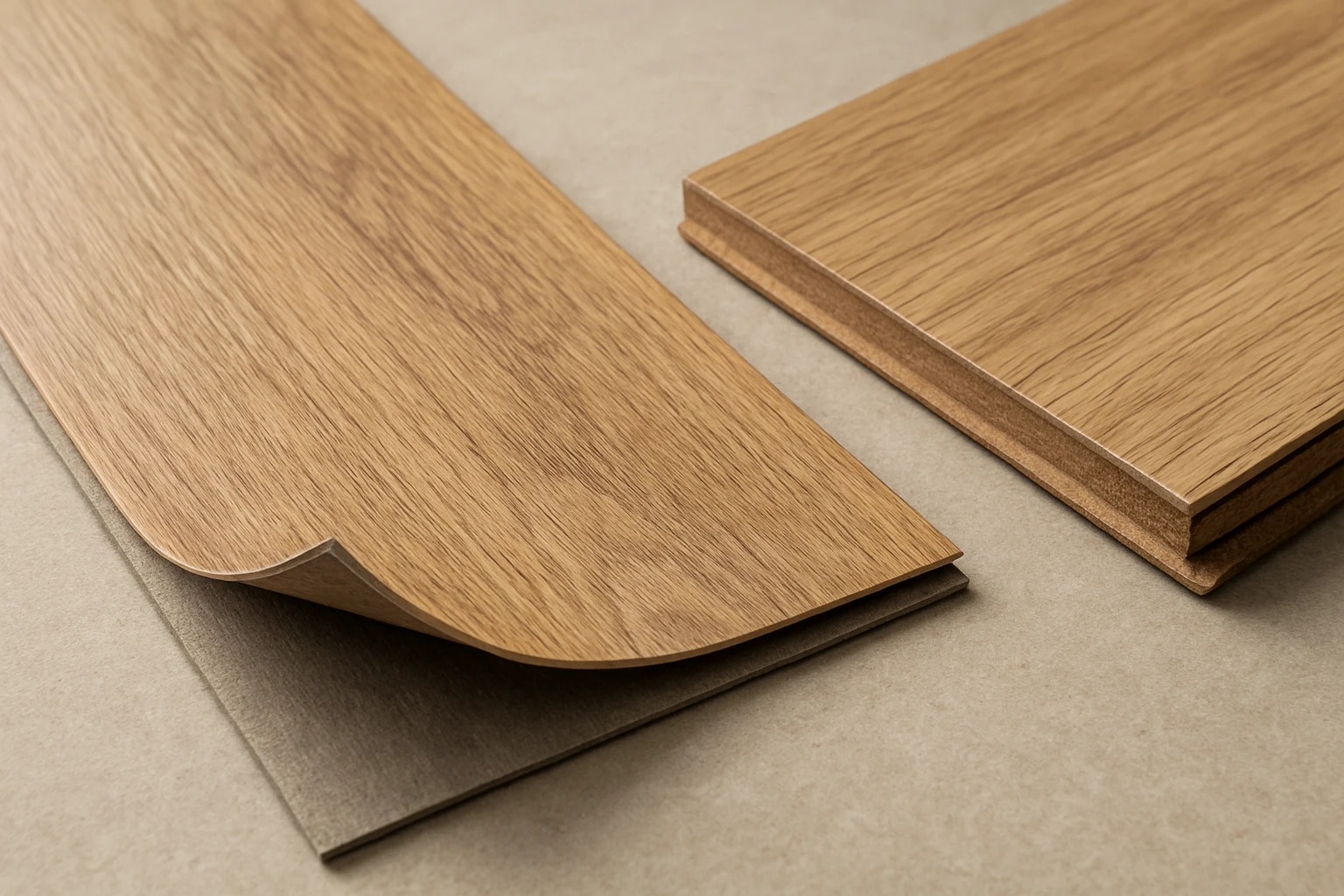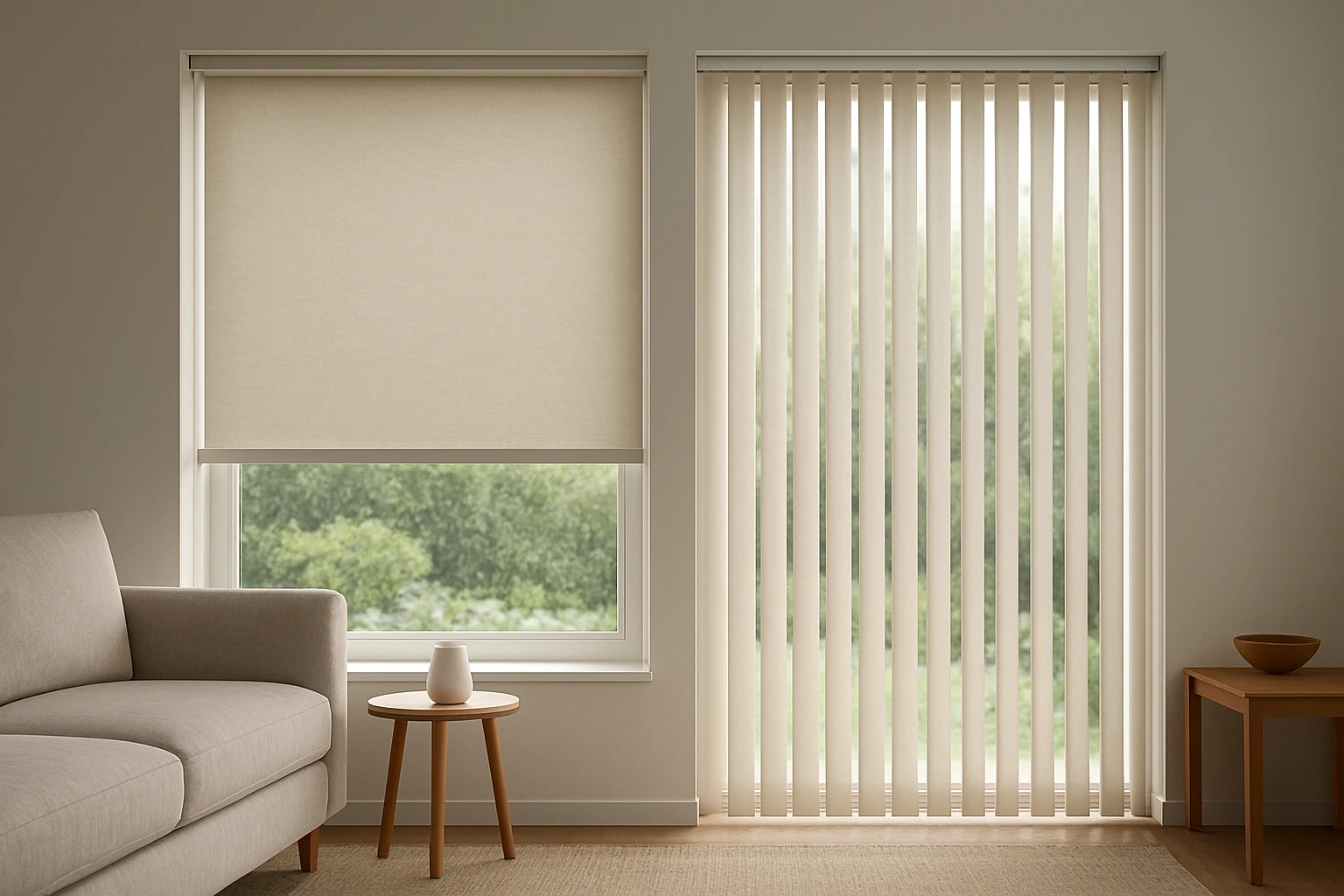

The best blackout curtain fabrics and colours combine a light-blocking layer with a face fabric that suits your room. Polyester is a practical choice, while lined linen, cotton and velvet offer different textures and care needs. White and pale curtains can block light as well as dark ones when they have a suitable blackout backing, but the fit around the window also affects how dark the room becomes.

What Makes a Curtain Fabric Blackout?
A curtain’s ability to block light comes from its construction or lining, not its visible colour. A dense dark curtain may reduce light, but it is not a reliable substitute for a proper blackout layer.
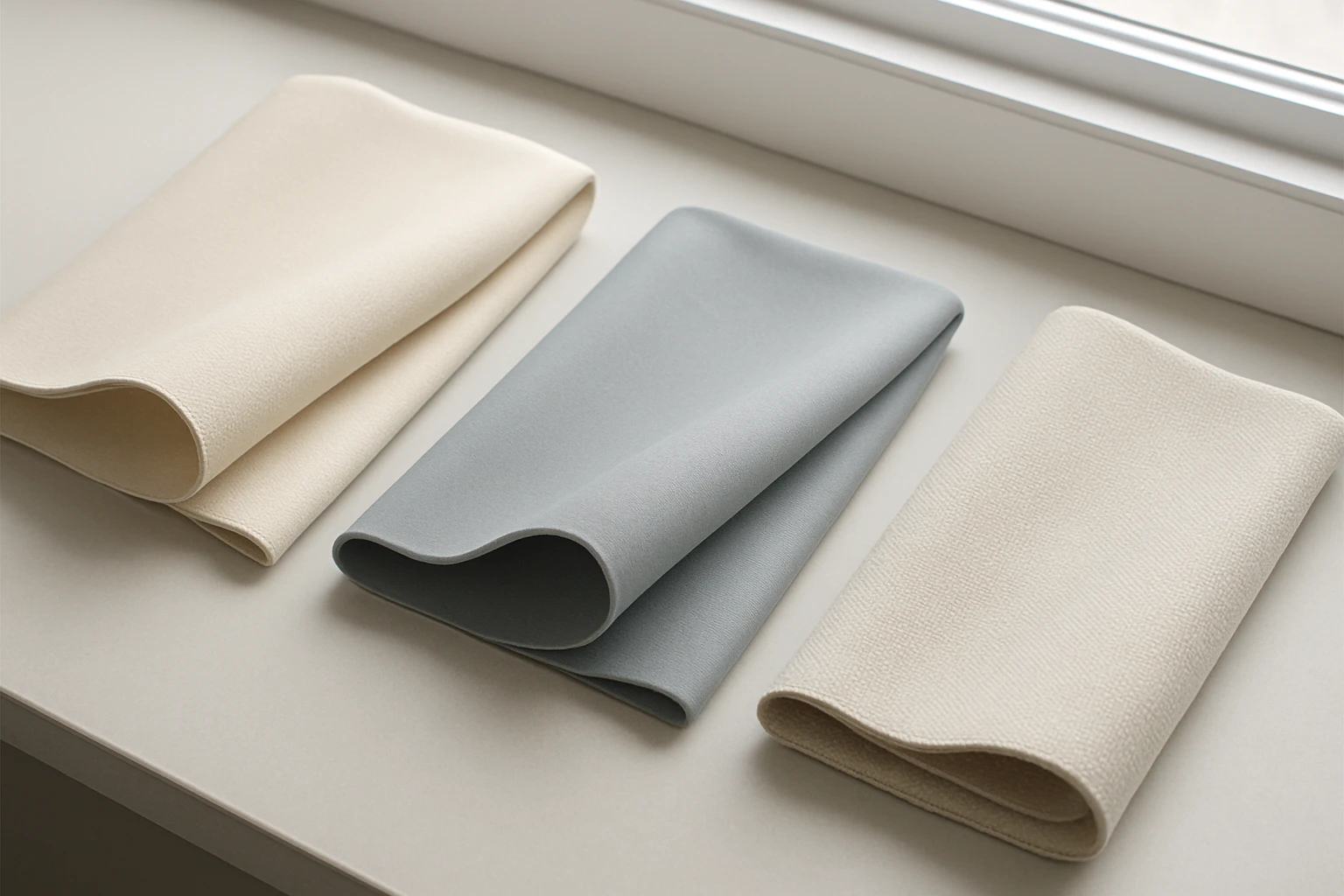
There are three main ways to make a curtain block light.
| Construction | How It Works | What to Check |
|---|---|---|
| Coated blackout fabric | A light-blocking coating is applied to the back of the fabric | Whether the coating stays flexible and which cleaning methods it allows |
| Decorative fabric with a separate blackout lining | A second fabric layer blocks light behind the visible curtain | How the layers hang together, their total weight and their care needs |
| Dense woven fabric, often sold as triple weave | Several yarn layers reduce light passing through the cloth | Whether that exact fabric and colour are rated as blackout or only dimout |
A separate lining gives you more freedom to choose the front fabric. You can have an open, linen-like texture facing the room while a different layer blocks the light behind it.
With woven fabrics, the colour may affect performance because lighter yarns can let more light through. Do not assume that a pale version blocks as much light as a dark sample from the same range. Our comparison of blackout and dimout curtains explains why those descriptions do not mean the same thing.
Also, separate claims about the fabric from the results you can expect in a room. Even fabric sold as blocking all light cannot stop daylight coming over the track or through a gap between panels. When comparing materials at Design Furniture, ask what the blackout claim covers: the cloth itself, the finished curtain or the whole fitted window treatment.
Which Blackout Curtain Fabric Should You Choose?
Polyester is a practical starting point for blackout curtains because it tends to hold its shape and resist creasing. Choose lined linen or cotton when you prefer their texture, or velvet when you want a deeper, heavier look and have a suitable track.

| Face Fabric | Best Reason to Choose It | Main Trade-Off | Buying Check |
|---|---|---|---|
| Matte polyester | A neat finish with relatively simple care | Some fabrics have a flat or synthetic-looking surface | View a large hanging sample rather than a small swatch |
| Linen-look polyester | A textured, relaxed look without relying on real linen | Loose-looking weaves need a proper blackout layer | Check that the backing does not show through the weave |
| Linen or linen blend | Natural texture and soft, uneven folds | Can crease, and some fabrics change size with moisture | Confirm lining, cleaning method and likely movement |
| Cotton or cotton blend | A soft, matte surface that works with prints | May crease, shrink or fade, depending on the fabric | Check care instructions for the complete lined curtain |
| Velvet | Deep colour, rich texture and a substantial drape | Adds weight and takes up more space when open | Confirm track capacity and the fabric’s pile direction |
The fibre name does not tell you everything. Two polyester curtains can feel very different because yarn thickness, weave and finishing all affect how they hang. Bend a sample into a loose fold rather than judging it flat on a counter.
For a wide window that you open every morning, fabric bulk matters as much as appearance. Thick velvet and heavy lining can form a large stack at each side, which may cover part of the glass even when the curtains are open. A lighter lined fabric can be a better choice where wall space is tight.
Velvet also has a pile, meaning a raised surface of short fibres. The shade changes as that surface catches the light, so joined panels should have the pile running in the same direction. Otherwise, matching fabric can appear to be two different colours.
Heavy curtains can soften some room echo, but weight alone does not make them soundproof. If traffic noise is part of the problem, consider soundproof curtains separately rather than assuming that blackout fabric will solve both issues.
Which Colours Work Best for Blackout Curtains?
Choose blackout curtain colours to suit the room, then check that the exact fabric has the light-blocking layer you need. White, cream and pale grey can all work in a bedroom that needs to be dark, so there is no need to choose black just to block daylight.

| Colour Family | Works Well With | Watch Out For |
|---|---|---|
| Warm white and ivory | Cream walls, oak, beige stone and warm lighting | A yellow undertone can stand out against cool white walls |
| Oatmeal, sand and greige | Natural wood, woven textures and mixed neutral rooms | A small sample may hide pink, green or purple undertones |
| Cool grey | Blue accents, cool white paint and grey stone | Blue-grey can look cold beside cream finishes |
| Sage and olive | Timber, off-white walls and earthy colours | Green can look much stronger across a full wall |
| Navy and deep blue | Pale walls, brass details and warm wood | Dark folds can make a large curtain area feel visually heavy |
| Charcoal and black | High-contrast rooms and darker furniture | Lint, pale dust and sun fading may be more noticeable |
| Terracotta and muted rose | Warm neutrals, walnut and soft cream | Afternoon light can make warm colours look more intense |
For a calm look, choose curtains close to the wall colour, but do not try to match from memory. Put the fabric beside the actual paint because two almost-matching whites can clash more than a clear contrast.
If the room has patterned bedding, a rug or wallpaper, pick a softer colour from that pattern for the curtains. This helps tie the room together without adding another strong feature across a large window.
Can White Blackout Curtains Work as Well as Black Ones?
White blackout curtains can block light as well as black curtains when an effective coating or separate lining provides the barrier. The main exception is an uncoated woven range where colour forms part of the light-blocking design.
Check the back as well as the front. A pale face fabric can look grey or muddy if a dark lining shows through it, while a visible bright white lining may look untidy at the opening edge of a dark panel. Ask to see a finished corner or hem so you can judge the layers together.
Do Dark Colours Keep More Heat Out?
Dark curtain colours do not automatically keep a room cooler. The surface facing the glass, the curtain construction and the gaps around the window all affect how heat moves, while dark surfaces tend to absorb more sunlight.
For a sunny Dubai window, ask about a pale sun-facing backing and any heat test results for the finished product. Do not treat the word blackout as proof of insulation. The article on whether blackout curtains keep heat out explains the difference between blocking light and reducing heat gain.
Match the Fabric and Colour to the Room
The best choice changes with how the room is used, how much sun reaches the glass and how often you open and close the curtains. Start with those needs before choosing a colour from a sample book.

| Room or Situation | Useful Starting Choice | Why It Suits the Space |
|---|---|---|
| Bedroom used for daytime sleep | Matte fabric with verified blackout lining and close-fitting edges | Strong light control depends on both cloth and coverage |
| Living room needing daytime privacy | Neutral blackout curtains on a separate track from sheers | Each layer serves a different purpose without making the room dark all day |
| West-facing room in Dubai | Suitable blackout fabric with a pale sun-facing backing | Strong afternoon sun makes backing and heat performance worth checking |
| Small room with little wall space | Supple fabric in a shade close to the walls | Reduces visual contrast and limits bulky side stacks |
| Formal sitting room | Lined velvet or a textured woven fabric | Adds depth, provided the track can carry the weight |
| Busy family room | Stable, easy-care fabric with clear cleaning instructions | Practical care matters more than a delicate showroom finish |
For bedroom curtains, put light control ahead of surface shine. A matte texture is often easier to live with because it does not produce strong highlights when bedside lamps are on.
In a living room, sheer curtains can soften daylight while the blackout layer stays open. Sheers do not provide reliable privacy at night when the room is brighter than outside, so you still need the opaque layer.
For sliding doors, check that the curtain stack leaves the handle and walking route clear. A heavy fabric that looks good when closed can become awkward if it gathers across the door you use most.
Why Curtain Fit Matters as Much as Fabric
Blackout fabric blocks light through the cloth, while the heading, track and panel overlap control light around it. If a bright outline remains around a closed curtain, changing from cream to charcoal is unlikely to fix the problem.

The most useful fitting checks are straightforward.
- Check above the curtain. A high track or suitable pelmet can reduce the bright band above the fabric, but the best approach depends on the window and ceiling.
- Check both sides. Extend the curtain beyond the glass and consider returns, which bring the outer edges back towards the wall.
- Check the centre. Two panels need enough overlap to avoid a narrow strip of daylight where they meet.
- Check the bottom. Measure the actual floor along the curtain run because an uneven floor can leave a larger gap at one end.
- Check the open position. Leave enough space for the gathered fabric so it does not block the door or more glass than intended.
Eyelet curtains have rings through the fabric, which leave space around the pole and across the top. They can work well for general room darkening, but a track heading with better top coverage is often a better fit for daytime sleep. A curtain installation service in Dubai can check the fixing surface, curtain weight and edge coverage together.
Fabric fullness also affects the result. Fullness is the extra width that creates folds when the curtain is closed. For example, a 2-metre curtain track at 2 to 2.5 times fullness needs about 4 to 5 metres of combined flat curtain width, before any extra allowances specified by the maker. That is the finished width across the panels, not the total length of fabric to order from a roll.
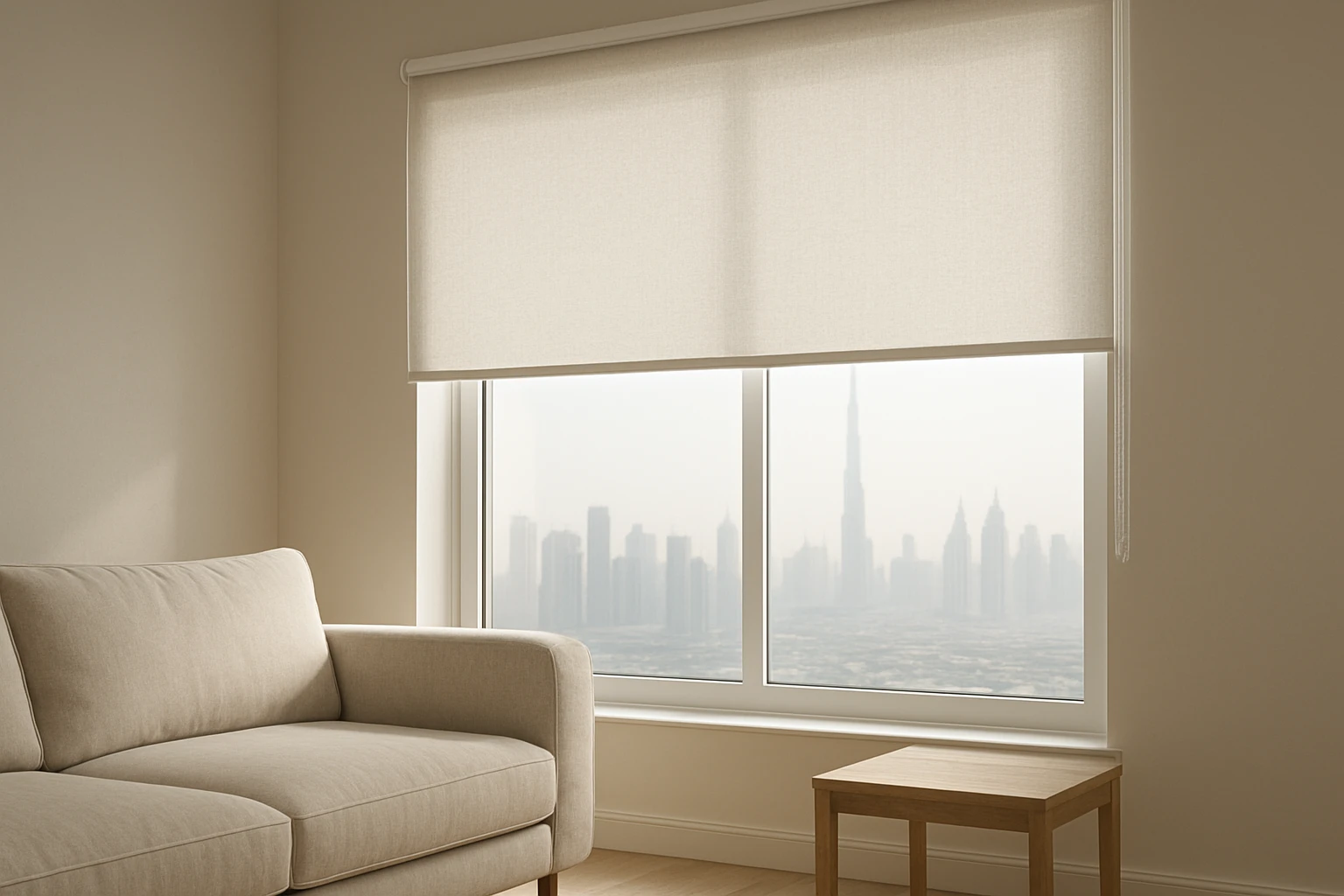
If there is no room for deep curtain stacks, blackout blinds may be worth comparing. Roller blinds use less fabric at the sides, though standard fittings can leave edge gaps. Lined Roman blinds keep a fabric look, but their folded stack takes up space at the top of the window. Do not assume either type will make a room fully dark without checking how it will be fitted.
How to Check Samples Before You Order
Check a large sample at your own window before ordering, because showroom lighting cannot show how the fabric will look or perform at home. Consider the colour, backing, folds and care needs together rather than choosing each one on its own.
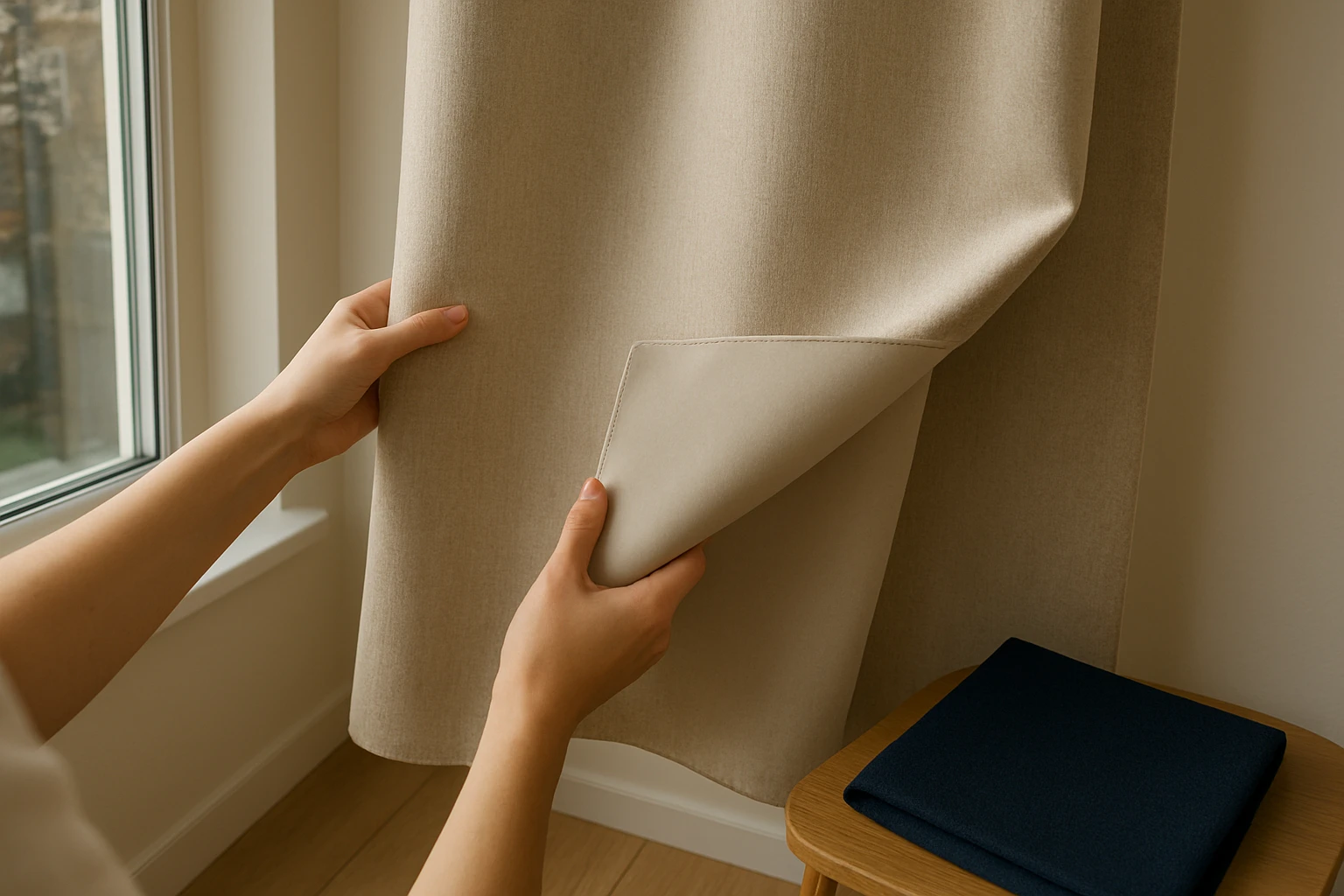
- View the exact shade at different times. Check it in morning light, afternoon light and under the lamps you use at night. Hold the sample upright, as the finished curtain will hang.
- Put it beside fixed finishes. Compare it with the wall, floor and sofa rather than a phone photo, since screens alter colour.
- Check the light barrier. Place the sample against bright daylight to spot a glowing weave or pinholes. This is a useful first check, not proof of a blackout rating or a substitute for product information.
- Make a loose fold. Look for stiffness, unwanted shine and backing that shows through. A large sample gives a better idea of how the fabric hangs than a small square.
- Read the whole curtain’s care label. The face fabric may be washable while its coating or lining is not. Do not assume that a washable polyester face makes the finished curtain machine-washable.
- Confirm the making details in writing. Record the fabric code, colour, lining, heading, finished size and any pattern matching before placing the order.
Coated backing needs particular care because unsuitable heat, rubbing or cleaning can damage it. Avoid pressing or steaming the coated side unless the maker allows it, and check whether cleaning could change the size of either layer.
For patterned fabric, ask how the repeat affects seams and fabric use. A pattern repeat is the distance before the same design starts again, and matching it across panels can require extra cloth. Our comparison of custom blackout curtains and ready-made curtains is useful when standard sizes or limited lining choices make the decision harder.
For most homes, start by comparing matte polyester or linen-look blackout curtains in warm white, oatmeal or greige, then check those shades against your walls. Choose richer colour or heavier fabric because it suits the room, not because you expect it to block more light. The best choice brings together the right fabric, backing and fit for your needs.
Frequently Asked Questions
Can I Add Blackout Lining to Curtains I Already Own?
You can often add blackout lining to existing curtains if the fabric, heading and track can support the extra weight. A curtain maker should check the seams, finished length and available hooks before making changes. Adding lining can also increase the space the curtains need when open, so check the side stacks as well.
Are Patterned Blackout Curtains as Effective as Plain Ones?
Patterned blackout curtains can work as well as plain curtains because the light barrier usually comes from the backing or lining, not the printed design. Check the exact product rather than judging by its darkest areas. For a large pattern, ask where the design will fall on each panel and whether seams will be matched.
Do Blackout Curtain Fabrics Fade in Strong Sunlight?
Blackout curtain face fabrics can fade in strong sunlight, even when they block light well. Light blocking and colour resistance are different properties, so ask for colourfastness information for the exact fabric. Lining helps protect the reverse, but exposed leading edges and folds may still receive sun, especially beside uncovered sections of glass.
Which Blackout Curtain Fabric Is Better for a Dusty Home?
A smooth, tightly woven fabric with maker-approved cleaning instructions is usually easier to maintain in a dusty home than deep-pile velvet or a heavily textured weave. Choose a shade that does not show every pale speck, and clean according to the label. Easy care does not necessarily mean the finished curtain can go in a washing machine.
Can New Blackout Curtains Have a Smell?
New blackout curtains can have a temporary smell from their coating, finishing or packaging, but this varies by product. Ask the supplier about airing and cleaning before use, and follow the care label rather than applying sprays or heat. A strong smell that persists should be raised with the supplier, particularly for a child’s room or someone sensitive to odours.