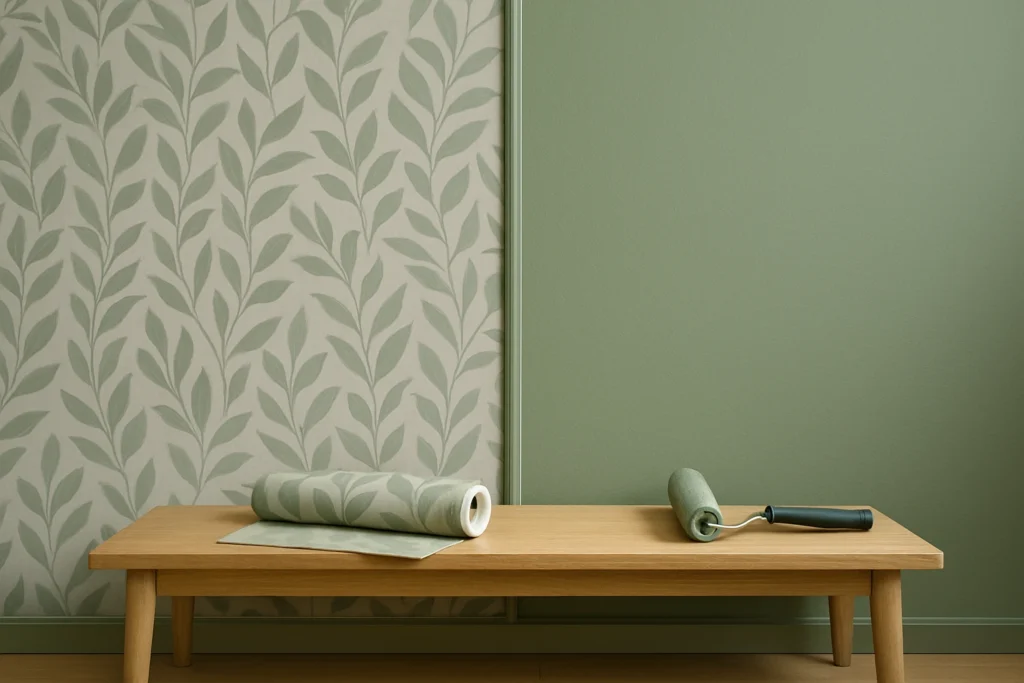

Paint is usually the better choice for a lower budget, easy colour changes, and simple repairs, while wallpaper suits rooms where pattern or texture is the main design feature. Wallpaper often costs more to buy and fit, and it needs dry, smooth walls and the right adhesive to stay in place. For many homes, painted walls with one wallpaper feature wall offer a good balance of cost, style, and upkeep.
Wallpaper Vs Paint at a Glance
Paint generally wins on upfront cost and ease of change, while wallpaper offers printed detail and texture that standard wall paint cannot match. The right choice depends as much on the wall’s condition and how you use the room as it does on appearance.
| Factor | Paint | Wallpaper |
|---|---|---|
| Initial cost | Usually lower for standard interior paint | Usually higher once rolls, adhesive, and fitting are included |
| Appearance | Solid colour, with decorative finishes available | Repeating patterns, murals, and textured surfaces |
| Wall preparation | Cracks and rough patches still need repair | Needs a smooth, dry, sealed surface, especially at seams |
| Cleaning | Depends on the paint’s stated washability | Depends on the wallpaper’s cleaning symbols and surface |
| Local repairs | Small marks can be touched up, though patches may show | Damage may need a full strip replaced |
| Moisture | Suitable paint can cope with occasional condensation, but not leaks | Damp can loosen adhesive and cause peeling |
| Redecorating | Usually straightforward after cleaning and preparation | Removal can add work before the next finish |
| DIY fitting | More forgiving for beginners | Pattern matching, trimming, and seams need greater care |
The table compares standard wall paint with common wallpaper used in homes. A specialist decorative paint finish may cost more than a basic wallpaper, while delicate paper wallpaper may be less washable than a good-quality painted surface.
When comparing wallpaper options, check the actual product rather than choosing by colour alone. Non-woven wallpaper has a backing made from bonded fibres, and many products use a paste-the-wall method. Vinyl-coated wallpaper has a protective surface, but its cleaning limits still depend on the manufacturer’s label.
This comparison from Design Furniture looks at both finishes, including the preparation, fitting, and future repairs that can affect the value of either choice.
How Much Do Wallpaper and Paint Cost in the UAE?
Standard interior painting usually costs less than wallpapering the same wall area. For a fair comparison, ask for both quotes to cover the same wall repairs, preparation, materials, labour, and cleanup.

For early budgeting in Dubai and other UAE markets, straightforward interior painting often costs roughly AED 15 to AED 35 per square metre of wall area. Standard wallpaper supply and fitting may cost around AED 50 to AED 150 per square metre, with designer papers, murals, and difficult work costing more. These are broad planning ranges, not a price list. Costs vary by supplier, location, product, and wall condition.
| Example Scope | Paint Budget | Wallpaper Budget |
|---|---|---|
| 10 square metres of wall | Roughly AED 150 to AED 350 | Roughly AED 500 to AED 1,500 |
| 40 square metres of wall | Roughly AED 600 to AED 1,400 | Roughly AED 2,000 to AED 6,000 |
These examples simply apply the ranges above. Small jobs may carry a minimum charge, and major plaster repairs, old wallpaper removal, ceiling work, and VAT may be extra. Wallpaper is also often sold by the roll, so the amount bought can exceed the wall area covered.
Why Wallpaper Waste Changes the Price
The amount of wallpaper you need depends on full-height strips and pattern matching, not just square metres. A pattern repeat is the distance before the same part of a design appears again, and matching it can leave unused paper at each cut.
For example, take a plain wallpaper roll measuring 0.53 metres wide by 10 metres long and a wall measuring 3 metres wide by 2.7 metres high. The wall needs six strips across its width. If each strip is cut to 2.8 metres to allow for trimming, each roll gives three strips, so the job needs two rolls before allowing for defects or spare material.
That means buying 10.6 square metres of paper for an 8.1-square-metre wall. A large pattern repeat could increase the amount needed, so ask the installer to calculate the roll count from the product label.
Paint coverage also needs checking. If a paint label states coverage of 10 square metres per litre per coat, that same wall needs about 1.62 litres for two coats before allowing for absorbency and waste. Primer is separate unless the product instructions say otherwise.
What a Useful Quote Should Include
A clear quote should name the paint product and finish or the wallpaper collection and roll size. It should also state the preparation work, number of paint coats, adhesive, furniture protection, disposal, and any removal charges.
Ask wallpaper suppliers who pays for an extra roll if the original quantity is not enough. For paint, ask whether stain blocking and repairs are included, because two coats alone will not fix every surface problem.
Which Finish Handles Humidity, Wear, and Cleaning Better?
Washable paint is often the simpler choice for walls that need frequent cleaning, while suitable vinyl wallpaper can work well in dry, busy rooms. Neither paint nor wallpaper can solve damp caused by a leak, failed waterproofing, or repeated condensation.

In UAE homes, outdoor humidity is only part of the picture. An air-conditioned room can still develop condensation near cold surfaces or poorly sealed windows when moist air enters. If a wall smells musty, shows salt-like deposits, or repeatedly bubbles, find the cause before choosing a new finish.
Match the Surface to the Cleaning Routine
For a hallway where bags and hands often brush the wall, choose paint with a stated scrub-resistance rating or wallpaper marked as suitable for the cleaning it will need. A smooth surface is usually easier to wipe than a deep texture that catches dust.
| Wall Location | More Practical Starting Choice | What to Check |
|---|---|---|
| Busy hallway | Scrub-resistant paint or scrubbable vinyl wallpaper | Cleaning rating and resistance to scuffs |
| Bedroom feature wall | Non-woven wallpaper or matte paint | Dry wall, sunlight exposure, and furniture contact |
| Kitchen wall away from the hob and sink | Washable paint or suitable washable wallpaper | Grease, heat, and the product’s stated limits |
| Bathroom outside splash zones | Bathroom-suitable paint is usually simpler | Ventilation, condensation, and product approval |
| Shower enclosure or wet splash zone | Neither ordinary paint nor standard wallpaper | A properly waterproofed wall system is needed |
Do not assume a glossy surface is always tough or that all matte paint marks easily. Modern paint ranges differ, so the product’s cleaning guidance is more useful than sheen alone.
For wallpaper, check whether the label says spongeable, washable, or scrubbable. Those terms do not mean the same thing, and a paper that tolerates a damp sponge may still be damaged by hard rubbing.
Durability Includes Repairs, Not Just Years
Wallpaper can stay attractive for many years in a dry room where little touches the walls, but an exposed seam beside a chair can fail much sooner. Paint can also last well, though repeated wiping or scuffing may make a busy wall look tired before the coating itself fails.
A small paint touch-up is easier than replacing wallpaper, but it may show because the original colour has faded or the roller texture differs. Repainting from corner to corner often gives a more even result.
Keep spare wallpaper from the same batch for future repairs, since a later batch may differ slightly in colour. Store it dry and away from strong light rather than in a damp cupboard.
Where Do Wallpaper and Paint Look Best?
Wallpaper works best where its pattern can be seen clearly, while paint is useful for linking rooms and keeping busy spaces calm. Choose the wall based on how it looks from the doorway or your usual seat, not simply because it is the largest empty surface.

A feature wall works best when it has a clear role, such as framing a bed or defining a seating area. A wall broken up by doors, shelves, and switches may waste an expensive pattern without giving the room a clear focal point.
Choose Pattern Scale Before Choosing Colour
A large pattern can work in a small room, but the main shapes need enough clear wall space to stand out. Hold up a large sample rather than judging from a small swatch, and view it from the doorway and your usual seat.
Geometric wallpaper makes crooked corners and sloping ceilings easier to notice because the eye follows its straight lines. If the room is visibly out of square, a softer floral wallpaper or a loose texture may be more forgiving.
A mural wallpaper needs a different check because it forms one large image rather than a repeating pattern. Confirm where the main subject will fall after the bed, sofa, or television is in place, and check the supplier’s trimming allowance before ordering.
Use Light and Furniture to Test the Finish
For living room wallpaper, inspect the sample beside the sofa fabric and flooring in both daylight and evening light. A shiny texture can catch light pleasantly on one wall but show every seam on a wall lit sharply from the side.
For bedroom wallpaper, a low-sheen finish behind the bed often feels calmer than a reflective surface opposite a window. If a west-facing wall receives strong afternoon sun, check the product’s lightfastness guidance, which describes how well its colour resists fading.
Choose paint for the surrounding walls using a sample tested in the room rather than matching a colour on a phone screen. A near-match that looks wrong is often less pleasing than a clearly lighter shade drawn from the wallpaper.
Wallpaper is not limited to walls, but a ceiling needs a separate plan for alignment and overhead fitting. Read the things to know before wallpapering a ceiling before treating it as an easy extension of a feature wall.
How Do Preparation, Installation, and Removal Compare?
Painting is generally more forgiving, while wallpaper needs more care with surface smoothness, strip alignment, and adhesive. Both finishes can fail when applied over loose paint, dust, damp, or repairs that have not dried.
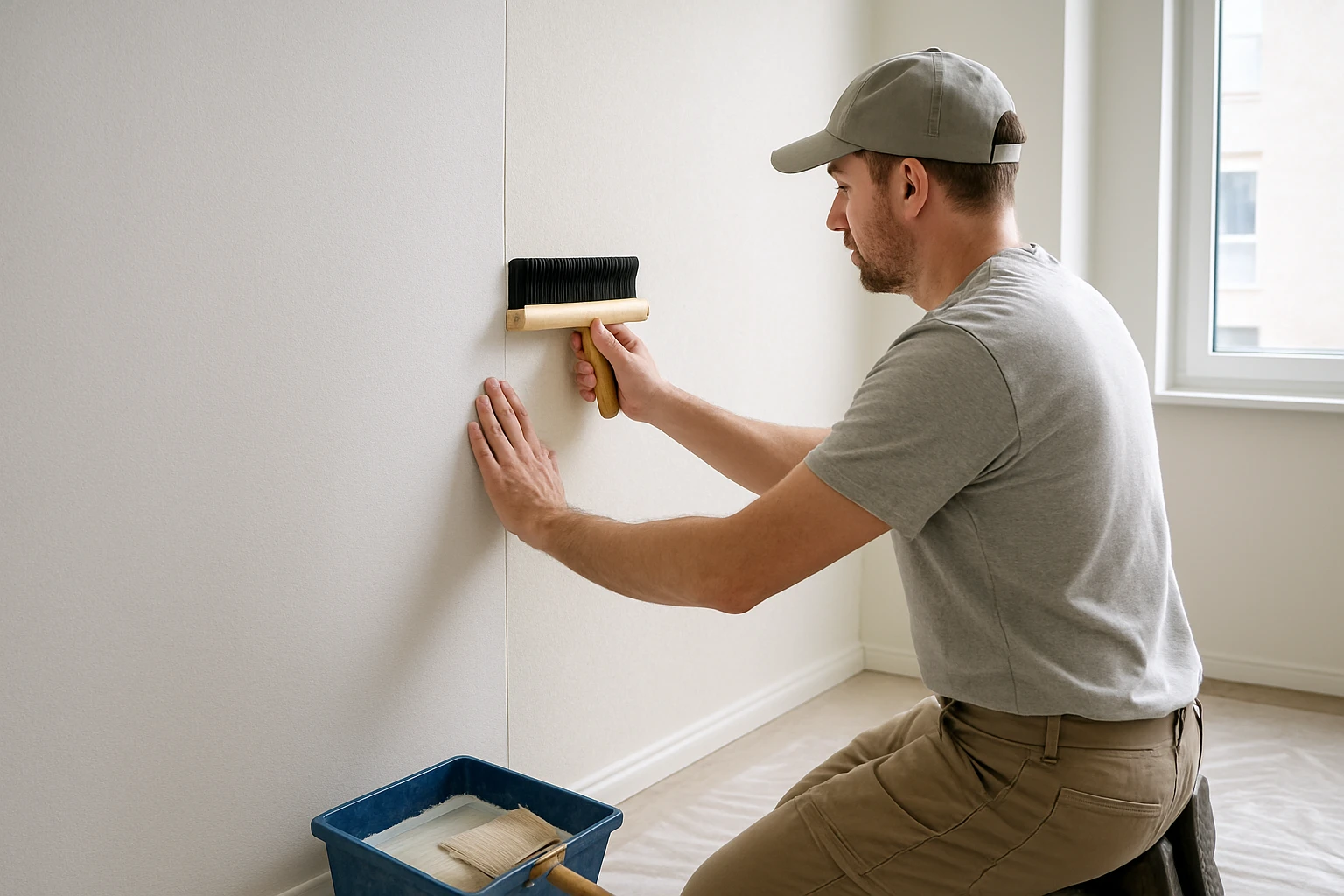
A common mistake is choosing thick wallpaper to hide a rough wall. Texture may disguise slight flaws, but bumps can show through and weak patches can pull away under the adhesive. Paint also highlights poor repairs, especially when sunlight falls across the wall.
Prepare the Wall Before Comparing Finish Quality
The basic preparation steps are similar for both finishes, though the final primer or sealer must suit the chosen product.
- Find and fix leaks and sources of damp, and remove loose surface material before decorating.
- Remove unstable paint or old wallpaper, then clean away dust and grease.
- Fill holes and cracks, sand the repairs, and remove sanding dust.
- Let plaster and repairs dry fully, following the material supplier’s guidance.
- Apply the specified primer or sealer, then follow its drying instructions before painting or papering.
For wallpaper, a suitable wallcovering primer helps control how quickly the wall absorbs moisture from the paste and can make later stripping easier. Bare plaster or drywall may absorb too much moisture, and unprimed drywall can be damaged during removal.
Peel-and-stick wallpaper has its own limits. Dust, rough texture, unsuitable paint, and paint that has not fully cured can weaken its grip, while removal may still pull paint away. Test a sample on a hidden area and follow both the paint and wallpaper instructions.
Compare the Full Redecorating Job
Paint is usually easier to change because a sound surface can often be cleaned, lightly prepared, and repainted. Strong colours or stains may need a suitable primer or extra coats rather than repeated coats of ordinary paint.
Wallpaper removal depends on the product and the surface underneath. Some strippable non-woven papers peel away in full sheets, while other coverings need soaking and careful scraping after the face layer is removed.
Do not keep wetting a wall without checking what is underneath. Too much water or careless steaming can soften plaster or damage drywall paper, which adds repair work before the next finish.
If old paint or a textured coating may contain a hazardous material, get suitable advice before sanding or scraping it. Keeping dust down matters more than finishing the job quickly.
Which Should You Choose for Your Home?
Choose paint when cost, frequent changes, or easy repairs matter most, and choose wallpaper when a lasting pattern or texture is worth the extra fitting and removal work. If you want both, use wallpaper on a well-chosen feature wall and paint the remaining surfaces.
Base your choice on how you will use the room:
- For a rental or a short stay, paint is often simpler, but check the tenancy agreement and the required handover condition before changing either finish. Removable wallpaper is not a promise of damage-free removal.
- For a dry bedroom you plan to keep, wallpaper behind the bed can provide a clear focal point without covering every wall.
- For a busy family hallway, start with the cleaning and repair needs, then compare paint with a stated washability rating against a suitable scrubbable wallpaper.
- For a wall with recurring damp, choose neither until the cause has been fixed and the surface is dry enough for the specified finish.
- For a room you redesign often, paint keeps later changes simpler, especially if the existing wall is sound.
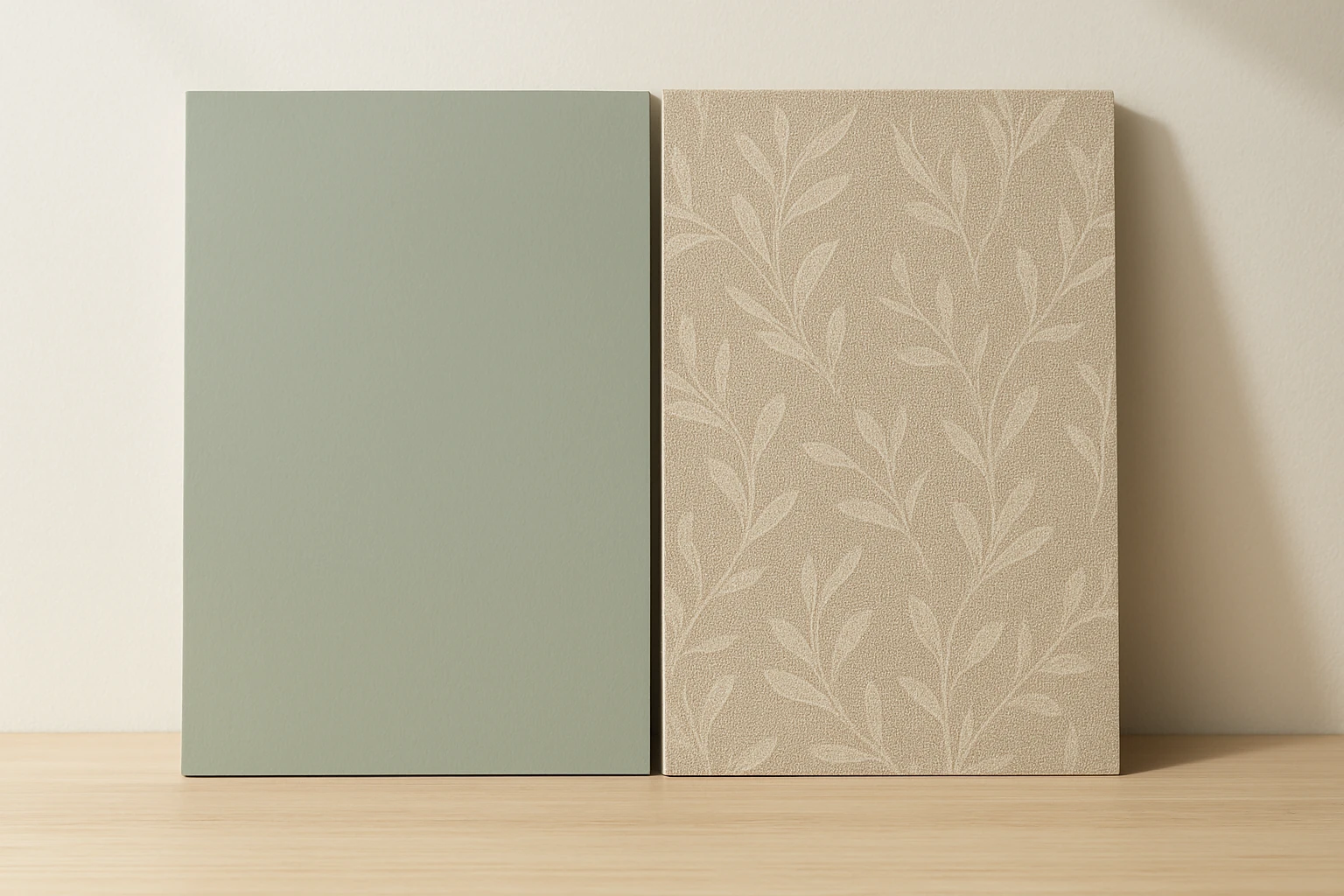
Before ordering, place a large wallpaper sample and a painted sample board in the room for several days. Check them in morning light, afternoon sun, and under the lights you use at night, then compare complete written quotes rather than the cost of one tin against one roll.
Frequently Asked Questions
Can I Paint Over Wallpaper Instead of Removing It?
You can sometimes paint over firmly bonded wallpaper, but removal usually gives a more reliable result. Loose seams, bubbles, and heavy textures may remain visible or worsen when the coating is applied. If removal would damage the wall, have the surface checked and use a primer and paint system suited to the existing covering.
Does Wallpaper Reduce Noise Between Rooms?
Ordinary decorative wallpaper does not meaningfully soundproof a wall. A soft or textured surface may slightly change how sound reflects within a room, but it will not stop much noise passing through the wall. For noise between rooms, check gaps, doors, and the wall construction rather than relying on a decorative finish.
Is Wallpaper Safer Than Paint for Indoor Air Quality?
Neither wallpaper nor paint is automatically better for indoor air quality because the full product system matters. Compare paint, primer, wallpaper, and adhesive information, including any credible low-emission certification. Low-VOC does not mean no emissions, and good ventilation during fitting and drying is still needed, especially in a room used by someone with sensitivities.
Can Wallpaper Go on a Textured Wall?
Most wallpaper needs a smooth surface, so a textured wall usually needs preparation first. Raised areas reduce contact with the adhesive and may show through the paper, while peel-and-stick products can lose their grip. Depending on the texture and wall material, a decorator may recommend sanding, a skim coat, or another suitable preparation method.
Should Wallpaper Be Installed Before or After Painting?
Wallpaper is usually installed after nearby ceilings, trim, and painted walls have been finished and allowed to dry as directed. This helps prevent paint splashes on the paper and avoids masking tape on a delicate surface. Leave enough time for the paint to cure where needed, and agree on the work order with the decorator.