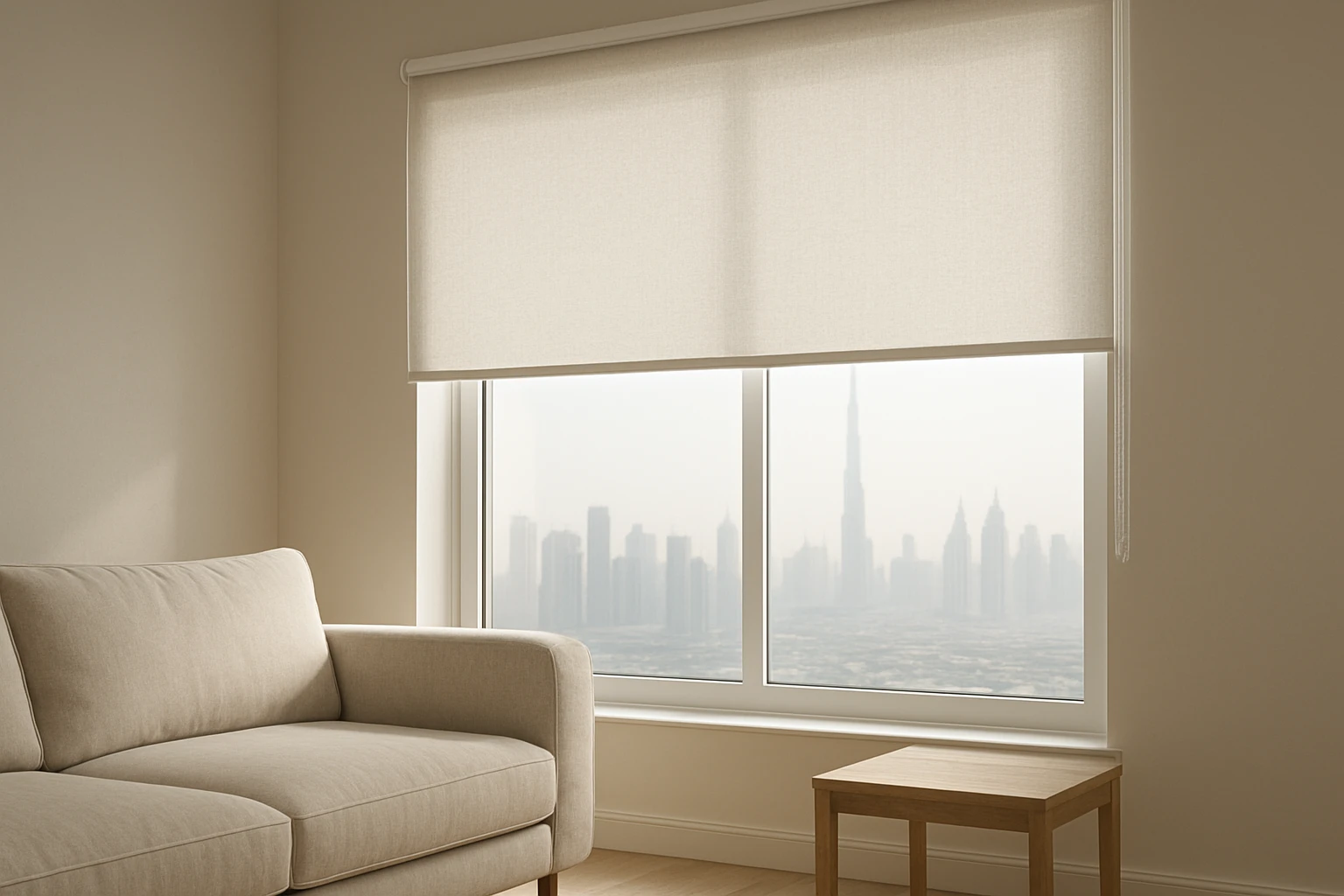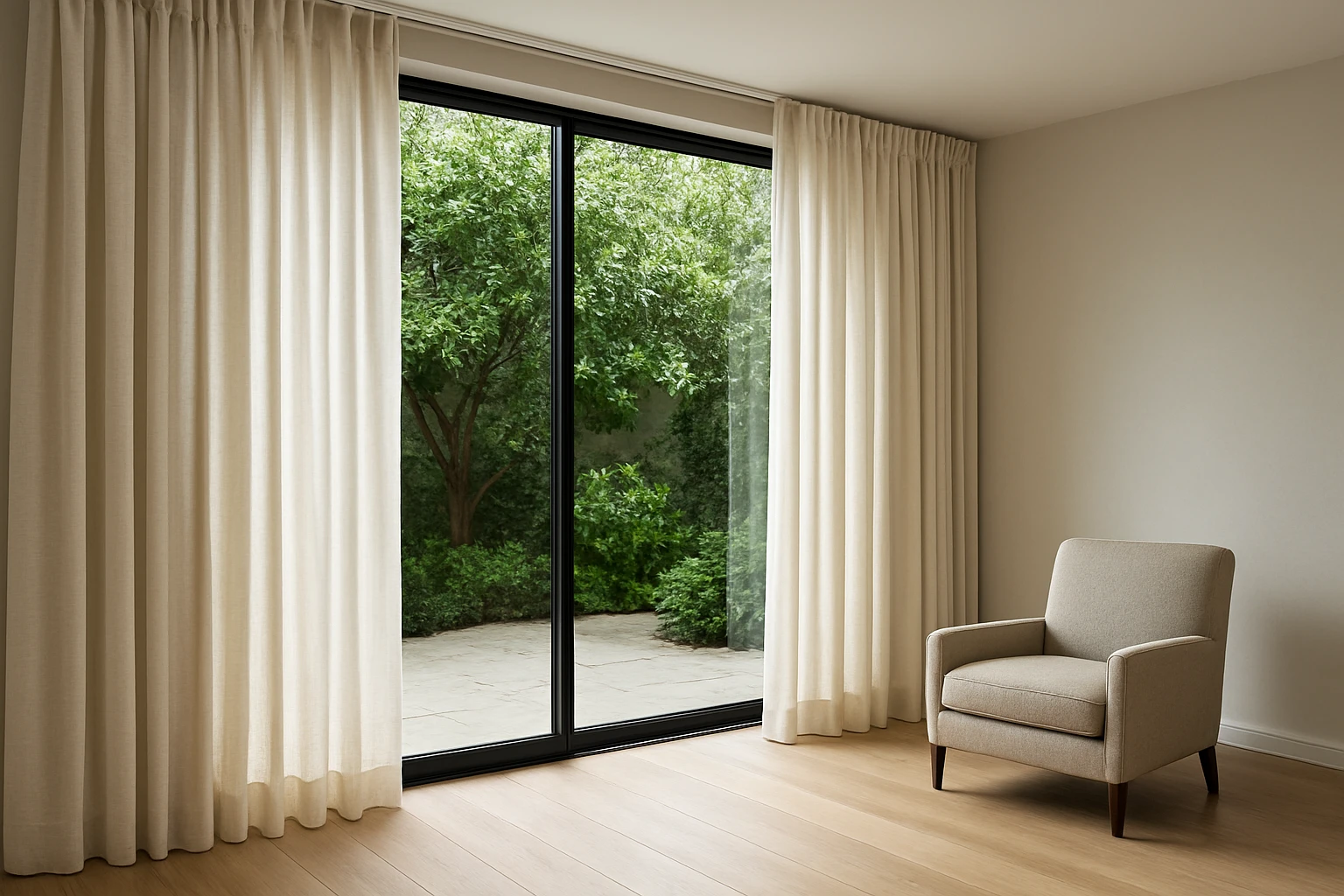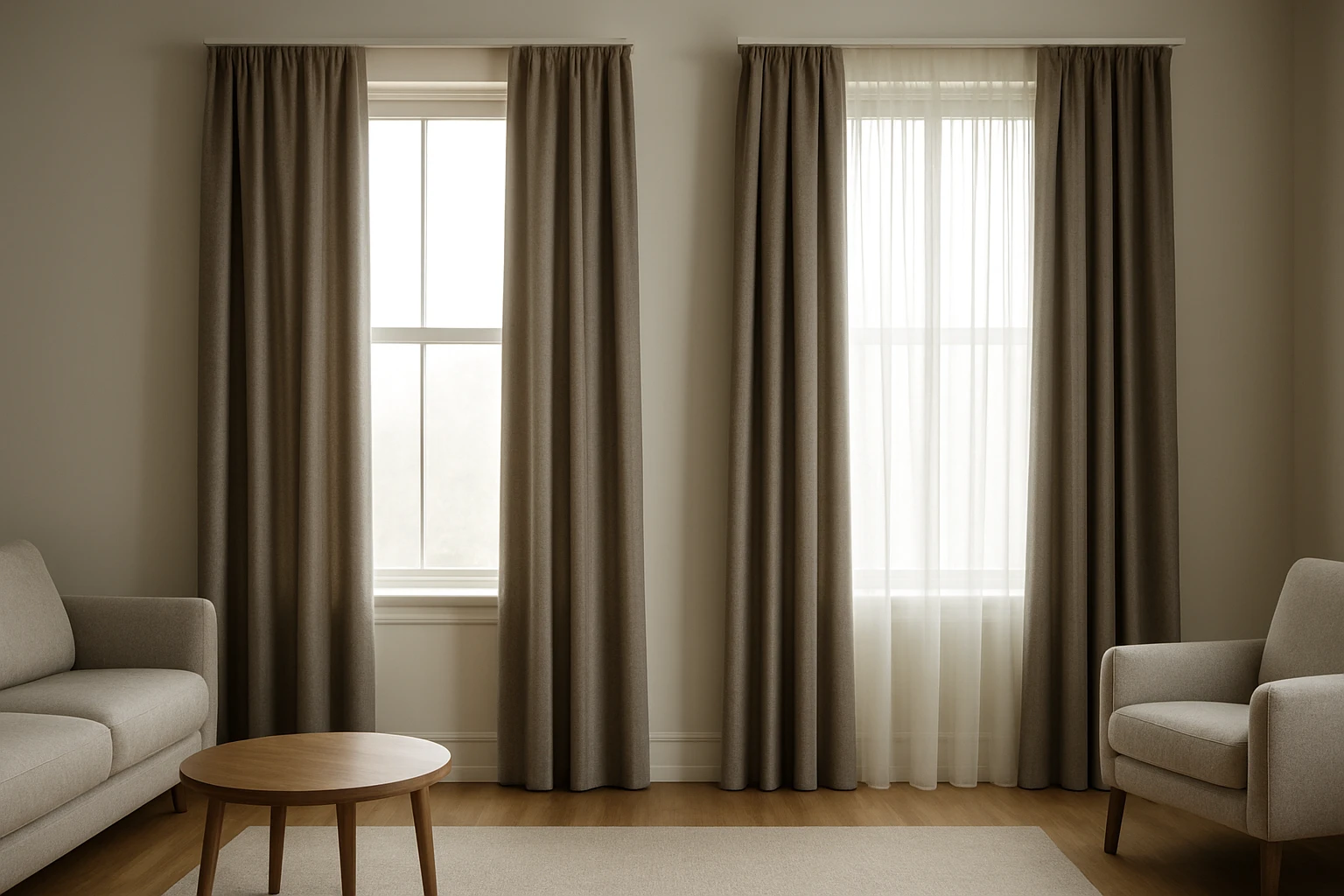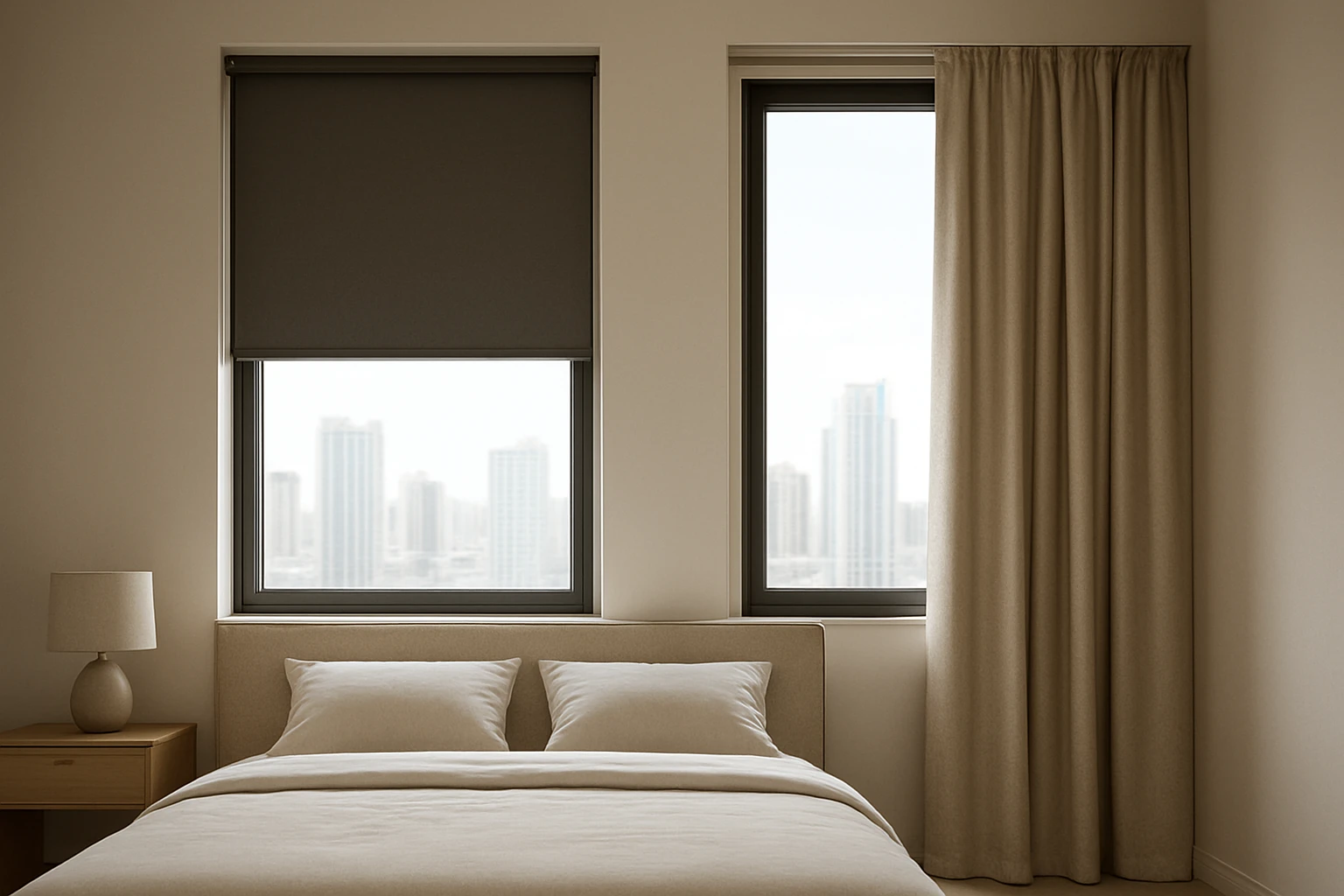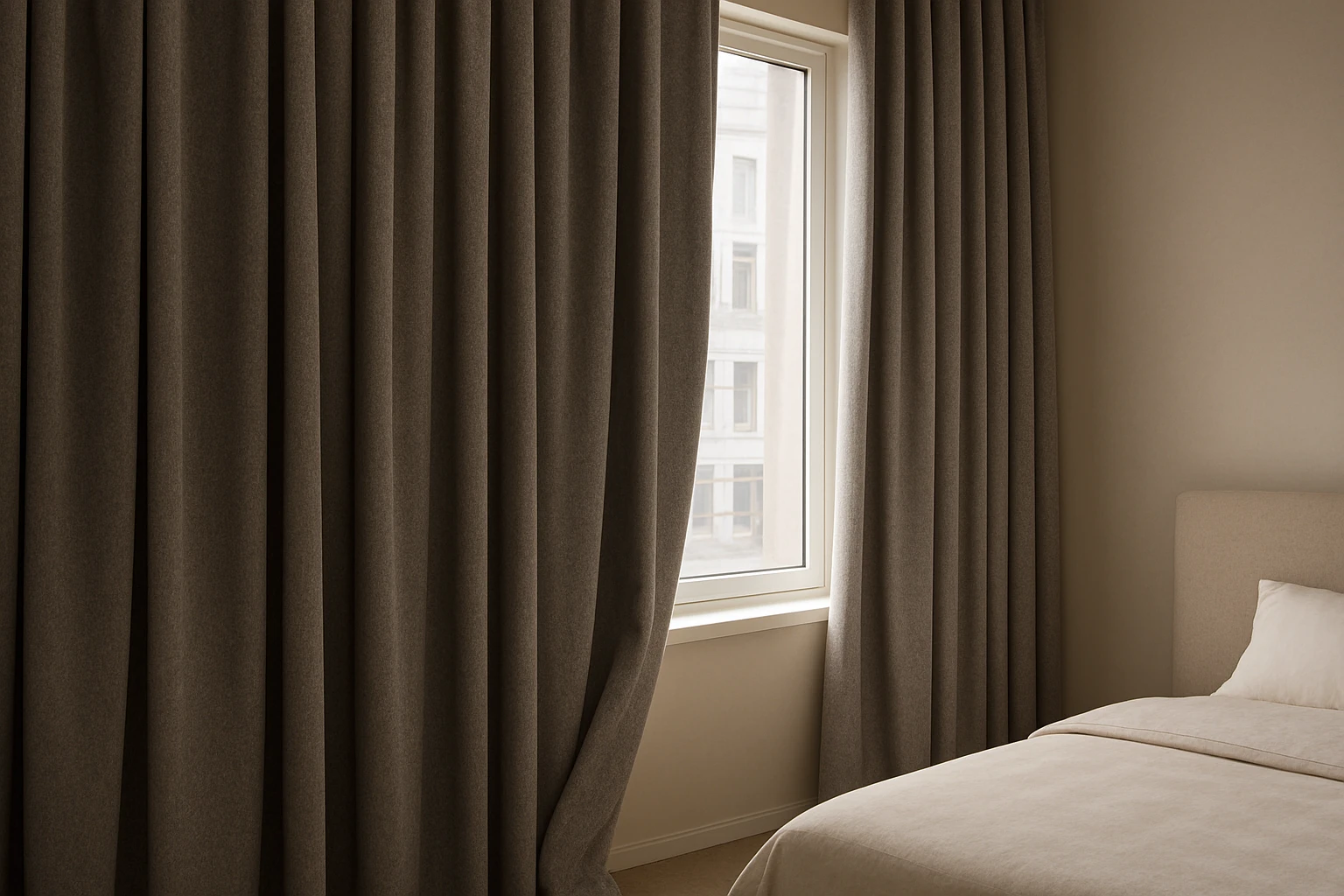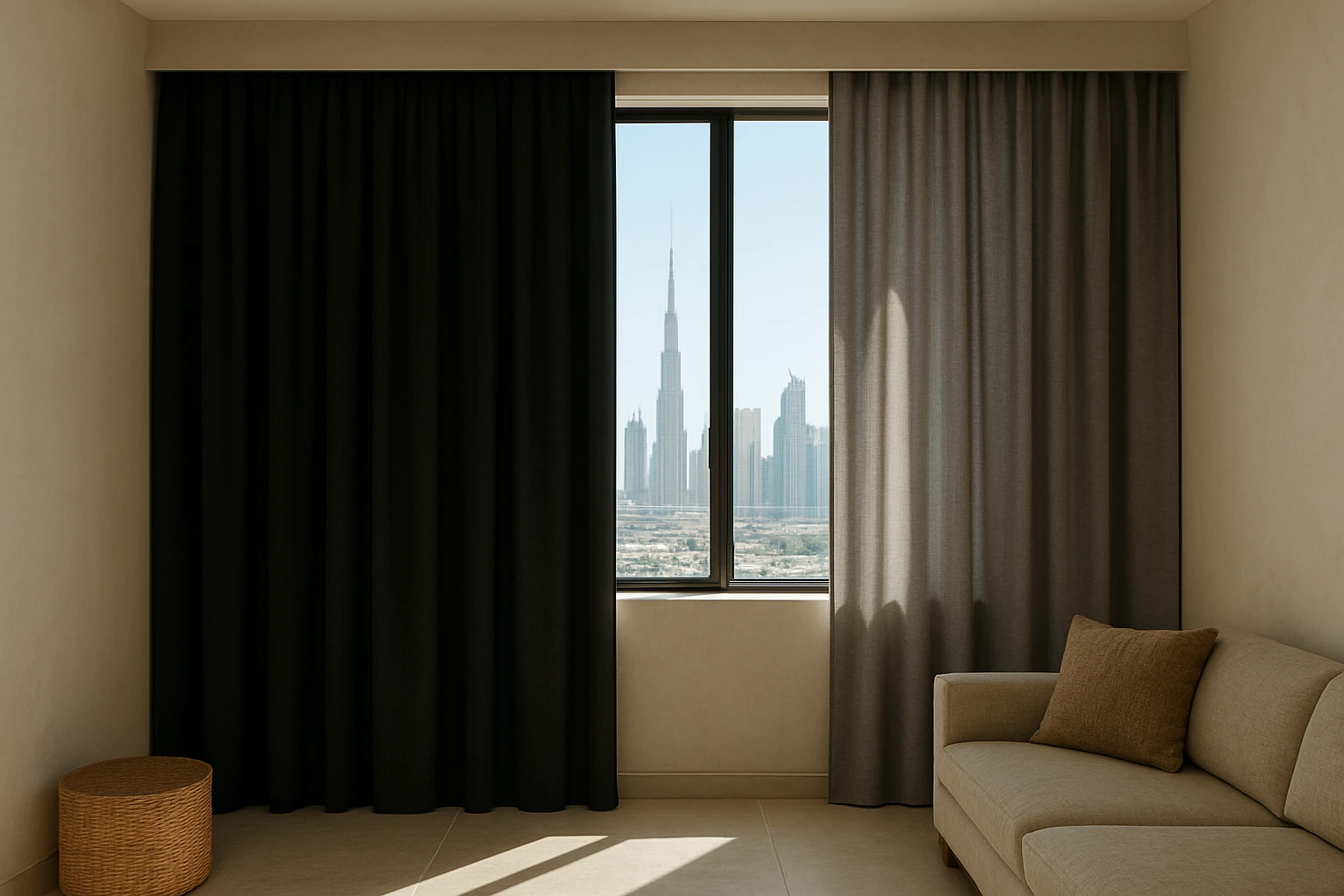
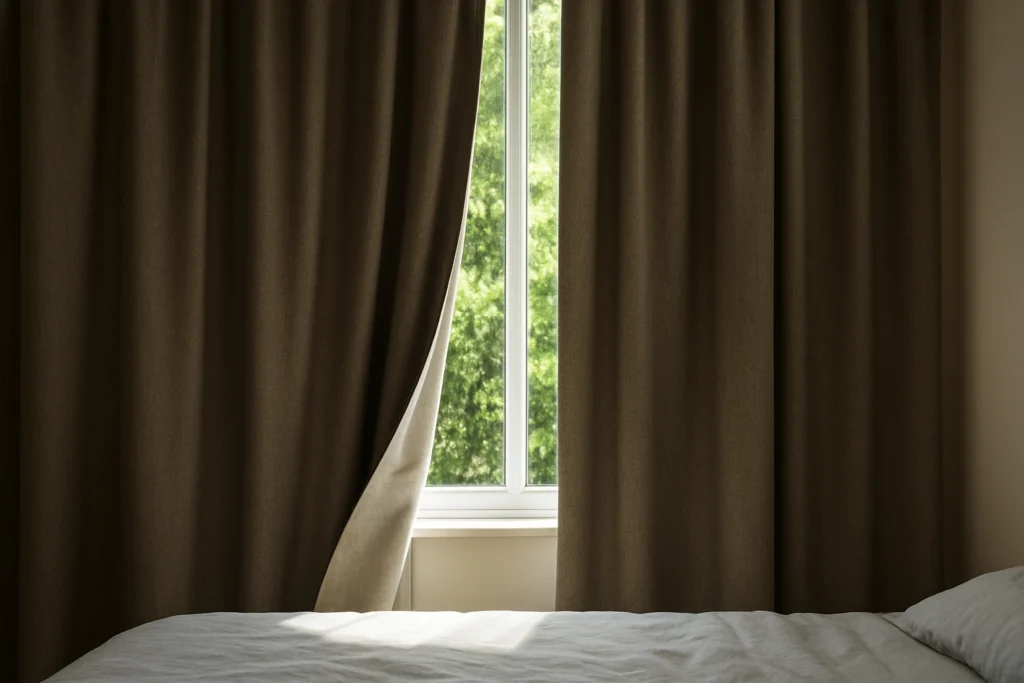
Yes, blackout curtains help keep heat out by blocking sunlight and slowing the flow of heat from a hot window into the room. They work best with a light-colored backing, a thermal lining, and a close fit around the window. Blackout describes light blocking, not a tested level of heat protection, so curtains can reduce heat gain but cannot replace air conditioning.
Key Statistics
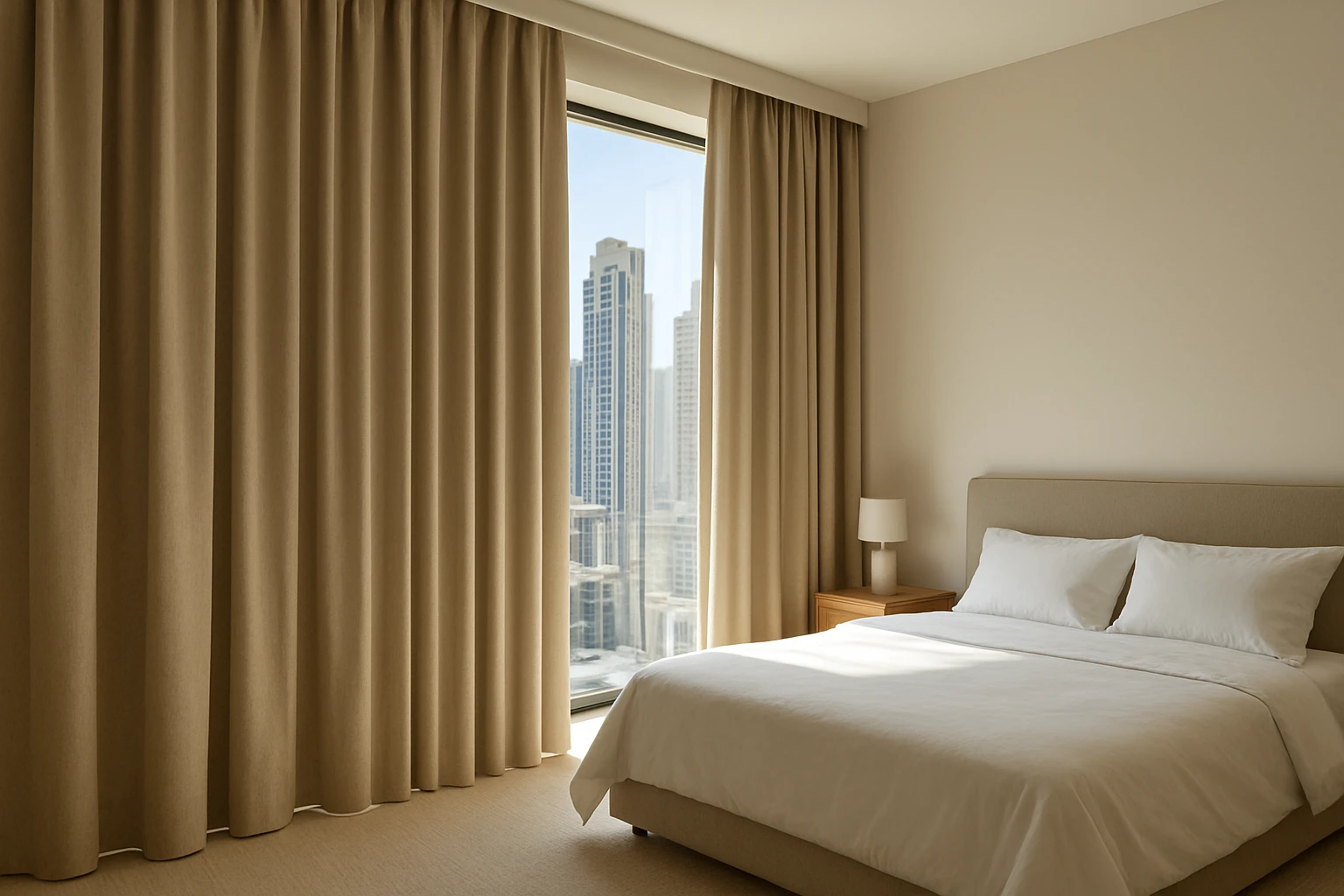
- The U.S. Department of Energy reports that medium-colored draperies with white plastic backings can reduce heat gains by 33%. This finding applies to a specific curtain design, not every blackout curtain, and does not mean a 33% reduction in your electricity bill.
How Do Blackout Curtains Reduce Heat?
Blackout curtains reduce heat mainly by stopping direct sunlight from warming floors, furniture, and other surfaces. Their lining and the air space behind the fabric also slow the flow of heat from the window into the room.
Sunlight passing through glass becomes heat when indoor surfaces absorb it. A curtain blocks that sunlight, but what happens next depends on its backing. A pale, reflective surface facing the window sends some light back toward the glass, while a dark surface absorbs more energy and becomes warm.
That is why a room can feel cooler even when the curtain itself feels hot. The curtain has kept direct sun off the bed or sofa, though some heat still reaches the room through the fabric and around its edges.
There are two separate product features to check:
- Blackout means the fabric blocks light. Gaps around the curtain can still let light into the room.
- Thermal means the curtain has a lining or design intended to slow heat transfer. The term alone does not prove a particular level of performance.
A thin blackout panel may darken a bedroom well without offering much insulation. When comparing blackout curtains, ask about the window-facing backing and the lining, not just how dark the fabric makes the room.
This guide from Design Furniture focuses on those practical differences, because the label on the package tells only part of the story.
Which Blackout Curtains Keep a Room Cooler?
For a hot, sunny room, choose blackout curtains with a pale window-facing backing, a thermal lining, and enough coverage to limit gaps. The decorative color facing the room matters less than the backing facing the glass.

| Feature | What to Look For | Why It Matters |
|---|---|---|
| Window-facing backing | White or another light shade | Reflects more incoming sunlight than a dark surface |
| Lining | A separate thermal lining or a clearly described insulating construction | Adds resistance to heat moving through the curtain |
| Fabric coverage | Enough width for folds and a generous center overlap | Reduces open paths around the fabric |
| Heading and track | A track or pole that allows the edges to sit close to the wall | Limits warm air moving around the curtain |
| Performance information | Test details for the complete product, where available | Gives better evidence than words such as “premium” or “energy saving” |
Black curtains are not automatically better at keeping heat out. A navy curtain with a white backing can be a sensible choice, while a pale decorative curtain without a suitable lining may offer less protection.
For bedroom curtains, check both heat control and light leaking around the edges. A well-lined curtain can still leave a bright strip beside the bed if its track is too short.
Also, do not treat dimout fabric as another name for blackout. Dimout fabric reduces light rather than fully blocking it through the fabric, and neither label alone confirms how well a curtain controls heat. The blackout vs dimout curtain comparison explains the light-control difference.
How Should You Fit Blackout Curtains to Reduce Heat?
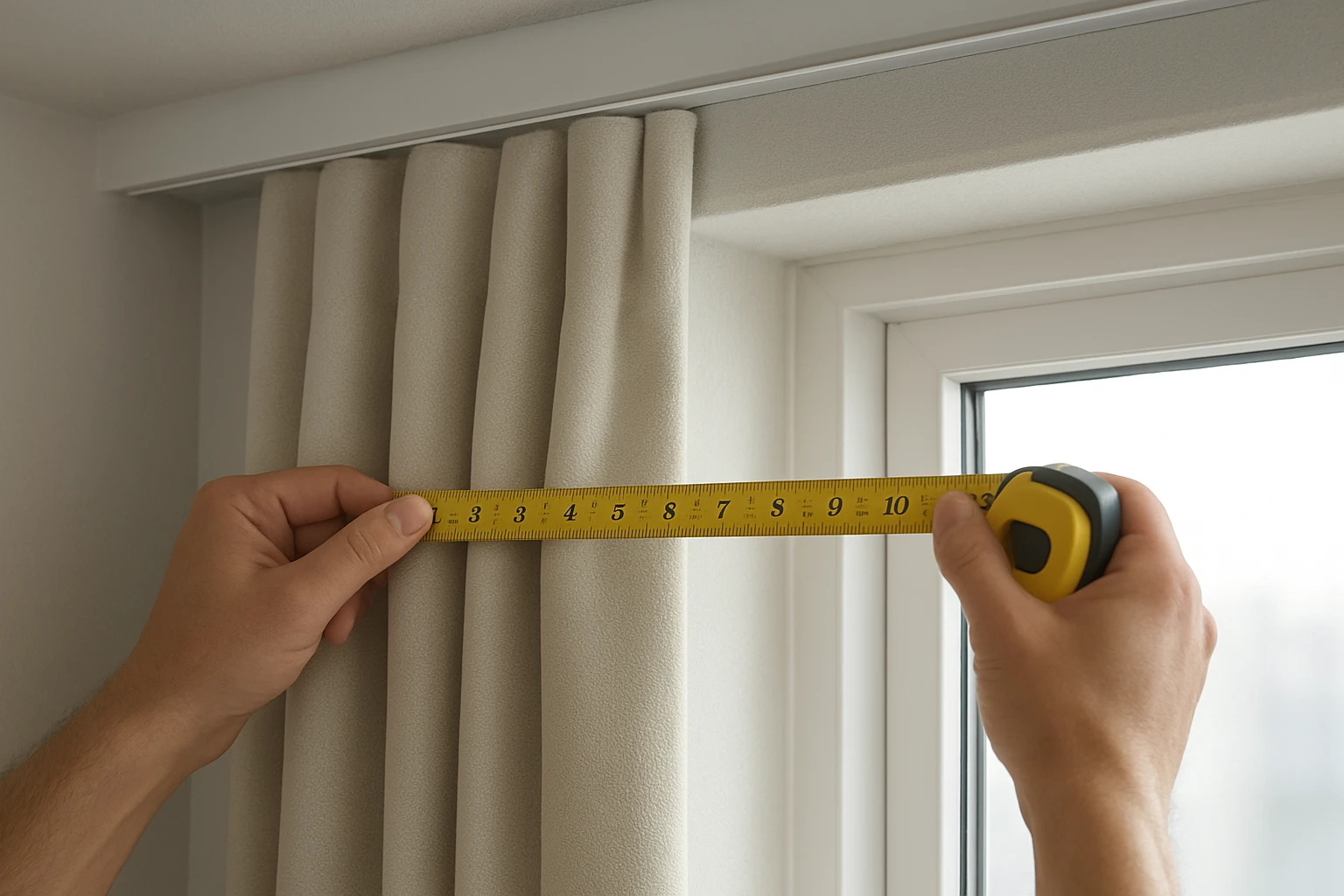
Fit blackout curtains beyond the window edges, bring them close to the wall, and leave a good overlap where the panels meet. A thick curtain with large gaps can allow warm air to move around it, making it less effective.
Follow these steps when fitting your curtains:
- Measure the whole window opening. Include the frame and any handles or deep sills that could push the fabric outward.
- Extend coverage beyond the frame. Where space allows, roughly 15 to 20 cm beyond each side is a useful starting point, though the right allowance depends on the window and the space the curtains take up when open.
- Allow enough fabric width. For example, a 2-meter track often needs about 4 meters of flat fabric for a gathered look. The exact amount depends on the heading style and fabric weight.
- Reduce the top and side gaps. A suitable ceiling track, side returns, or a pelmet can help limit air movement around the curtain. Side returns bring the curtain edges back toward the wall. A pelmet is a cover above the curtain that hides the track and closes part of the top gap.
- Check the center and lower edge. The panels should overlap when closed, and the length should suit the floor or sill without blocking vents.
Measure from the track, not just the glass, when working out fabric width. Ordering twice the glass width can leave too little fabric for folds once the track extends beyond the frame.
Eyelet curtains can provide good coverage, but the rings and pole usually leave openings along the top. Where strong heat and light control matter most, compare that setup with a track and pelmet rather than choosing by appearance alone.
For tall windows, heavy linings, or tricky corners, curtain installation in Dubai can help you work out the mounting and overlap details before the fabric is made.
When Should You Close Curtains in Dubai’s Heat?
Close blackout curtains before direct sunlight reaches the window, rather than waiting until the room feels hot. In Dubai, east-facing rooms need attention in the morning, while west-facing rooms often face strong afternoon sun.
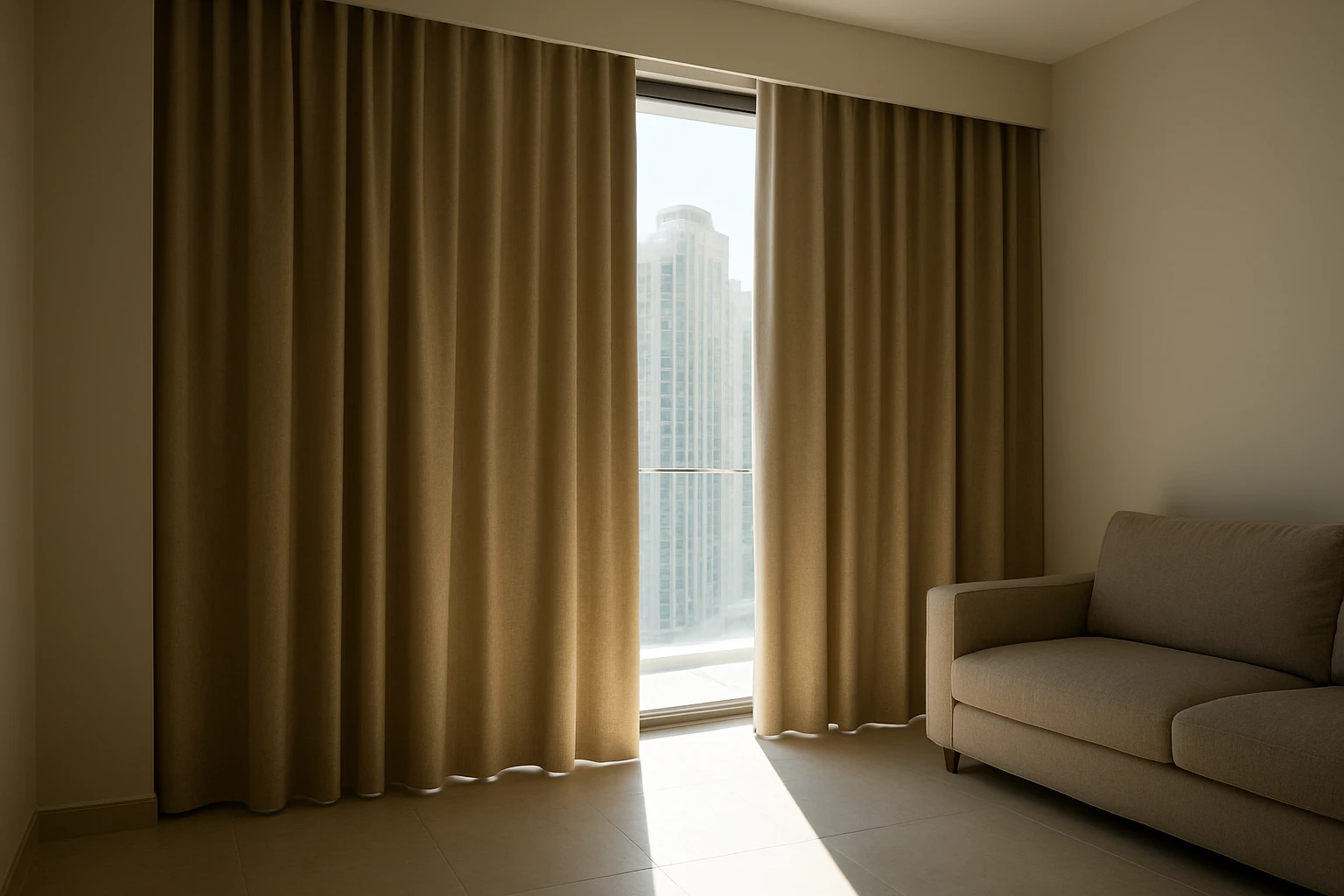
Once sunlight has heated the floor and furniture, closing the curtain cannot remove that stored heat. It can stop more sunlight from entering, but the air conditioner still has to cool the room and its warm surfaces.
A useful routine is to close the curtain just before the sun reaches that side of the building. On windows that stay shaded, you may prefer to keep the blackout layer open for daylight. Do not assume every window needs the same schedule.
Motorized curtains can make this easier when connected to a compatible timer or control system. Schedule them around when the sun reaches the glass, and adjust the timing as the seasons change.
A double track also lets you use sheer curtains for softer daylight when there is no direct sun. Sheers are useful for glare control, but they are not a substitute for the lined blackout layer during strong sun. Our comparison of double-layer curtains vs single-layer curtains explains how the two layers give you more control.
If the room stays hot after the sunny window is covered, check for other heat sources. A hot roof, air leaks, cooking, or weak cooling can matter more than the curtain, especially in a top-floor room.
Are Blackout Curtains Better Than Blinds for Heat Control?
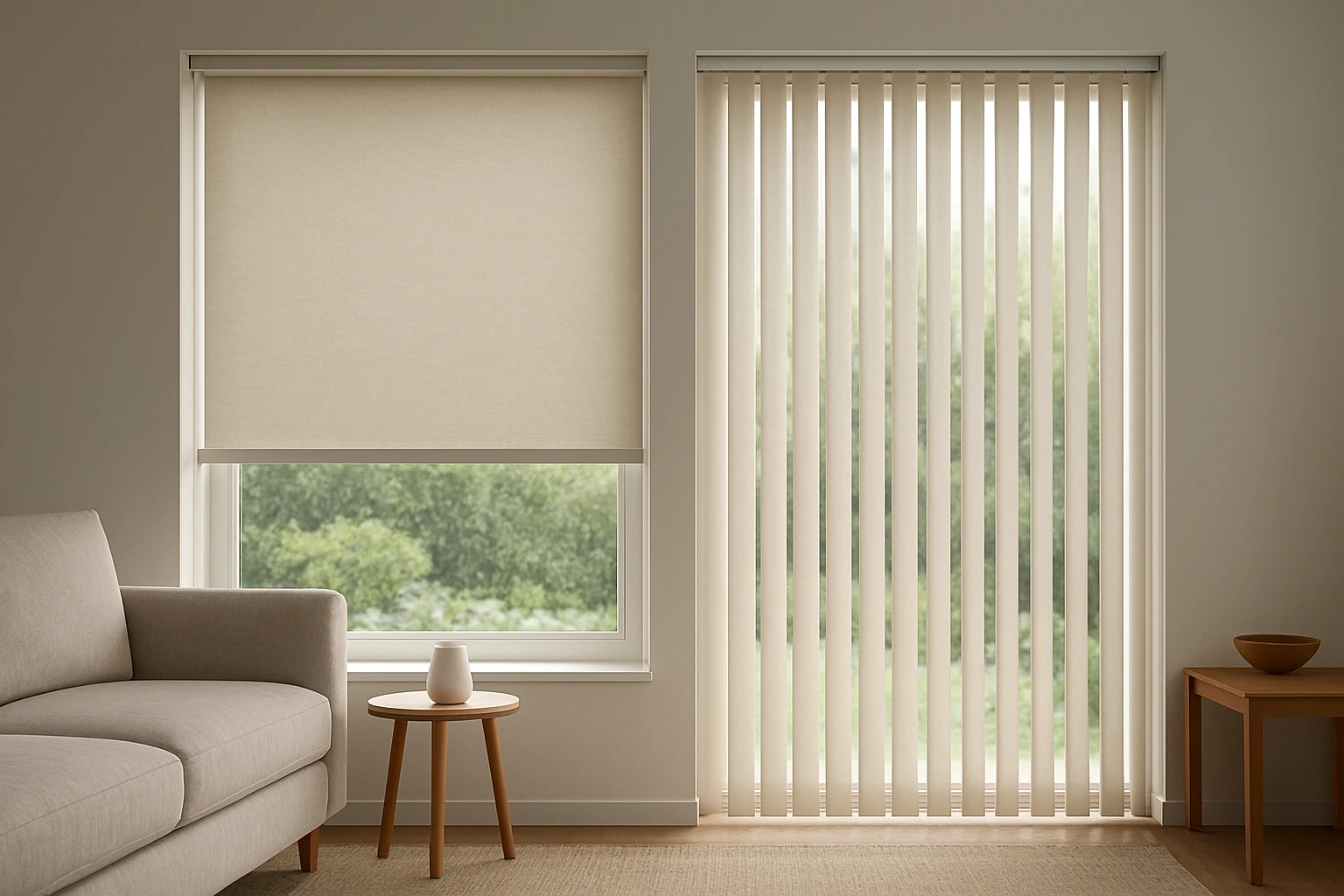
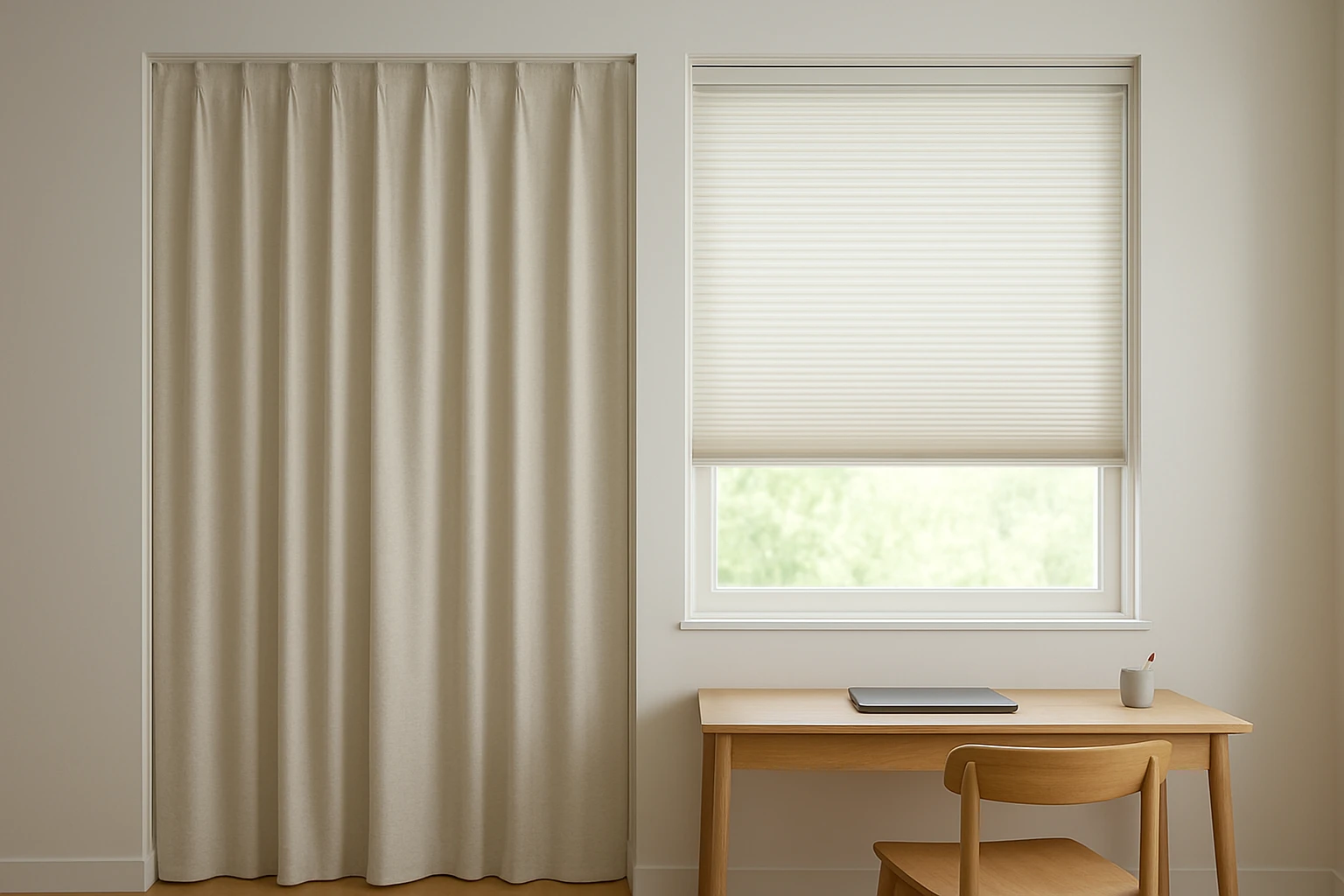
Blackout curtains are not always better than blinds for heat control, because design and fit matter more than the product name. A close-fitting cellular shade can provide useful insulation, while exterior shading can stop sunlight before it reaches the glass.
| Window Covering | Main Benefit in Hot Weather | Main Limitation |
|---|---|---|
| Lined blackout curtains | Block direct sun and add an insulating layer | Top, side, and center gaps reduce performance |
| Blackout roller blinds | Block light through the fabric with a compact fit | Side gaps remain unless the system includes suitable channels |
| Cellular shades | Honeycomb-shaped pockets trap air and slow heat transfer | Performance depends on the product and fit |
| Sheer curtains | Soften glare while keeping some daylight | Provide limited protection from strong direct sun |
| Exterior shutters, screens, or awnings | Shade the glass before sunlight enters | May need building approval and suitable wind-resistant fixing |
For a small room with little space beside the window, blackout blinds may fit better than full curtains. For a bedroom where comfort and darkness both matter, a close-fitting blind behind lined curtains can help cover gaps left by either layer alone, though it costs more and takes up more space.
The blackout blinds vs curtains comparison covers how the two options compare for darkness. Consider heat control separately, because a dark room is not proof of a well-insulated window.
Automation changes when a covering closes, not its insulating value. If you prefer blinds, motorized blinds can provide scheduled shade when paired with compatible controls.
For most hot, sun-facing rooms, start with a pale-backed, thermally lined curtain and careful fitting. If the room is still very hot, check the glass, exterior shade, and cooling system before buying a thicker curtain. Never attach reflective material directly to glass without checking the window manufacturer’s guidance, because some combinations can cause uneven heating and glass damage.
Frequently Asked Questions
How Many Degrees Cooler Will Blackout Curtains Make My Room?
There is no reliable temperature drop that applies to every room. The result depends on the window size, glass, sun exposure, curtain fit, outdoor heat, and air conditioning. Treat a seller’s promised drop with care unless the test conditions are clear and close to those in your home.
Do Blackout Curtains Keep Heat in During Winter?
Lined blackout curtains can help keep heat indoors during winter by slowing heat loss through the window area. Close them after sunset, but open them when useful winter sun can warm the room. Keep the fabric clear of heaters and follow the heater manufacturer’s required safety distances.
Can Washing Blackout Curtains Damage Their Heat-blocking Lining?
Washing can damage some blackout coatings or linings if the care instructions are not followed. Some curtains allow gentle machine washing, while others need professional cleaning. Check the sewn-in label before using heat, bleach, or a tumble dryer, because cracked or peeling backing can also weaken light blocking.
Can Blackout Curtains Cause Condensation or Mold Around Windows?
Closely fitted blackout curtains can contribute to condensation when moist room air reaches cold glass and has little space to circulate. The curtain is not the source of the moisture, but it can hide damp patches. Check behind the fabric, dry wet surfaces, and address high humidity or window leaks.
Can Renters Reduce Window Heat Without Drilling Curtain Brackets?
Renters can use suitable no-drill blinds or tension-mounted coverings, provided the fittings are rated for the product’s weight and window size. Heavy thermal curtains may exceed a tension rod’s safe load, especially across a wide opening. Get permission before adding permanent brackets, exterior shades, or window film.