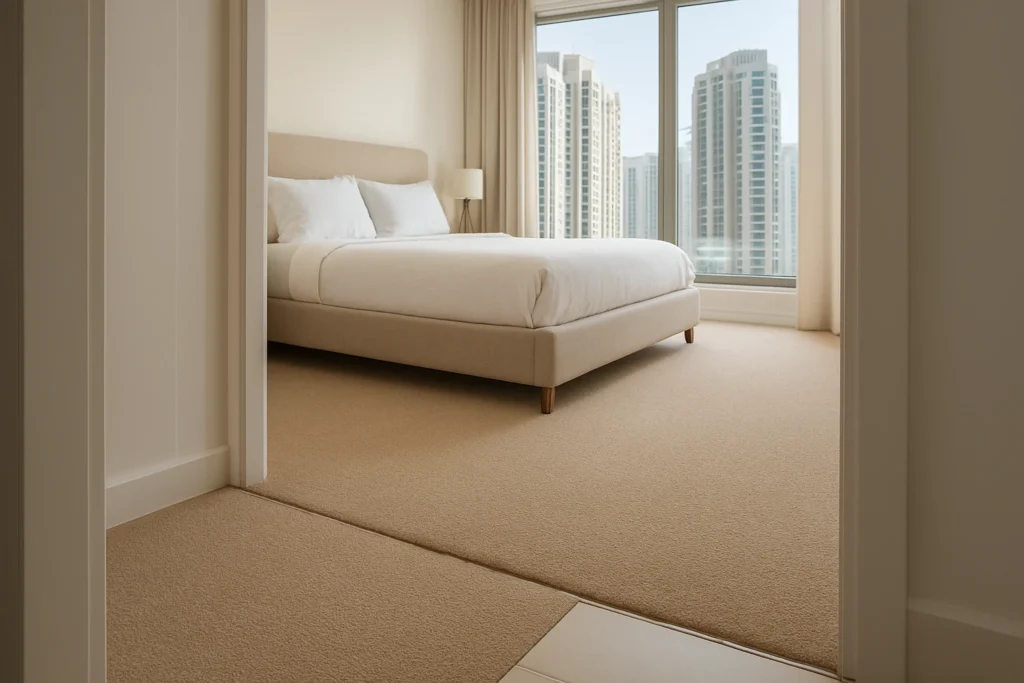
Carpet installation cost in Dubai is roughly AED 45 to AED 150 per square metre for many budget and mid-range synthetic carpets, including basic fitting and underlay where needed. Labour alone is often around AED 10 to AED 25 per square metre, while premium materials, stairs, floor repairs, removal, and VAT can raise the total. These are planning estimates, not fixed prices, so ask for a quote based on measured quantities that lists the carpet, fitting, and extra work separately.
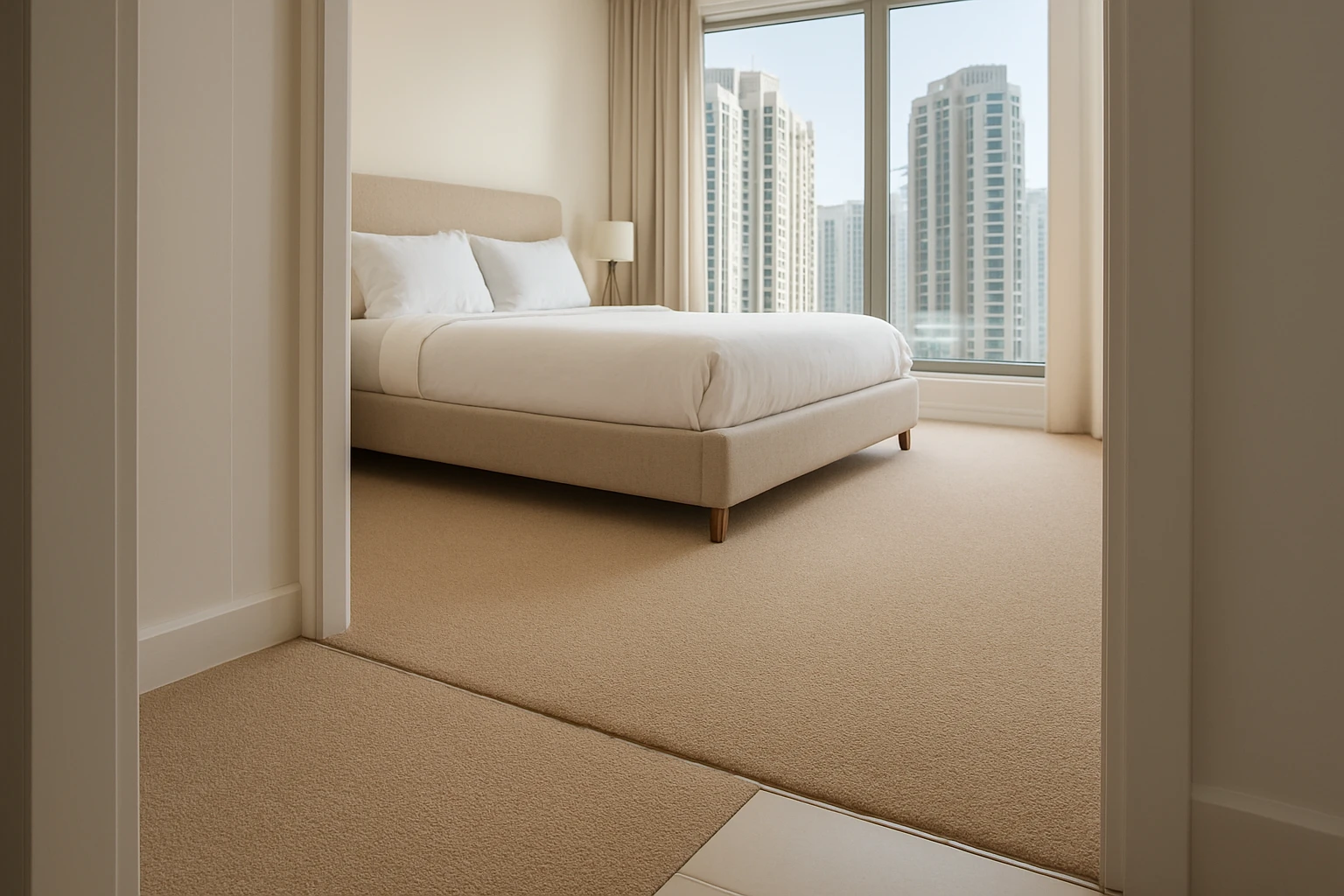
The main pricing trap is comparing a carpet supply price with a fully fitted price. A lower price per square metre may leave out underlay, cutting waste, or the work needed to prepare the floor.
This guide from Design Furniture explains how to build a useful budget and compare quotes for the same scope of work. All prices below are rough estimates in UAE dirhams and can vary by supplier, product, site condition, and order size.
How Much Does Carpet Installation Cost in Dubai?
For a straightforward room, allow roughly AED 45 to AED 150 per square metre for budget to mid-range carpet with basic fitting and suitable underlay. Premium carpet can cost well above this, and a small room may have a minimum fitting charge rather than a fee based only on its area.
The table separates supply from labour so you can see what an advertised price may leave out. These are broad budget ranges, not a current price list or a claim that every supplier charges within them.
| Carpet Option | Approximate Carpet Supply Cost | Approximate Basic Fitting Cost | Supply and Fitting Subtotal |
|---|---|---|---|
| Budget synthetic roll carpet | AED 25 to AED 50 per sq m | AED 10 to AED 20 per sq m | AED 35 to AED 70 per sq m |
| Mid-range synthetic roll carpet | AED 50 to AED 110 per sq m | AED 10 to AED 25 per sq m | AED 60 to AED 135 per sq m |
| Premium wool or specialist roll carpet | AED 110 to AED 250 or more per sq m | AED 15 to AED 30 or more per sq m | AED 125 to AED 280 or more per sq m |
| Standard commercial carpet tiles | AED 35 to AED 100 per sq m | AED 10 to AED 25 per sq m | AED 45 to AED 125 per sq m |
These subtotals exclude separate underlay, extra material needed because of roll width or pattern matching, removal, repairs, trims, furniture moving, and VAT. Suitable residential underlay may add roughly AED 10 to AED 25 per square metre, but it is not needed under every carpet system.
A quoted rate also needs a clear unit. One linear metre of a four-metre-wide carpet roll covers four square metres, so a price per linear metre cannot be compared directly with a price per square metre.
When requesting carpet installation in Dubai, ask whether fitting is charged on the room’s floor area or on the amount of carpet purchased. Those figures can differ, especially in narrow rooms and awkward layouts.
Which Carpet Gives You the Best Value?
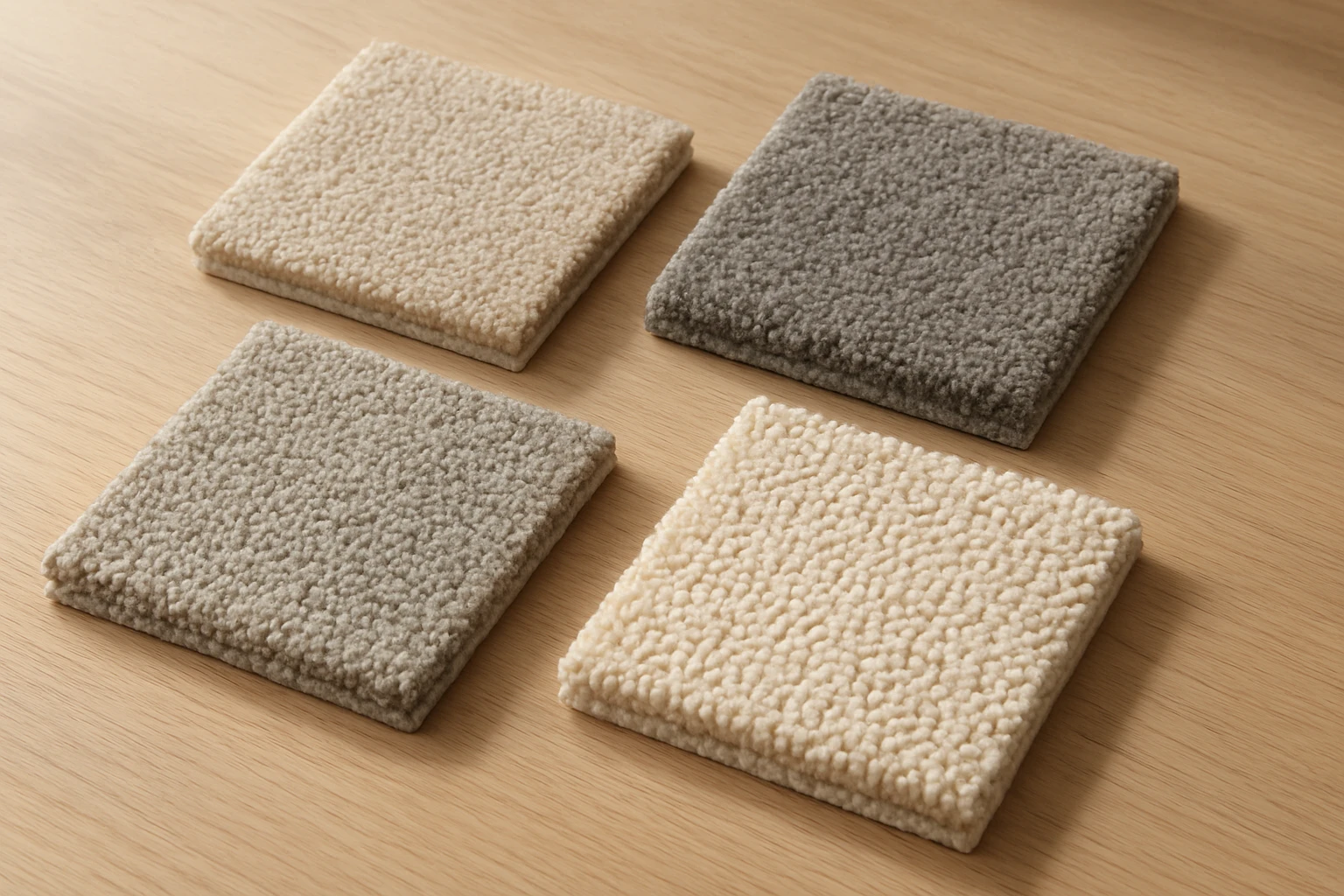
The best-value carpet suits the room’s foot traffic and fitting method, rather than simply having the lowest supply price. A soft bedroom carpet, an office carpet tile, and a stair runner face different wear, so they should not be treated as equal products.
| Material or Format | Where It Often Makes Sense | What to Check Before Paying More |
|---|---|---|
| Polypropylene carpet | Lower-cost rooms with modest traffic | The maker’s use rating and how well the pile resists flattening |
| Polyester carpet | Bedrooms where softness matters | Suitability for busy walkways and the care needed for oily marks |
| Nylon carpet | Busy living areas and regular foot traffic | Pile construction, stain treatment, and the stated warranty terms |
| Wool carpet | Rooms where feel and natural fibre matter | Care needs, cleaning limits, and suitability for the room |
| Carpet tiles | Offices and spaces needing local repairs | Backing type, adhesive system, spare tiles, and chair-use suitability |
| Sisal carpet | Dry rooms where a natural woven look is wanted | Moisture limits, stain risk, and the required fitting method |
For wall-to-wall carpet, compare the backing and pile construction as well as the fibre. Pile means the fibres you walk on, and a taller pile does not always resist wear better. A soft, open pile can flatten sooner in a busy walkway than a shorter, denser product designed for heavy use.
A living room carpet should suit the route between doors, sofas, and the balcony. In a Dubai home where sand comes in through balcony doors, regular vacuuming matters because grit works down into the pile and wears the fibres as people walk over it.
For an office carpet, check that it is suitable for castor chairs rather than choosing on colour alone. Carpet tiles can make later repairs easier because you can replace a damaged tile without lifting the whole floor, provided matching spares are available.
Natural sisal carpet needs a different approach to cost. Moisture and stains can be harder to manage, so a low initial quote does not make it a sensible choice for a room with frequent spills.
How Much Carpet Do You Actually Need to Buy?
The carpet you buy may cover more area than the room itself because rolls come in set widths and patterns need to line up. Ask for a cutting plan before accepting a fixed waste percentage, especially for narrow rooms, patterned carpet, and connected spaces.

Consider a room measuring 3.2 metres by 4.1 metres. Its floor area is 13.12 square metres, but covering it with one piece from a four-metre-wide roll may require 4 metres by 4.1 metres of material, or 16.4 square metres. That is 25 percent more material than the floor area, even before allowing for pattern matching.
This is a worked example, not a standard waste rate. Another roll width or a different room layout could produce less waste, while an offcut might cover a cupboard or part of another room.
Roll Carpet and Carpet Tiles Need Different Calculations
Roll carpet needs a layout that accounts for width, joins, and pile direction, while carpet tiles need an allowance for edge cuts and the chosen pattern. A simple percentage can help with an early budget, but the final order should follow the measured layout.
For a plain rectangular room, an initial allowance of roughly 5 to 10 percent may be useful when planning carpet tile quantities. Do not apply that allowance to roll carpet without checking the layout, as the example above shows why it can fall short.
Before approving the order, ask the fitter to confirm:
- The room area and the separate quantity of carpet being purchased.
- Where joins will sit, especially near doors and main walkways.
- The direction of the pile across adjoining rooms.
- Whether offcuts can be reused and which pieces will be left with you.
- Whether a spare pack of tiles or a useful repair offcut is included.
Pile direction matters because the same carpet can look lighter or darker when viewed from opposite sides. Turning a spare piece to make it fit may save material but leave a visible change in shade.
Which Extra Charges Can Change the Final Price?
The main extras are old carpet removal, floor preparation, underlay, edge finishing, furniture moving, and access arrangements. These costs depend on what the fitter finds on site, so a useful quote lists them rather than hiding them inside a single rate.

| Possible Extra | When It Applies | What the Quote Should State |
|---|---|---|
| Old carpet removal and disposal | Existing flooring must be lifted | Whether underlay, tack strips, and waste transport are included |
| Adhesive removal | Old glue affects the new installation | The removal method and the floor finish required afterward |
| Floor repair or levelling | The base has cracks, loose areas, or uneven spots | The repair area, material, and separate charge |
| Underlay | The selected carpet system needs a cushion layer | Brand or specification, thickness, and price |
| Doorway trims and edge work | Carpet meets another floor or an exposed edge | The number, type, and finish of each trim |
| Door adjustment | The new floor build-up reduces clearance | Who will adjust the door and at what cost |
| Furniture moving | Rooms cannot be cleared before fitting | Which items are included and which are excluded |
| Building access or work restrictions | Delivery routes or working hours are limited | Any transport, permit, parking, or out-of-hours charge |
Floor Preparation and Underlay
The base beneath the carpet must be sound, clean, and suitable for the chosen fitting method. Carpet can soften the feel of a floor, but it does not repair loose tiles, sharp ridges, or damp patches underneath.
Carpet can sometimes be fitted over existing tiles if they are firmly bonded, dry, clean, and suitable for the fitting method. Deep grout lines, loose tiles, or limits on which adhesives can be used may change the plan, so avoid accepting a firm price based only on a photograph.
If an old glued carpet is being removed, the cost depends on the adhesive and the surface beneath it. This guide to removing carpet glue from tiles explains why aggressive scraping or an unsuitable chemical can damage a floor you intend to keep.
Underlay should match the carpet maker’s requirements. A very thick, soft underlay is not always better, particularly on stairs or beneath carpet that needs firm support. Many carpet tiles are designed to sit directly on a prepared floor, so adding household underlay can cause movement or affect the warranty.
Stairs, Doorways, and Building Access
Stairs should be quoted separately because each tread, riser, and edge needs careful measuring and fitting. A stair carpet quote should show the number of steps, any landings, the carpet layout, and whether old fixings must be removed.
Ask whether patterned carpet needs extra material to keep the design centred. Saving a small amount by changing the pattern direction can leave an obvious mismatch on the most visible part of the staircase. If removal is part of the job, this guide to removing stair carpet explains the fixings and surfaces involved.
In an apartment tower, confirm service lift bookings, approved working hours, and delivery access with building management before setting an installation date. Do not assume these arrangements are included in the fitter’s price.
If carpet is only one part of a wider renovation, agree on the order of all flooring installation work before it starts. Dusty cutting, wet repairs, and painting should be completed before the finished carpet goes down.
What Would a 20-Square-Metre Room Cost?
A 20-square-metre room could cost about AED 2,247 under the sample assumptions below, including VAT. This is a worked budget, not a supplier quote, and it shows how the separate charges add up to a final total.
The example uses a mid-range synthetic carpet, an assumed purchase quantity of 22 square metres, and fitting charged on the actual 20-square-metre floor area. The extra material must still be checked against the roll layout rather than assumed to suit every room.
| Item | Example Calculation | Example Cost |
|---|---|---|
| Carpet supply | 22 sq m at AED 60 | AED 1,320 |
| Underlay | 20 sq m at AED 15 | AED 300 |
| Basic fitting | 20 sq m at AED 12 | AED 240 |
| Old carpet removal and disposal | Assumed fixed allowance | AED 160 |
| Doorway trims | Assumed fixed allowance | AED 120 |
| Subtotal | Before VAT | AED 2,140 |
| VAT | 5 percent, where applicable | AED 107 |
| Example Total | Including VAT | AED 2,247 |
The UAE Federal Tax Authority sets the standard VAT rate at 5 percent. Check whether a supplier’s stated price already includes VAT, and do not add it a second time when comparing totals.
In this example, the carpet alone costs AED 1,320, but the completed job is AED 927 more after the listed extras and VAT. That gap explains why multiplying room area by the carpet’s shelf price often gives an incomplete budget.
If you are keeping a tiled floor beneath the carpet, also consider the cost of restoring it later. A removable system may matter more in a rented home than a small saving on fitting today.
How to Compare Quotes Without Paying for the Wrong Things
Compare carpet quotes only after the product, measured quantity, fitting method, and exclusions are clear. The lowest total is not the best value if it leaves out floor repairs or uses a different grade of carpet.
Give each supplier the same short list of requirements so you can compare the quotes fairly.
- Give the room dimensions, location, and whether the property is occupied.
- Name the carpet product or ask for options within a clear supply budget.
- Request the floor area, purchase quantity, and cutting plan separately.
- Ask which fitting method is proposed and why it suits the product.
- List removal, preparation, underlay, trims, furniture moving, and disposal as separate items.
- Confirm VAT, minimum charges, access costs, payment terms, and the fitting date.
- Ask what the product warranty covers and what the workmanship warranty covers.
A fitting method is not just a way to reduce labour cost. Stretch fitting holds suitable carpet over underlay using strips around the room’s edges, while direct glue-down bonds a suitable carpet to the prepared floor. The product and room use should guide the choice.
For carpet tiles, do not assume that fitting without permanent glue means you can simply lay them without securing them. Some systems need an approved tackifier, an adhesive designed to hold tiles while allowing later lifting, or a connector system approved by the maker. Read the limits in this guide to installing carpet tiles without glue before choosing that route for a rental or office.
Ask for the exact carpet product code and a physical sample before ordering from the wider carpet range. Product names such as premium or luxury do not tell you the fibre, backing, use rating, or care requirements.
For most straightforward bedrooms, start with a suitable synthetic carpet and spend enough on correct preparation and fitting. For busy offices, compare tile replacement costs and suitability for castor chairs, while stairs need a separate allowance based on measurements. A clear cutting plan and written scope of work will usually protect your budget better than chasing the lowest advertised rate.
Frequently Asked Questions
Can I Install Carpet in a Rented Apartment in Dubai?
You can often install carpet in a rented Dubai apartment, but you should get written approval before changing or bonding anything to the existing floor. Check your tenancy terms and ask whether the floor must be restored when you leave. A removable system may reduce that work, though its suitability depends on the carpet and base.
How Long Does Carpet Installation Take for One Room?
A straightforward, cleared room can often be fitted within a day, but preparation or adhesive drying can extend the schedule. Ask the installer to separate fitting time from the time needed for repairs and curing. Furniture, difficult access, and complex joins can also affect when the room is ready.
When Can I Put Furniture Back After Carpet Fitting?
You can put furniture back when the installer confirms that the chosen fitting system is ready for use. Stretch-fitted carpet and glued systems may have different waiting periods, so follow the adhesive maker’s guidance where glue is used. Carry heavy furniture rather than dragging it, and use suitable furniture cups where needed.
Is It Cheaper to Fit Several Rooms at the Same Time?
Fitting several rooms together can reduce the cost per room when the job shares delivery, setup, and minimum labour charges. A combined cutting plan may also make better use of roll widths and offcuts. Ask for both room-by-room quantities and a whole-job total, because awkward layouts can still create substantial waste.
Does New Carpet Need Ventilation After Installation?
New carpet should be ventilated after installation in line with the carpet and adhesive makers’ guidance. Ask for product emissions information before ordering if anyone in the home is sensitive to smells. Plan ventilation around outdoor heat, dust, and building rules, and report a strong smell that does not ease as advised.