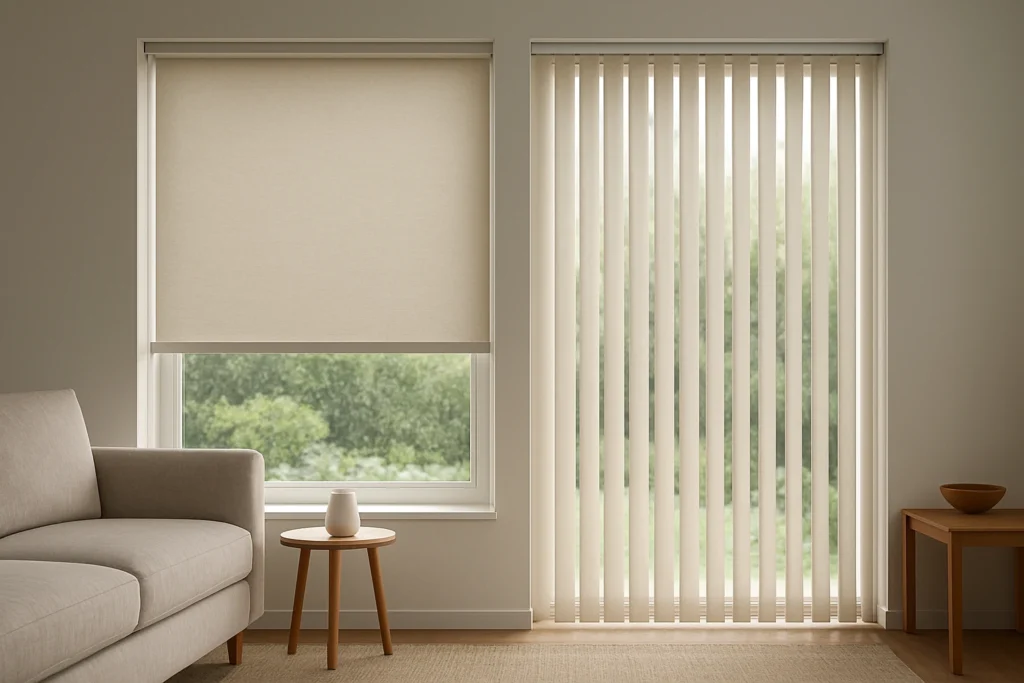
Roller blinds are usually the better choice for a neat look on standard windows, while vertical blinds suit wide windows and sliding doors where side access matters. Vertical blinds let you turn the slats to adjust light and privacy, but roller blinds need to move up or down. For a dark bedroom, a blackout roller blind with well-fitted side channels usually blocks light better than vertical blinds, which leave gaps between the slats.
Roller Vs Vertical Blinds at a Glance
Roller blinds use one sheet of fabric that rolls around a tube, while vertical blinds use hanging strips, called slats or vanes, that turn and draw to one side. The best choice depends less on the room’s style than on how you need to use the window each day.
This comparison from Design Furniture focuses on the details that affect daily use, including balcony access, night-time privacy, light gaps, and repair needs.
| Feature | Roller Blinds | Vertical Blinds |
|---|---|---|
| How they open | Fabric rolls up above the window | Slats draw to one side or split to both sides |
| Light control | Raise or lower the fabric; fabric choice sets how much light passes through | Turn the slats to change the light angle, then draw them open when needed |
| Privacy | Depends on fabric and how far the blind is lowered | Depends on slat angle, viewing direction, and fabric |
| Blackout potential | Stronger with opaque fabric, side channels, and a close fit | Usually weaker because light can pass between and around slats |
| Wide glazing | May need several blinds or a heavier-duty system | Often practical as one track, within the supplier’s size limits |
| Sliding-door access | Must lift clear of the route through the door | Can draw away from the opening side |
| Appearance | Simple, flat surface with few visible parts | Strong vertical lines with a visible track and slat stack |
| Cleaning | One large surface, but fabric may not tolerate washing | More pieces to clean, though some damaged slats can be replaced separately |
| Main fit problem | Gaps at the edges or a tube too large for the recess | Slats catching handles or the stack blocking part of the doorway |
A useful starting point is to compare roller blinds for windows you rarely walk through and vertical blinds for glass doors you use often. Neither rule is absolute, but both help narrow the choice before you select a fabric.
Which Blinds Give Better Light Control and Privacy?
Vertical blinds give better control over the direction of daylight, while roller blinds give a more even covering across the glass. For privacy and darkness, the fabric and the gaps around the blind matter as much as the blind type.

Daytime Glare and Night-Time Privacy
Vertical slats can turn to block a direct line of sight while still letting in some daylight. This helps in a living room facing nearby flats, but privacy changes with the viewing angle. A person looking from the side may see through gaps that are hidden when viewed straight on.
A standard roller blind cannot tilt. Lowering it covers more of the window, so the choice of fabric becomes especially important:
- Sunscreen fabric reduces glare while keeping some outward view. Its small openings can allow people to see inside when the room is brighter than outdoors.
- Light-filtering fabric softens daylight, but some fabrics show shapes or silhouettes at night.
- Blackout fabric blocks light through the fabric itself, though light can still enter around the edges.
Our guide to the uses, pros and cons of sheer roller blinds explains the balance between views and privacy in more detail.
For a west-facing Dubai home office, judge the fabric against the low afternoon sun rather than soft morning light. A sunscreen roller blind may reduce glare enough to make a screen comfortable to use, but it will not necessarily block a sharp patch of sun. Ask to see the fabric’s openness factor, which describes how much of its surface is open, and check the maker’s guidance on glare control.
Blackout Fabric Is Not a Blackout Installation
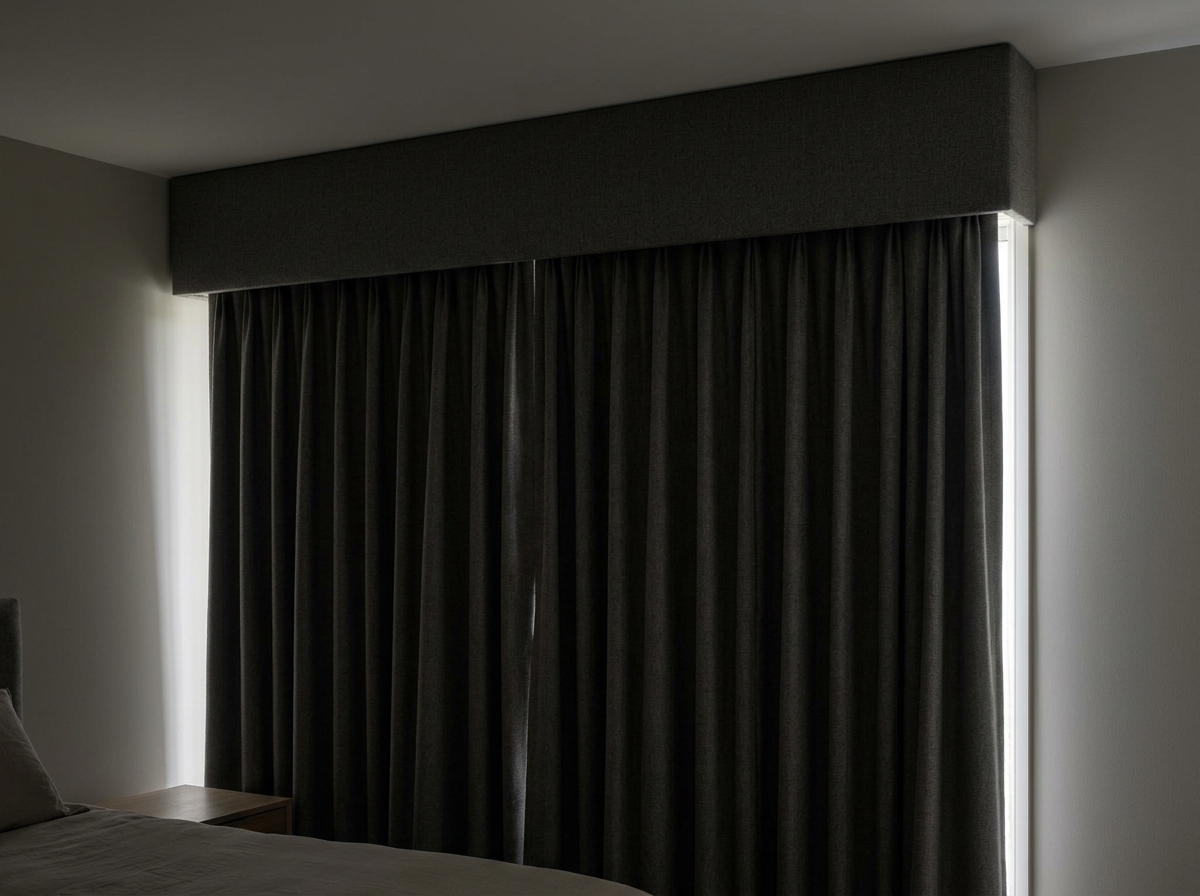
A blackout roller blind can still leave bright strips beside the brackets and below the fabric. A recess fit, where the blind sits inside the window opening, often makes these gaps more noticeable because the fabric is narrower than the full width between the brackets.
An outside fit with enough overlap can reduce light around the edges. Side channels, which hold the fabric edges within narrow tracks, can reduce it further. Vertical blinds made with blackout fabric still have gaps between the slats, so they are rarely the first choice for a light-sensitive sleeper.
Compare the complete fitting system when choosing blackout blinds in Dubai, not just the fabric label. For shift workers or a nursery, ask specifically how the sides, top, and bottom will be covered.
Neither blind type automatically provides better heat control. How much light the fabric reflects, the glass type, direct sun, coverage, and gaps around the blind all affect the result. Compare product details rather than assuming that a darker room will always be cooler.
Which Blinds Work Better on Wide Windows and Sliding Doors?
Vertical blinds are often more practical for sliding doors because they move sideways, matching the way the door opens. Roller blinds can work well across wide areas of glass, but splitting the width into separate blinds usually makes access easier than using one large sheet.
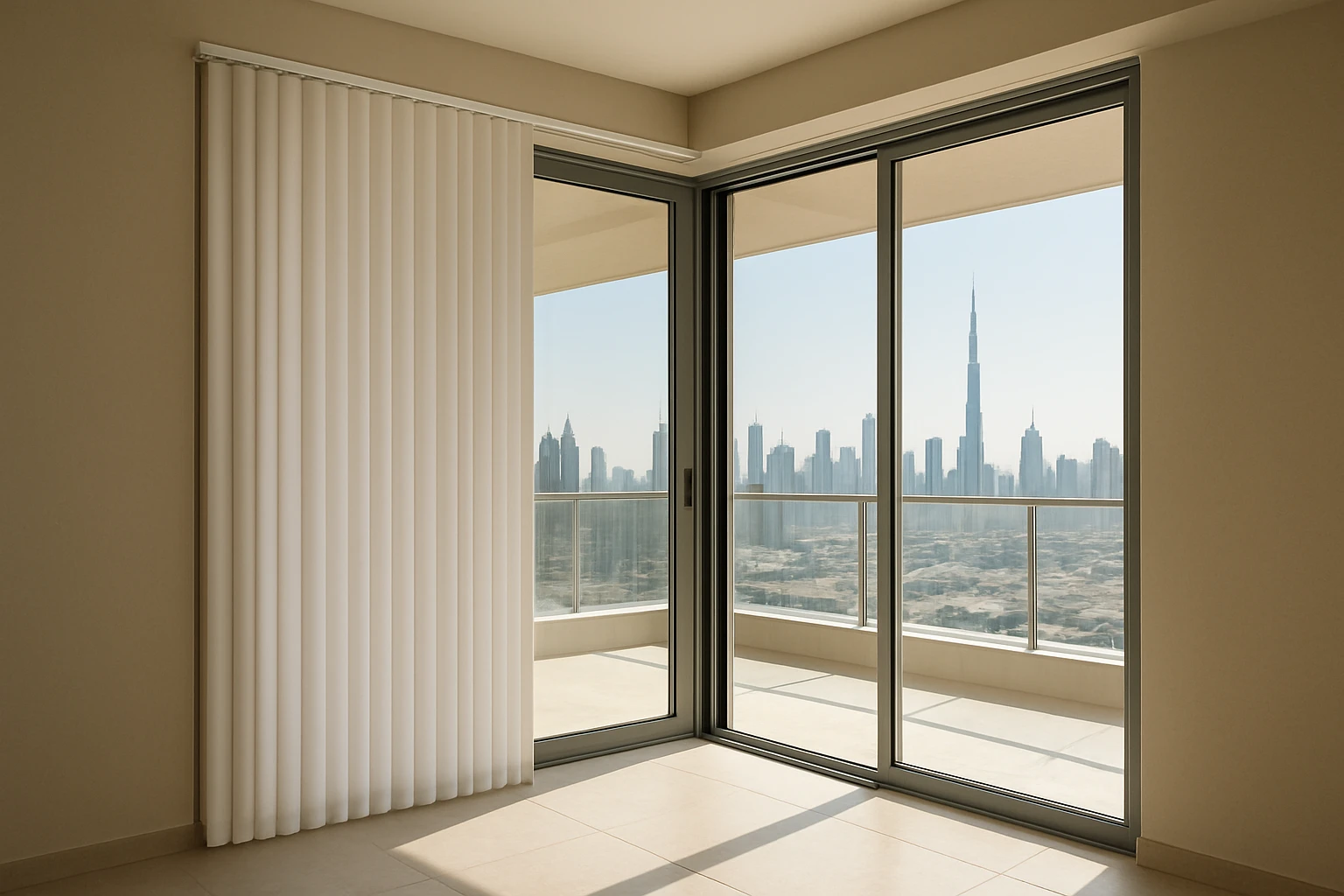
The key detail is where the vertical slats collect when open. This is the stack, and it still takes up space. If the stack sits over the sliding door panel, you may lose part of the opening even when the blind is fully drawn.
Ask how wide the stack will be and which way the blinds will draw before ordering. A one-side draw may suit a door that opens at one end, while a centre split can suit some wider layouts. The correct choice depends on the actual door, not just the total glass width.
For example, consider a 3-metre-wide glazed opening with a sliding panel on the right. Vertical blinds that stack over the fixed glass on the left can keep the right-hand route clear. With roller blinds, separate units aligned with the glass panels let you raise only the blind over the door.
The drawback is light leakage between separate roller units. Even blinds fitted side by side need space for brackets and mechanisms, so a narrow bright line may remain between them. One very wide roller avoids that gap but needs a suitable tube, fabric, and control system to prevent sagging or difficulty raising and lowering it.
Open windows also matter. Vertical slats can sway, tap against one another, or catch nearby objects in a draught, while a lowered roller blind may flap against an open window. Check how the blind behaves with the window open as you would normally leave it for airflow, not only when everything is closed.
How Much Do Roller and Vertical Blinds Cost in Dubai?
Basic manual roller and vertical blinds often fall within similar price bands, and fabric, size, and fitting details can change which costs less. Compare quotes for the same opening and features rather than assuming that one blind type is always cheaper.
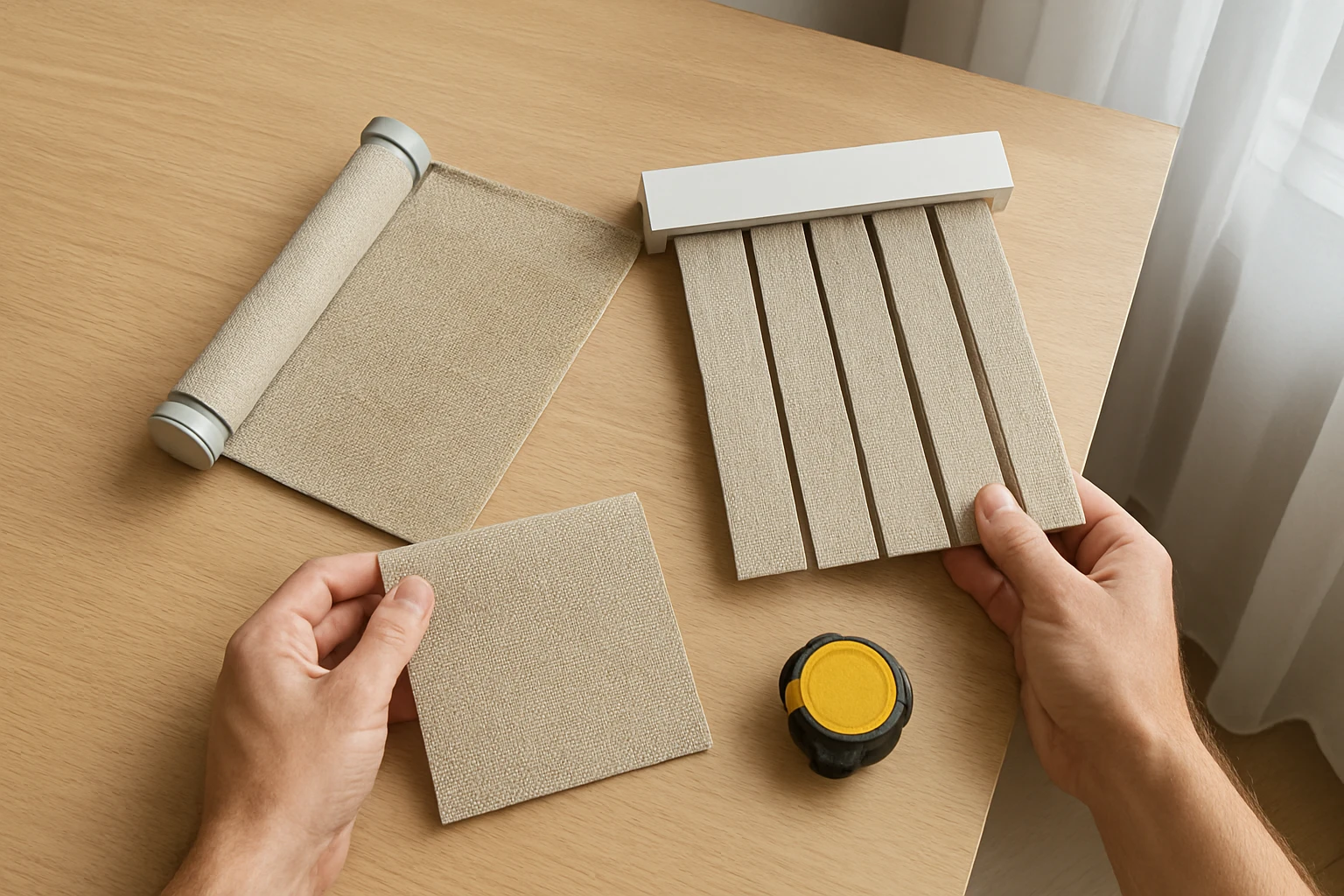
For early budgeting, a basic made-to-measure manual blind for a window around 1.2 metres wide by 1.5 metres high may cost roughly the amounts below. These are broad market estimates, not fixed prices, and they vary by supplier, fabric, location, and what the quote includes.
| Specification | Approximate Budget in AED | What to Check |
|---|---|---|
| Basic manual roller blind | 200 to 700 per blind | Fabric type, brackets, measuring, and fitting |
| Basic manual vertical blind | 250 to 800 per blind | Slat material, track quality, draw controls, and fitting |
| Blackout roller with side channels | Usually more than a basic roller | Whether channels, bottom light control, and fitting are included |
| Motorized roller or vertical system | Request a separate itemized quote | Motor, power supply, controls, wiring, and setup |
Small jobs may carry a minimum fitting charge, while large openings may need stronger hardware. Ask whether VAT, removal of old blinds, and access equipment are included, especially for tall apartment windows.
For a fair comparison, ask each supplier to quote for the same fabric performance, coverage, and fitting work. A low roller quote without side channels is not a like-for-like alternative to a complete blackout system.
If you are comparing motorized blinds in Dubai, confirm exactly what the motor operates. A motorized roller raises and lowers the fabric, while a vertical system may offer powered slat turning, powered drawing, or both. Do not assume every movement is included.
What Should You Check Before Installation?
Check handles, opening panels, fixing strength, and control safety before ordering either blind type. A blind can match the measured width and still be awkward to use if its moving parts hit the window fittings.
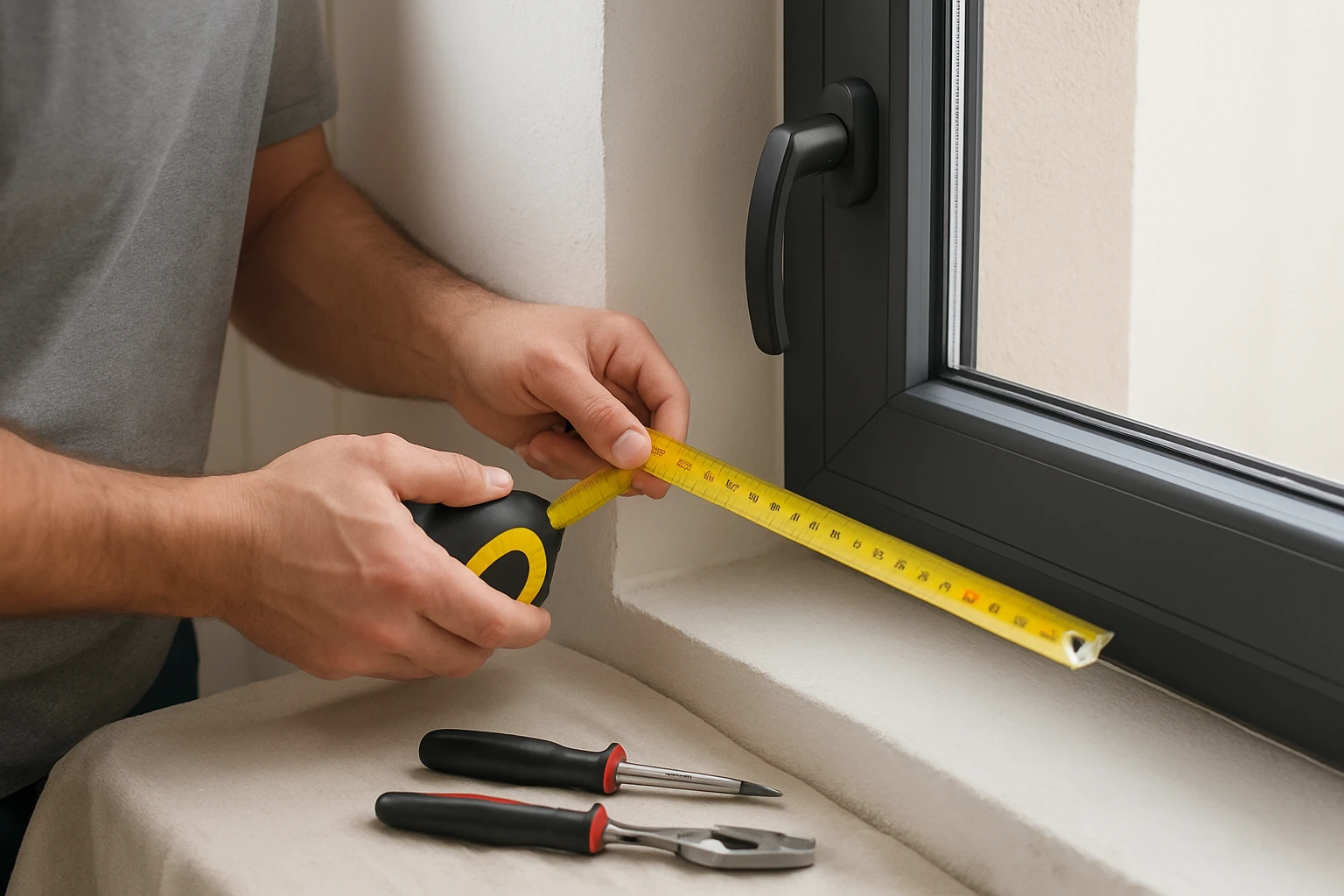
Use this order when checking the opening:
- Open the window or door fully. Note where handles, hinges, and moving panels travel.
- Check the recess depth. Roller tubes and vertical tracks need space, and vertical slats need room to turn without hitting the glass or handle.
- Choose inside or outside fitting. Outside fitting can improve coverage, but nearby walls, ceiling details, and cupboards may limit overlap.
- Confirm the fixing surface. Concrete, masonry, and hollow plasterboard need different fixings. A suspended ceiling may need extra support rather than a simple surface attachment.
- Choose the control side. Keep controls easy to reach without leaning over furniture or stepping into a doorway.
- Plan child-safe operation. Use a suitable cordless design or have any looped control cord or chain secured with the specified safety device.
For vertical blinds, the installer should also leave enough space at the bottom so the slats do not drag on the sill or floor. For roller blinds, the fabric must run straight. Poorly aligned brackets or an unsuitable tube can cause it to move sideways and rub against the fittings.
Professional blind installation in Dubai is especially useful for wide openings, high windows, and full blackout systems, where a small fitting error can leave a noticeable light gap or strain the mechanism.
Motorized blinds can remove a manual control loop, but they still need a suitable power source. Check access for charging, battery replacement, or electrical work before choosing a motor, rather than leaving power as a detail to solve after fitting.
Which Blinds Are Easier to Clean and Repair?
Roller blinds have fewer surfaces to clean, while vertical blinds may be easier to repair when only one slat is damaged. The fabric’s care instructions matter more than a general claim that either style is washable.

A roller blind offers one broad surface that is usually quick to dust. Yet a stain sits on the main fabric sheet, and harsh scrubbing can leave a patch, damage a coating, or distort the edge. Do not soak blackout or sunscreen fabric unless the maker permits it, and let any cleaned area dry before rolling the blind up.
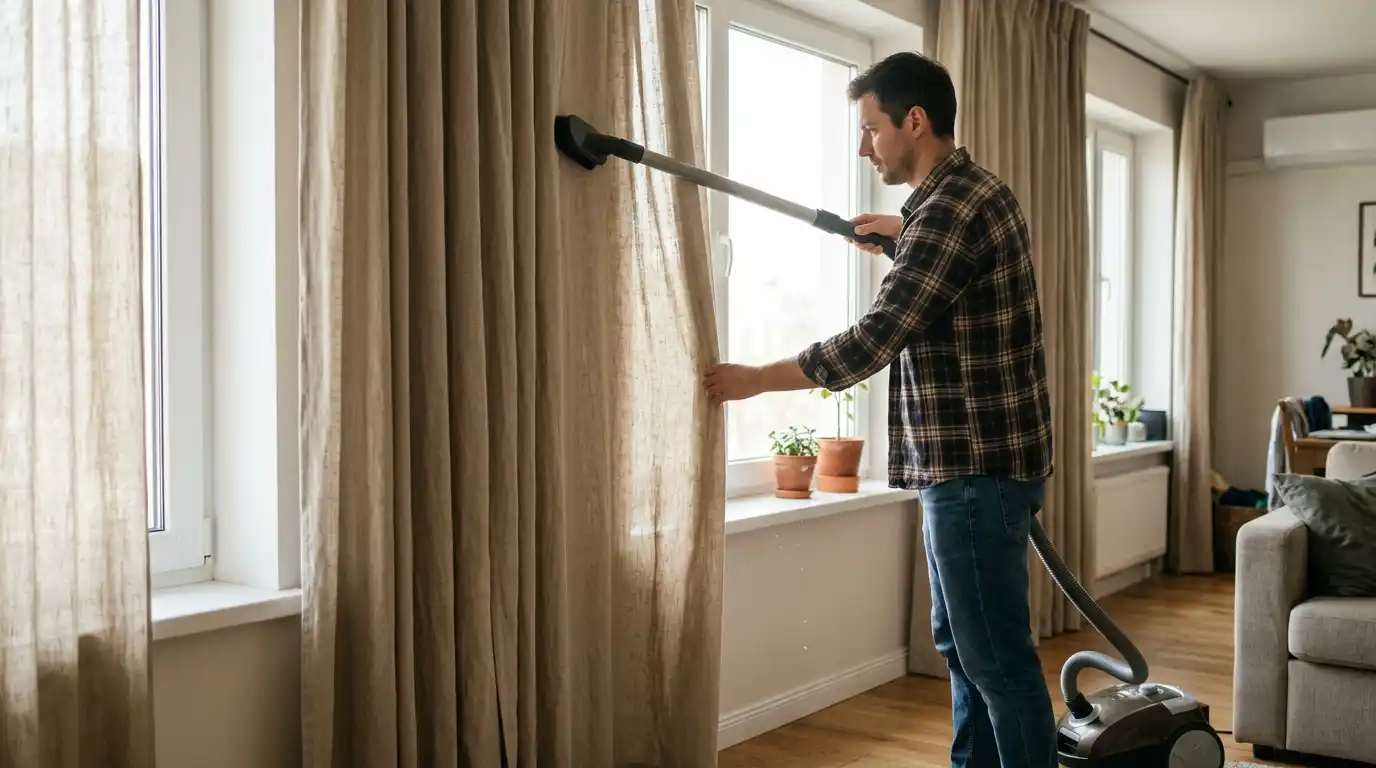
Vertical blinds have more edges, hangers, and bottom fittings to work around. Smooth PVC slats can often be wiped, while fabric vanes may need gentle vacuuming or specialist care. Removing fabric slats for washing without checking the instructions can cause shrinkage, curling, or damage to their backing. Follow the steps for your material in this guide to cleaning vertical blinds.
A damaged vertical slat can sometimes be replaced without changing the whole blind, but the replacement’s width, length, hanger type, and colour must match. Older fabric may have faded, so a new slat can stand out even when the original colour is still available.
Roller blind faults often involve the chain mechanism, brackets, or fabric alignment. If the chain becomes stiff, do not keep pulling harder because that can damage the control or pull at the fixings. This guide to a stiff roller blind chain explains checks to make before deciding whether a part needs replacing.
In a kitchen or bathroom, ask for a material rated for moisture and suitable for the cleaning method you plan to use. A fabric being easy to dust does not mean it will cope with steam, splashes, or grease.
Which Blind Should You Choose for Your Home?
Choose roller blinds for a simple finish on standard windows and better light blocking with the right blackout fitting. Choose vertical blinds when adjustable slats and side access meet your daily needs. In many homes, using both types in different rooms works better than choosing one style everywhere.
| Your Main Need | Best Starting Point | Detail That Makes the Choice Work |
|---|---|---|
| A dark bedroom | Blackout roller blind | Close-fitting edges, suitable overlap, or side channels |
| A frequently used balcony door | Vertical blinds | Stack positioned away from the active opening |
| Daylight with adjustable privacy | Vertical blinds | Slat angle checked from outside and from nearby buildings |
| A clear outward view with less glare | Sunscreen roller blind | Fabric checked in direct sun and a separate plan for night privacy |
| A wide window that rarely opens | Either type | Compare roller size limits with the vertical stack width |
| A small window with a simple finish | Roller blind | Enough clearance for the tube, brackets, and handle |
Before you order, ask the supplier to show where the blind will sit when open, where light can enter when closed, and how you will use the window or door. Those three checks reveal more than a fabric sample alone.
You can compare the wider blinds range or contact Design Furniture with the opening size, a photo of the handles, and your main goal. State whether privacy, darkness, glare, or door access comes first, because that priority should guide your choice of blind and fittings.
Frequently Asked Questions
Can I Mix Roller and Vertical Blinds in the Same Room?
Yes, roller and vertical blinds can work together in one room when each suits a different opening. Use similar colours and fabric finishes to keep the room coordinated, but compare samples in daylight because different weaves can look noticeably different. Matching every mechanism is less useful than keeping windows and doors easy to use.
Are Roller or Vertical Blinds Better for a Rented Flat?
The better choice for a rented flat depends on the existing fittings and the landlord’s rules, rather than the blind type alone. Get written permission before drilling, and check whether approved no-drill brackets suit the frame and blind weight. Keep the original fittings if the tenancy requires you to restore them when leaving.
Can Roller or Vertical Blinds Reduce Traffic Noise?
Neither standard roller nor vertical blinds should be relied on to reduce traffic noise significantly. Thin fabric and gaps around the window covering allow sound to pass, even when the blind looks fully closed. If noise is the main problem, first check window seals and glazing, then consider a window treatment with tested acoustic performance.
Can Either Blind Type Fit a Curved Bay Window?
Both blind types can suit some bay windows, but the angles and available mounting space need careful checking. Roller blinds usually need separate units for each flat section, which can leave gaps at the corners. Vertical blinds may use a suitable curved or angled track, subject to the track system and room for the slats to turn.
Will Motorized Blinds Work with My Smart Home System?
Motorized blinds work with a smart home system only when the motor and control equipment are compatible. A remote-controlled blind does not automatically support phone apps or voice control, and some systems need a separate hub. Confirm the exact motor model, supported platform, power source, and manual backup before ordering.