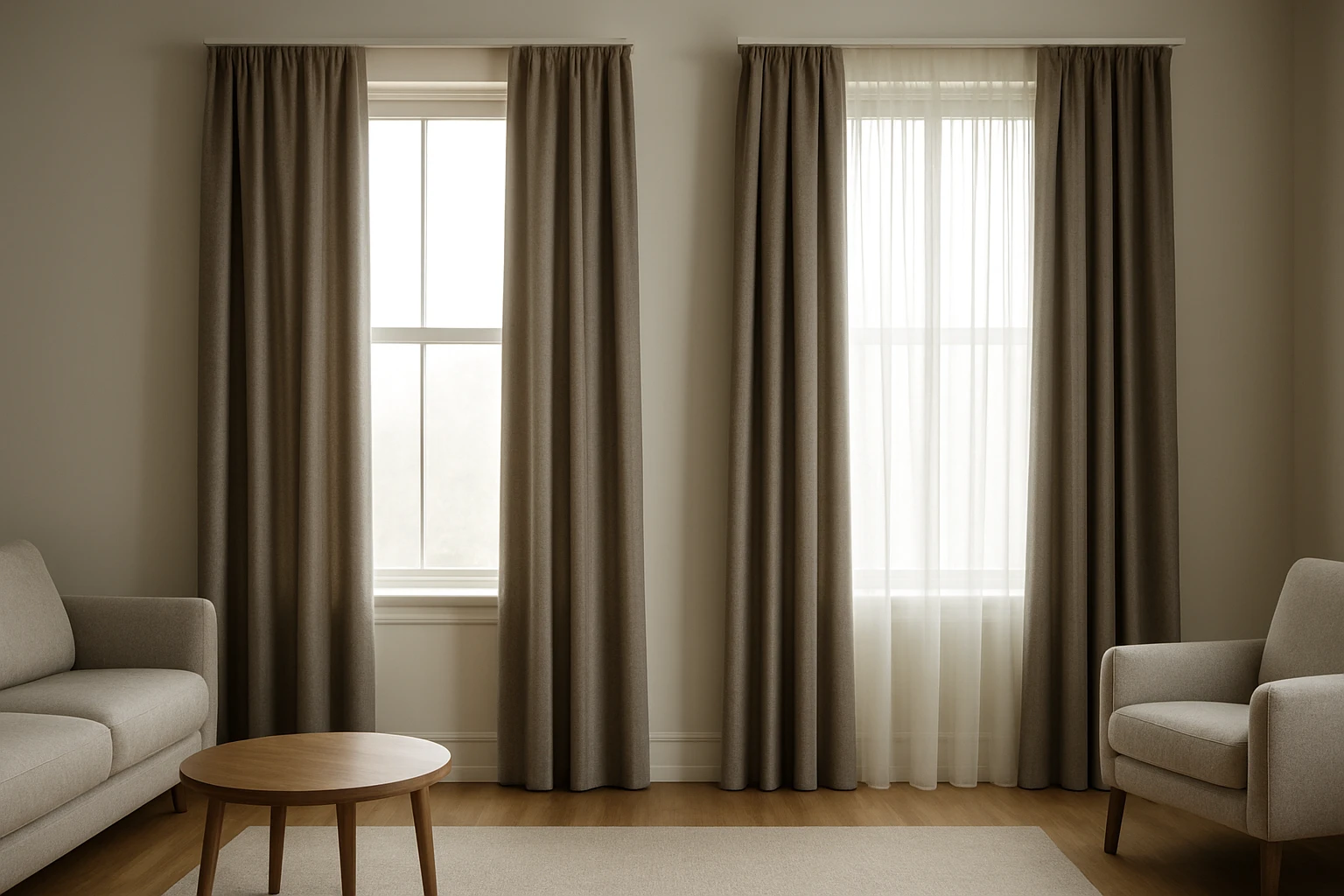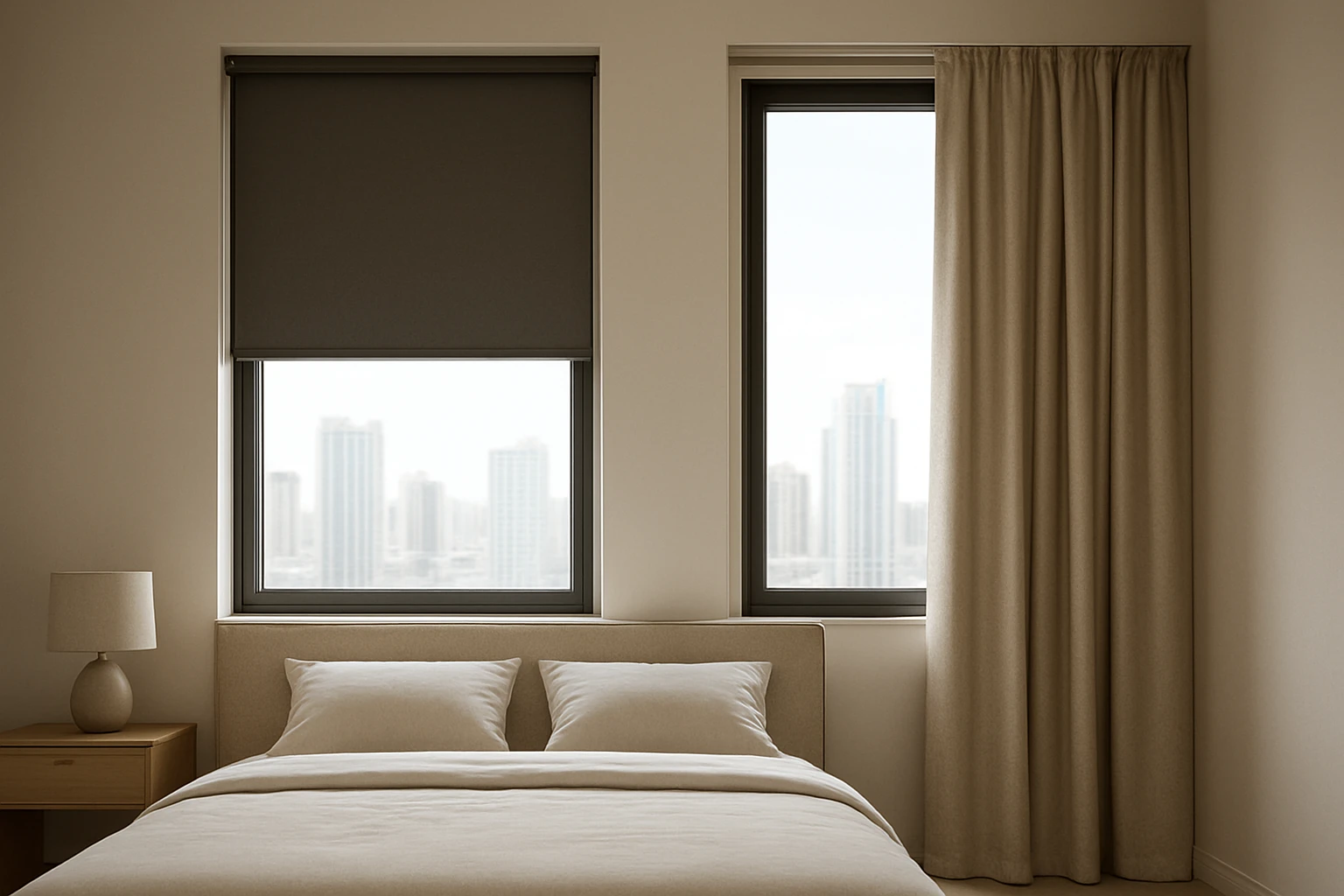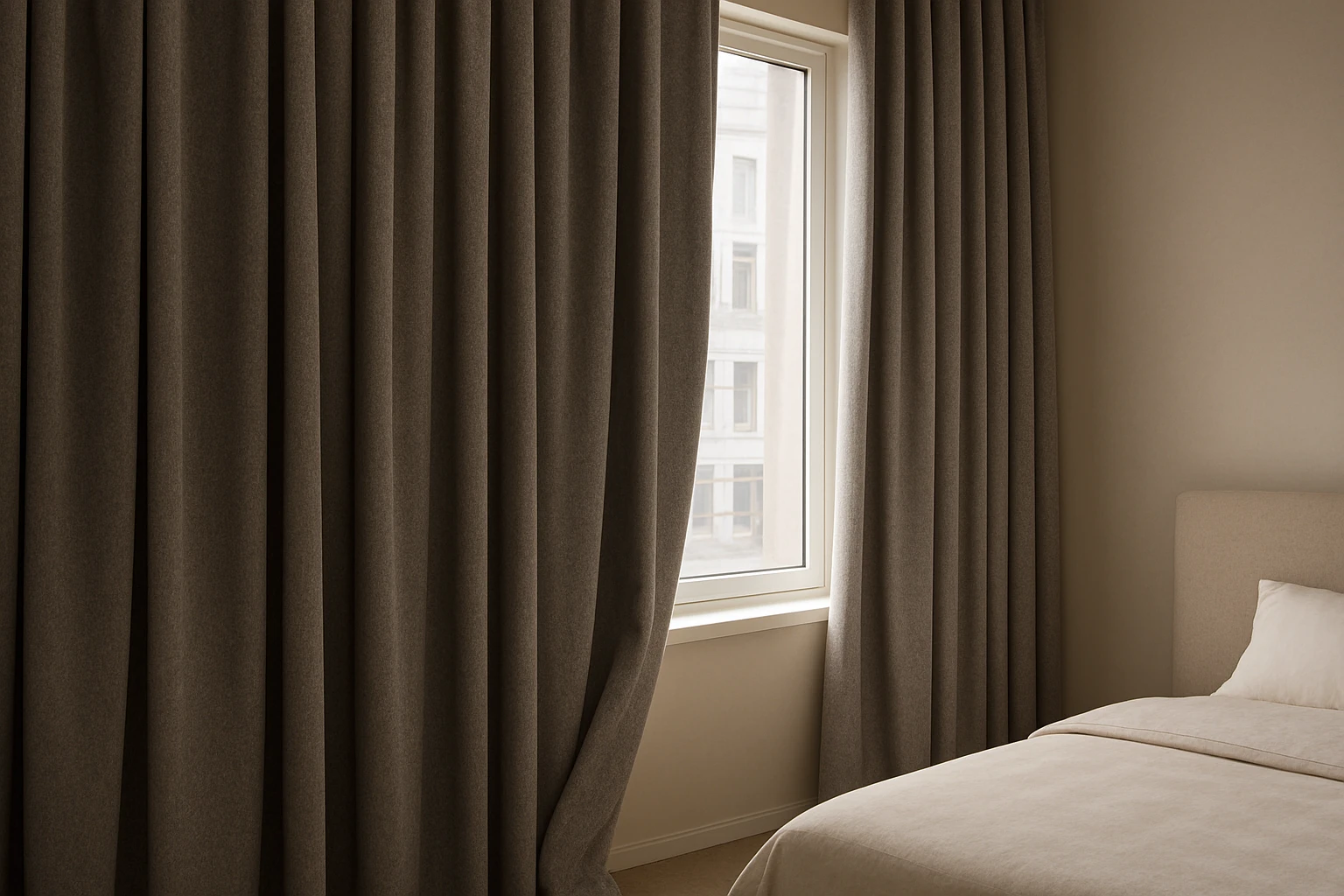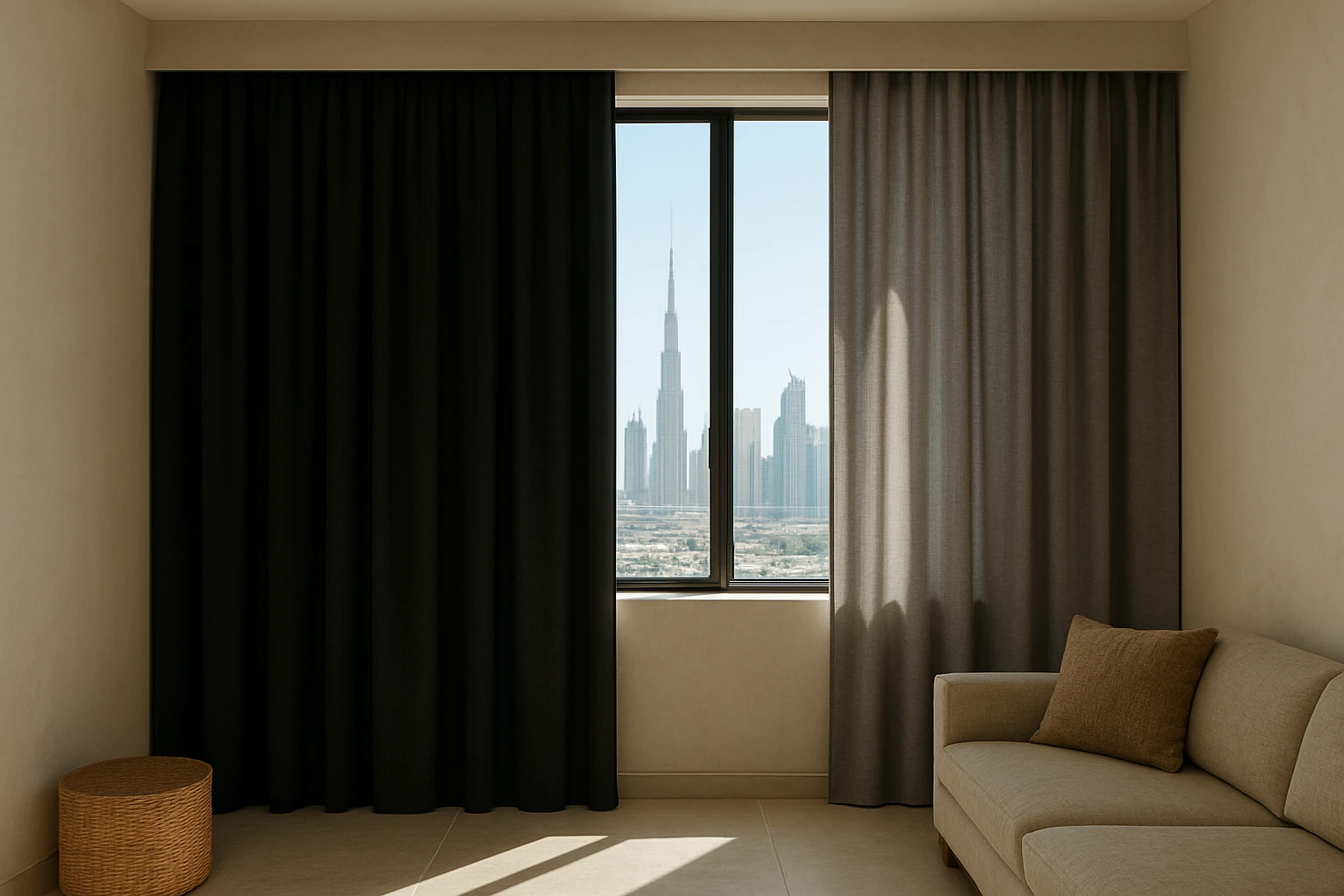
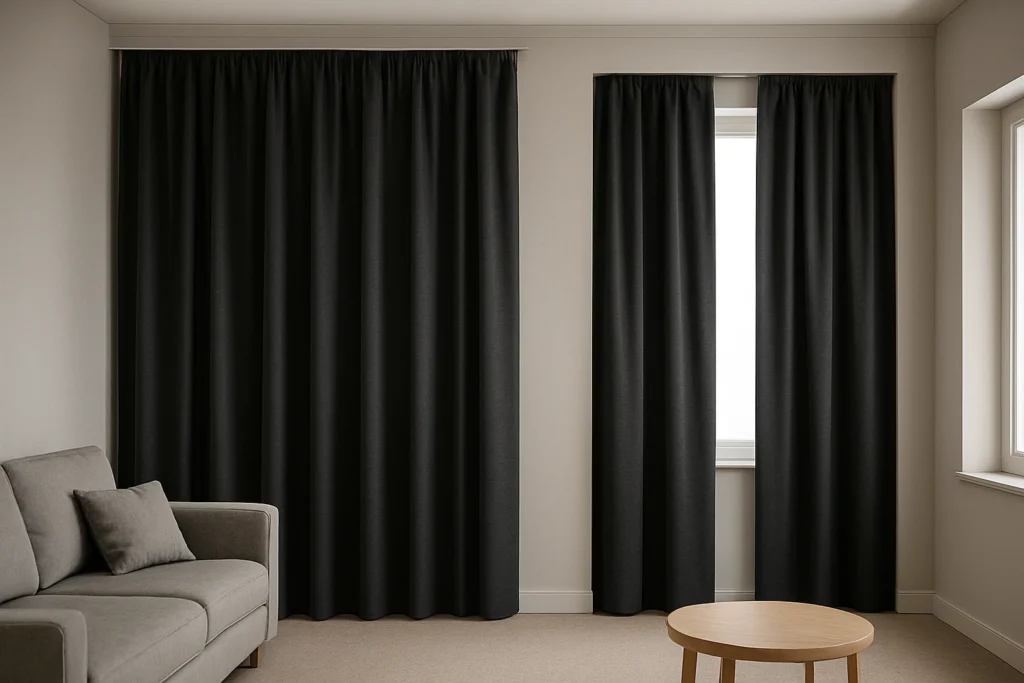
Custom blackout curtains are usually the better choice for wide, tall, or awkward windows because the fabric, track, and fit can be planned together to reduce light gaps. Ready-made blackout curtains cost less and suit standard windows, provided the panels are wide and long enough. For a dark bedroom, good fabric matters, but closing gaps at the top, sides, and middle often makes the bigger difference.
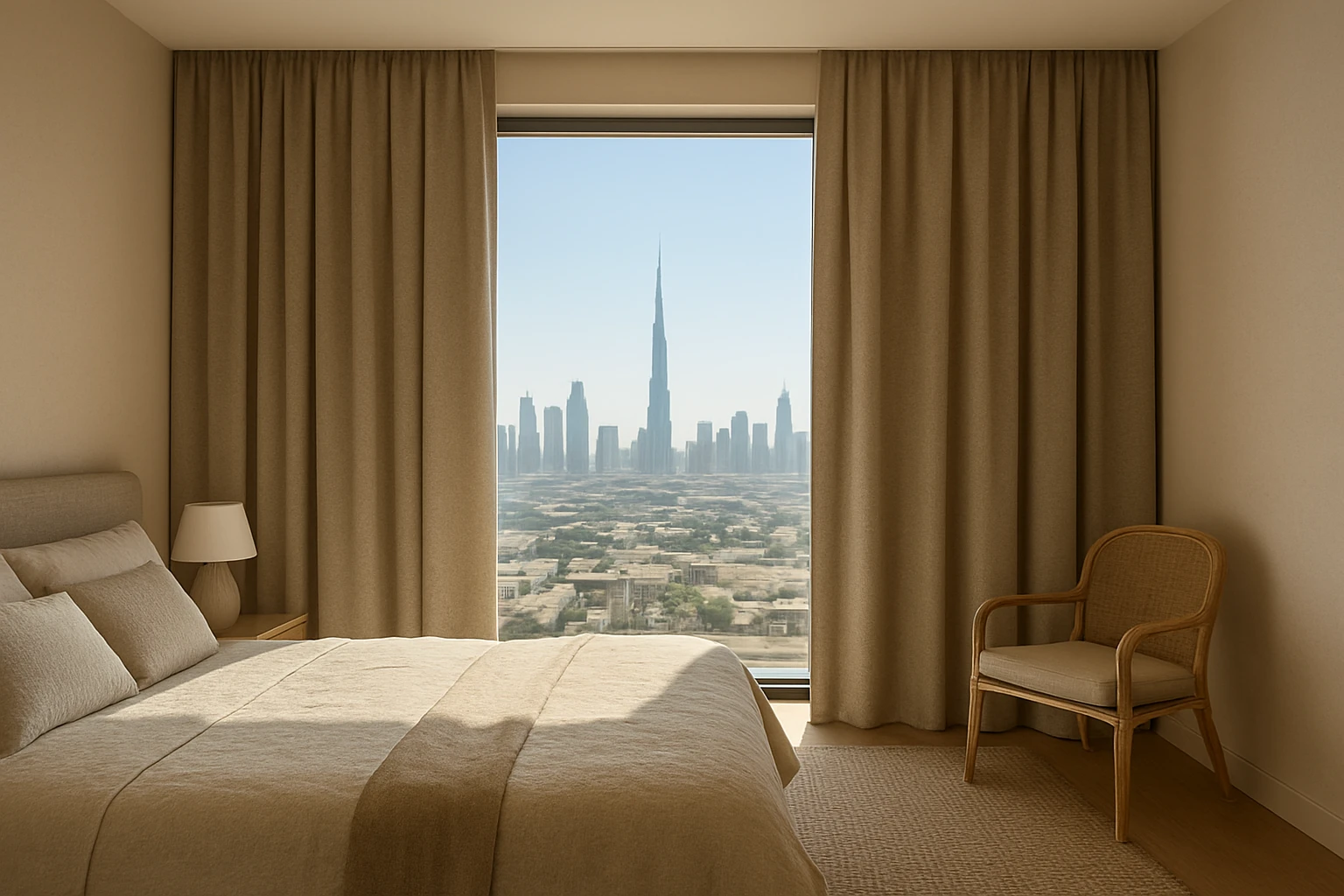
Custom Blackout Curtains Vs Ready Made at a Glance
Custom curtains give you control over the finished size and fit, while ready-made curtains come in set sizes that you adapt to your window. Neither choice guarantees a dark room unless the fabric blocks light and the curtains cover the full opening.
This comparison from Design Furniture focuses on the details that affect daily use, including panel width, track position, lining, and the full fitted cost.
| What Matters | Custom Blackout Curtains | Ready-Made Blackout Curtains |
|---|---|---|
| Size | Made to agreed measurements | Sold in set widths and drops |
| Light Control | Easier to plan side returns, centre overlap, and top coverage | Can work well, but stock sizes may leave gaps |
| Fabric | More choice of face fabric, lining, and heading | Limited to the combinations in stock |
| Initial Cost | Usually higher because measuring and sewing are involved | Usually lower, especially with DIY fitting |
| Total Cost | May include fitting, but check the quote | May need extra panels, hardware, and hemming |
| Availability | Requires production and a fitting slot | Often available quickly if the size is in stock |
| Alterations | Changes after approval may cost extra | Shortening may be possible; adding length is difficult |
| Returns | Usually restricted once made, subject to the seller’s terms and applicable law | Often easier for unused stock items, subject to store terms |
| Best Fit | Tall glazing, wide openings, unusual layouts, and sleep-sensitive rooms | Standard windows, smaller budgets, and short-term use |
Ready-made does not mean poor quality, and custom does not automatically mean better fabric. A well-fitted stock pair can block more light than expensive made-to-measure curtains that stop short of the wall or leave an open centre gap. When comparing blackout curtains, judge how the curtains will fit rather than the label alone.
Which Curtains Keep a Bedroom Darker?
Custom blackout curtains usually make it easier to darken a bedroom because their size and track can be matched to the room. Ready-made curtains can give a similar result when they have enough width, a suitable heading, and good coverage around the window.

The key difference is between light passing through the fabric and light passing around it. A manufacturer’s blackout rating may describe the fabric under test conditions, not the darkness of a whole room after fitting.
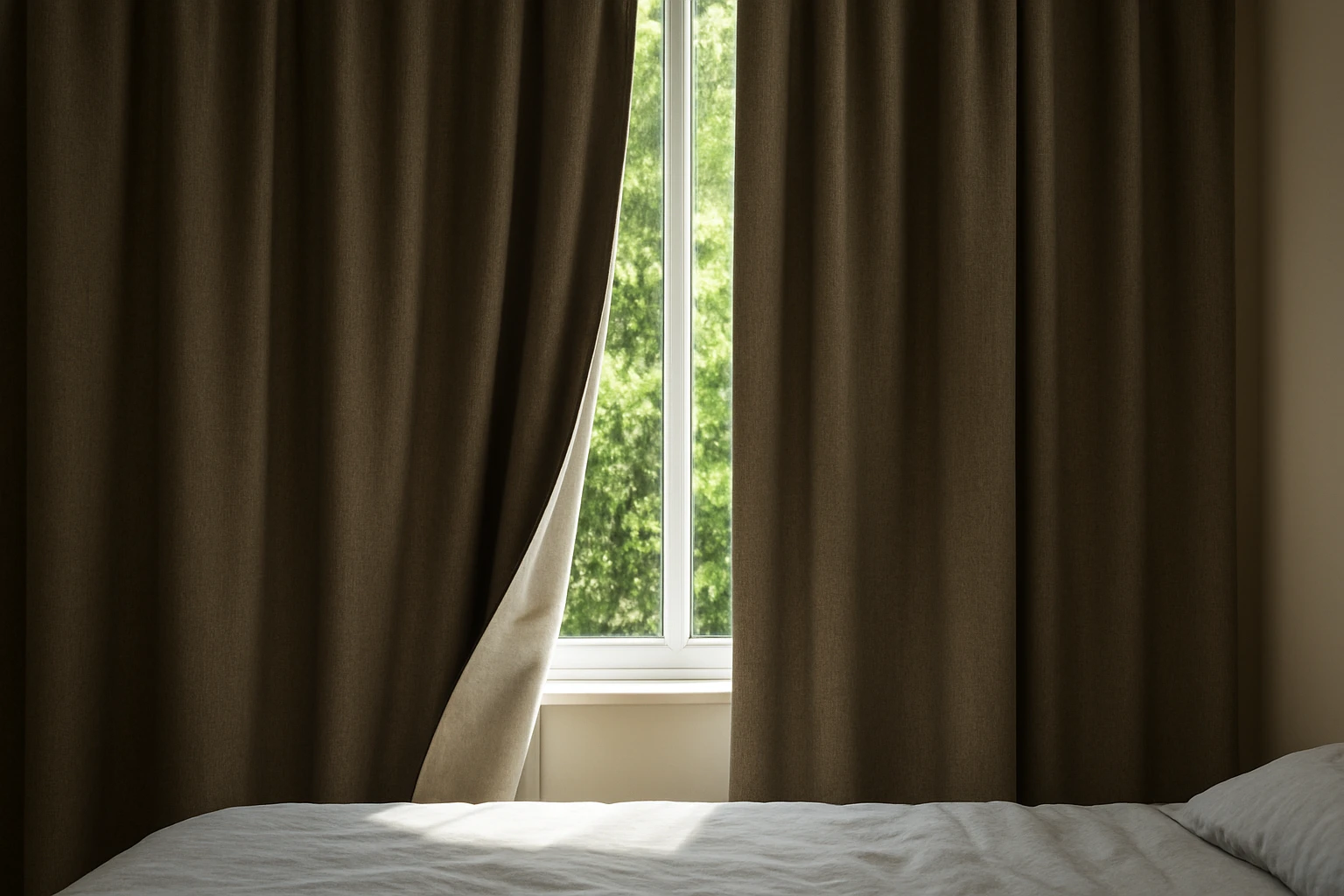
If you can see a bright outline around a closed curtain, changing to a thicker fabric may not solve the problem. The light is passing around the panel, not through it.
Where Light Gets Through
Check these four places before you pay for new curtains.
- The top: A pole set well away from the wall can leave an open gap above the curtain. A close-fitting track or a suitable pelmet, which is a cover above the curtain, can reduce this gap.
- The sides: Curtains that end at the edge of the glass allow light to spill around them. Extra track width and side returns, where the curtain turns back towards the wall, help close these gaps.
- The middle: Two panels that only just meet may part as the folds settle. An overlap carrier, which lets one curtain edge pass in front of the other, can help on a compatible track.
- The bottom: A short curtain can leave a bright strip below the window. Floor-length curtains reduce that opening, but they should not trail where they collect dust or catch under feet.
Eyelet curtains are simple to hang, but the rings and the space above the pole can let in light. They can still work in a bedroom, although a close-fitting track often makes it easier to keep light out.
Blackout Fabric Is Not the Same as Dimout Fabric
Blackout fabric is designed to block light through the material, while dimout fabric reduces light without necessarily stopping it. Some densely woven curtains are sold with broad darkening claims, so ask for the exact product description rather than relying on how heavy the sample feels.
The difference matters for daytime sleep. Our comparison of blackout vs dimout curtains in Dubai explains which level suits sleep and which leaves a softer glow.
For bedroom curtains, check a sample against a bright window and ask how the finished edges will be covered. A fabric sample cannot show how the fitted curtains will perform, but it can reveal material that lets through more light than expected.
How to Measure Before Choosing Either Option
Measure the planned track or pole width, not just the glass, and work out the curtain length, or drop, from the correct hanging point. Ready-made curtains only save you money if their finished size suits that plan without costly changes.

A common mistake is buying a pair whose combined width equals the window width. Curtains need extra width to form folds, and the track usually needs to extend beyond the glass.
- Measure the window and the wall space beside it. Check for corners, handles, sockets, wardrobes, and doors that could limit the track.
- Choose the track or pole position. Where space allows, extending roughly 15 to 25 cm beyond each side of the opening is a useful starting point, not a fixed rule.
- Confirm the required fullness. Fullness is the amount of fabric compared with the track width. Around 1.5 to 2.5 times the track width is common, but the right amount depends on the heading and fabric.
- Measure the drop from the actual hanging point. Eyelets, hooks, and ceiling tracks use different measuring points, so follow the product instructions or your fitter’s method.
- Measure the drop in several places. Floors and ceilings may not be level, and a single measurement can leave one end dragging.
- Check how much space the open curtains need. The gathered fabric, often called the stack, can cover part of the glass or block a nearby door.
A Worked Example for a Two-Metre Window
A 2-metre-wide window with 20 cm of extra coverage on each side needs a track about 2.4 metres wide. If the chosen heading needs twice that width in fabric, the target is about 4.8 metres of combined flat curtain width.
Two ready-made panels measuring 1.4 metres wide each provide only 2.8 metres in total. Across a 2.4-metre track, they would look quite flat and leave little spare width for overlap and side coverage.
Four panels would provide 5.6 metres, which may work, but they introduce extra meeting edges and more fabric to gather at the sides. At that point, compare the cost of four panels and any sewing with a custom pair.
Check the packaging carefully because some sellers quote the width of one panel and others describe a pair. For made-to-measure orders, also confirm whether the stated width means flat fabric width or finished pleated width.
Check the Hardware Before Ordering
Blackout lining adds weight, so an existing lightweight pole may need stronger brackets or a different track. The wall or ceiling fixings must suit both the curtain weight and the surface they attach to.
For motorised curtains, choose the track and motor before confirming the fabric order. The motor needs to suit the curtain weight, track length, and any bends, while the curtain heading must work with the track’s carriers.
An existing motorised track does not make every ready-made panel suitable. Altering the heading may remove much of the original saving.
How Much Do Custom and Ready-Made Blackout Curtains Cost in Dubai?
Ready-made blackout curtains usually have the lower purchase price, while custom curtains cost more because they are made to your measurements. Compare the full fitted price for the same window, since extra panels, track changes, and hemming can narrow the gap.
These are rough UAE shopping budgets rather than a Design Furniture price list. Actual costs vary by supplier, location, fabric, size, and what the package includes.
| Item | Approximate Budget in AED | What to Check |
|---|---|---|
| Basic to mid-range ready-made blackout pair | Around 100 to 600 | Panel count, width, drop, and whether the lining is included |
| Custom blackout curtains for one standard room window | Around 800 to 2,500 | Fabric amount, heading, lining, and whether measuring or fitting is included |
| Basic manual pole or track | Around 100 to 500 | Length, brackets, weight rating, and whether it is supplied as a full set |
| Straightforward installation | Around 100 to 350 | Access, fixing surface, travel charges, and minimum visit fees |
Wide floor-to-ceiling windows, premium fabrics, shaped tracks, and motorised systems can cost more than these amounts. A small window with a basic custom fabric may cost less.
Compare a Finished Window, Not a Pair of Panels
For a simple worked example, suppose ready-made panels cost AED 350, the pole costs AED 180, hemming costs AED 120, and fitting costs AED 150. The finished window costs AED 800, rather than the AED 350 shown on the panel label.
If a custom quote is AED 1,300 for the curtains, AED 250 for the track, and AED 200 for fitting, its total is AED 1,750. These figures are examples, not supplier quotes, but they show how to make a fair comparison.
Ask for both options to be priced against the same written list of requirements. That list should include the finished drop, track width, fabric name, lining type, heading, side coverage, and fitting work.
Also confirm who is responsible for the measurements. If you supply the wrong sizes, you may have to pay to alter a custom order, and extra fabric may not be available from the same batch.
Which Fabric and Layers Suit Dubai Homes?
Choose blackout fabric for light control, then check its care needs, weight, and backing before judging its colour or texture. In a sunny Dubai room, a dense fabric alone is not enough if the curtains leave wide gaps or are hard to close each day.

A separate blackout lining lets you choose the main curtain fabric mainly for its look and feel. An all-in-one coated fabric combines the curtain face and light-blocking layer, which may reduce bulk, though its care needs depend on the coating.
For a west-facing room that gets strong afternoon sun, ask about a light-coloured backing that faces the window, and close the curtains before the room heats up. Curtains can reduce heat from sunlight, but they do not replace good glazing, and a blackout label does not prove that they will save energy.
| Detail to Check | Why It Matters |
|---|---|
| Care label | Some coatings and linings cannot tolerate machine washing, high heat, or certain cleaning methods |
| Fabric weight | Heavy fabric needs suitable tracks and fixings, and it takes up more room when open |
| Backing colour | A pale window-facing backing can reflect more incoming sunlight than a dark exposed surface |
| Separate lining | Can make some repairs or lining changes possible, depending on construction |
| Colour batch | Panels bought later may not match the original shade exactly |
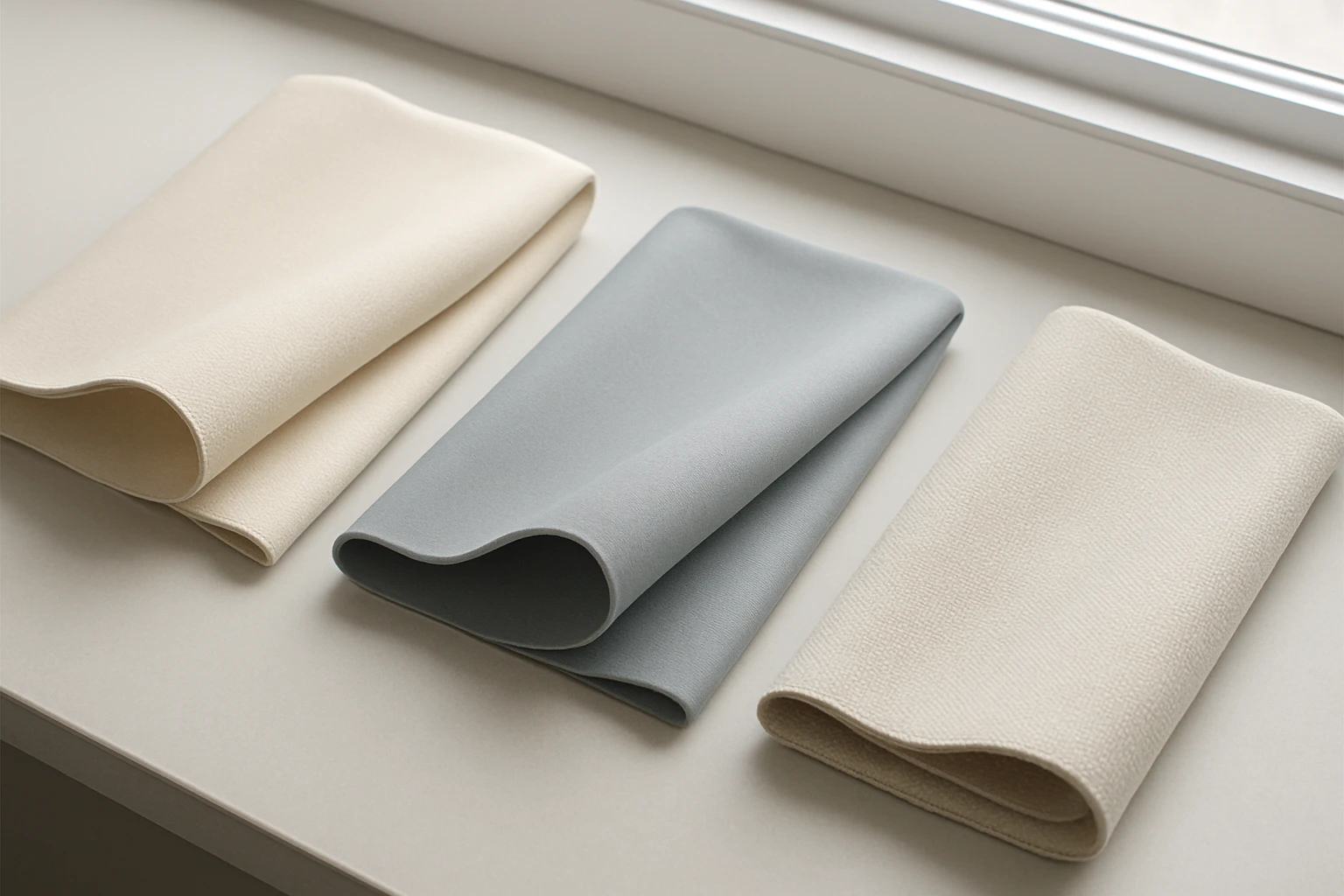
| Fabric sample | Shows texture and light transmission more clearly than a screen image |
When a Sheer Layer Is Worth Adding
A sheer layer is useful when you want daylight without leaving the window fully exposed. With blackout curtains alone, the choice is often between an open view through the window and a darkened room.
Pairing sheer curtains with blackout panels gives more control during the day, although sheers do not provide reliable privacy at night when indoor lights are on. Our guide to layering sheer and blackout curtains covers the layout in more detail.
Plan both tracks before ordering because a double layer needs more depth and wall space. A sheer track that projects too far from the window can also push the blackout layer too far into the room if the layout is not planned carefully.
Do not assume thick curtains will soundproof a bedroom. Fabric can soften some reflected sound inside a room, but traffic noise also passes through glazing, seals, and walls. Judge products sold as soundproof curtains by suitable test data and how they are fitted, not by weight alone.
When a Blind and Curtain Combination Works Better
A blackout blind behind curtains can be useful when one curtain layer cannot give both the look and light control you need. The combination works best when the blind reduces light at the glass and the curtains cover the remaining edge gaps.
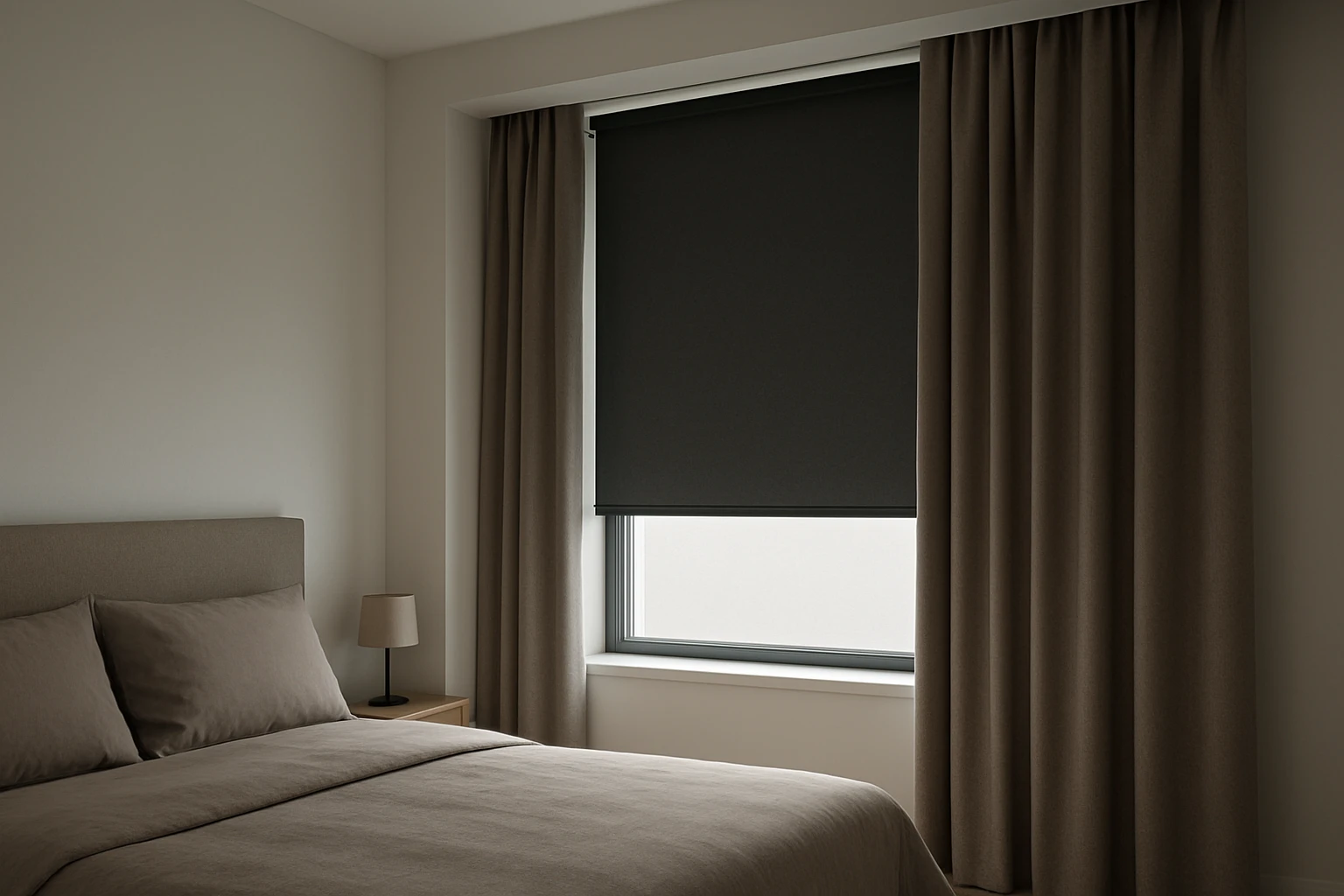
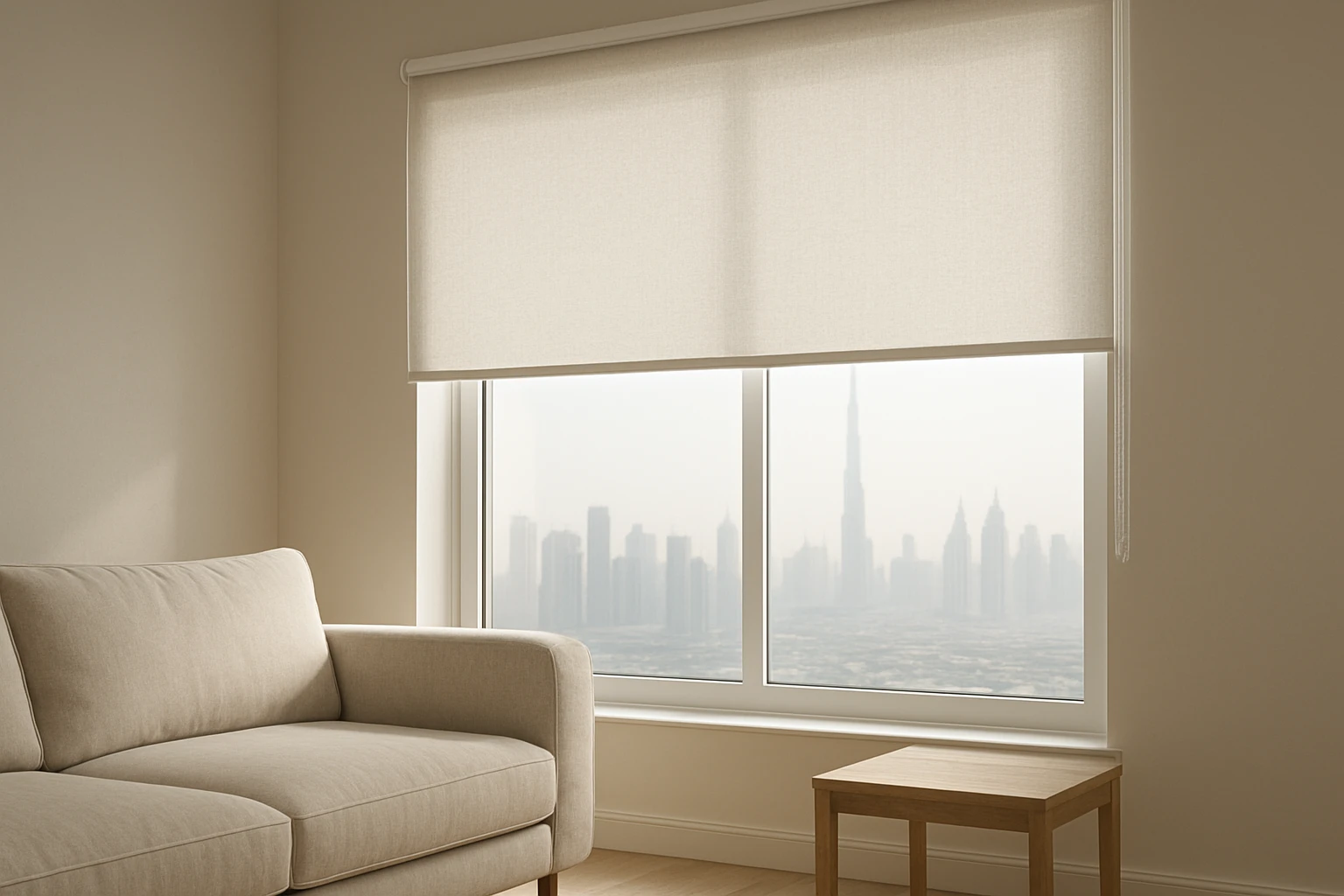
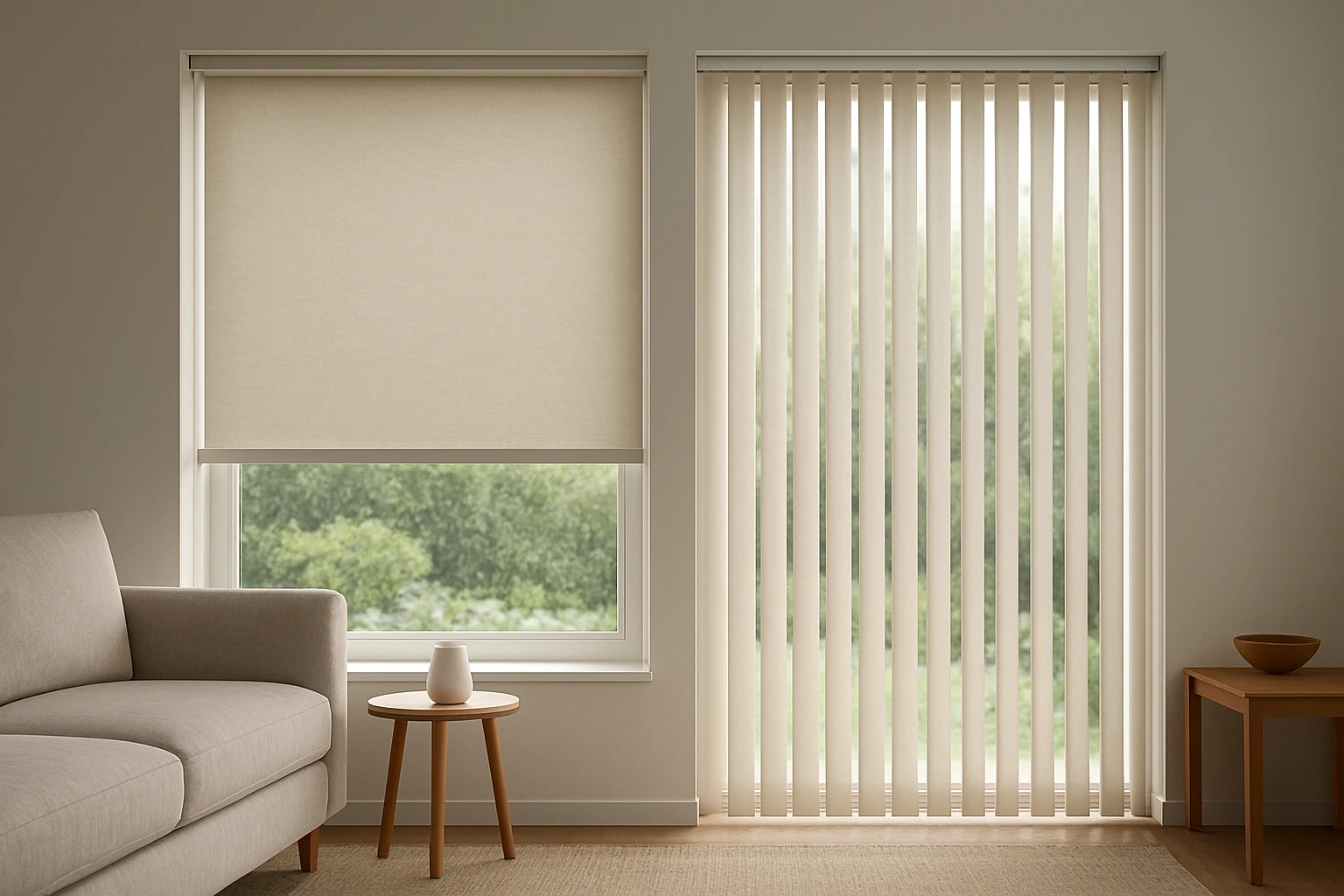
Standard roller blinds often have fabric that is narrower than the full bracket width. When fitted inside a recess, this can leave light gaps at the sides, even if the fabric itself blocks light.
To keep out more light, ask about blackout blinds with suitable side channels or a cassette system. A cassette is a cover around the top roller, and side channels guide the fabric edges to reduce light gaps. Not every blackout blind includes these parts.
A blind and curtain combination can be a sensible middle option for a standard window. A well-fitted blind handles much of the light control, while ready-made curtains provide the softer finish, provided there is room for both without handles or brackets getting in the way.
For a high or hard-to-reach window, motorised blinds may make daily use easier, but check the power source and access for charging or maintenance before fitting. The comparison of blackout blinds vs curtains explains where each type tends to leave gaps.
Which Option Should You Buy?
Choose ready-made blackout curtains when stock sizes fit your planned track, the care label suits your needs, and the full fitted cost stays clearly lower. Choose custom blackout curtains when the room needs precise coverage, the windows are unusually wide or tall, or changes to stock panels would remove much of the saving.
| Your Situation | Best Starting Point | What Could Change the Choice |
|---|---|---|
| Standard window and limited budget | Ready-made curtains | Needing four panels or major alterations |
| Daytime sleep or strong sensitivity to light | Custom curtains with planned edge coverage | A good existing track and correctly sized stock panels |
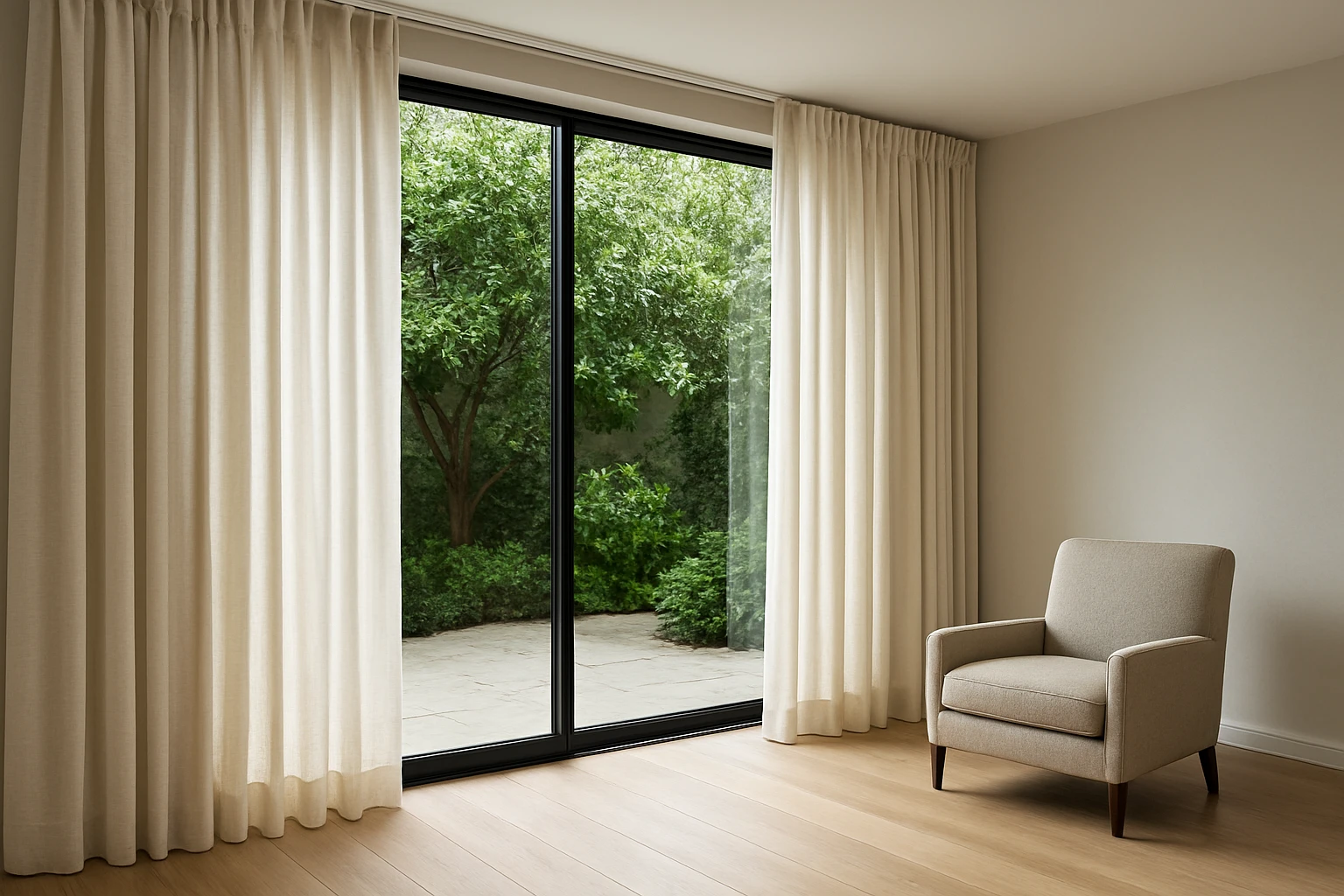
| Wide sliding door or tall apartment glazing | Custom curtains | Enough stock width and drop, with space for the gathered fabric |
| Short-term home | Ready-made curtains | Unusual windows that cannot be covered well with stock sizes |
| Existing suitable track | Compare both | Whether stock headings work with the track carriers |
| Need privacy and daylight as well as darkness | Sheer and blackout layers | Limited wall depth or a blind that already handles daytime privacy |
Before ordering, check the sample, measure the planned hanging position, and get the complete cost in writing. Ask how the side edges and centre join will close, since those details are easier to fix before sewing than after fitting.
You can compare the wider range of curtains once you know how they need to fit, rather than choosing a fabric first and trying to make the room work around it. For a made-to-measure quote, contact Design Furniture with the window width, drop, room photos, and any track or motor requirements, then confirm the final measurements before production.
Frequently Asked Questions
Do Blackout Curtains Have to Be Black?
Blackout curtains do not have to be black because the lining or backing provides the light control, not the visible colour alone. White, cream, and pastel curtains can all use blackout construction. Check the exact fabric specification and view a sample against daylight, since a pale unlined fabric is not the same as a pale blackout curtain.
Can I Add Blackout Lining to Curtains I Already Own?
You can often add blackout lining to existing curtains if the heading, fabric, and track can support the extra weight. A curtain maker should check the construction before sewing, especially with delicate fabrics or fixed eyelets. Separate clip-in linings may also work, but they need enough coverage to avoid bright strips around the edges.
Are Blackout Curtains Safe Near a Baby’s Cot?
Blackout curtains should be kept out of a baby’s reach, with no loose cords, fabric, or accessible fittings beside the cot. Do not place the cot directly against a curtain or blind, and secure operating cords according to the product’s safety instructions. Keep the room ventilated and check its temperature, since a dark room can still be warm.
Do Blackout Curtains Need to Be Fire Rated?
Blackout curtains need a suitable fire rating where the building rules, project specification, or intended use requires one. Requirements can differ between a private home, hotel, nursery, and other commercial spaces. Ask the supplier for a valid test certificate covering the exact fabric and lining combination rather than accepting a general claim that the curtains are fire resistant.
Can I Take Custom Blackout Curtains with Me When I Move?
You can take custom blackout curtains to another home, but their new fit depends on the window size and hanging system. Shortening is often possible, while adding length or width may require matching fabric that is no longer available. Keep the original fabric details and check track compatibility before paying for alterations.