Window Blinds, for sure, are the most incredible choice of window treatment considering all the functional advantages and most importantly the aesthetic significance. They are a lot more flexible and easy to deal with as compared to any other given form of window covering, like curtains or even shutters. However, this serviceability comes with a kind of downside, which is the difficulty scale of maintenance.
It’s an obvious aspect that window blinds can be nearly a bummer on the nerves when it comes to taking the right care of them and not doing so will simply end up worsening the situation. Besides, the most common concern in this regard is how to clean them in such an effective way that does not involve taking them down. Because that’s of course a great deal of effort and is meant to require a reasonable time of yours, as well.
So here we are, once again at your service, with our expert guide on how to clean your window blinds most effortlessly. Let’s get started and get to know about all those expert and effective ways.

Cleaning Your Window Blinds Without Removing Them
Ahead are some of the useful hacks with which you can easily carry out the blind cleaning job without indulging in a lot of detailed or tiring procedures. Also, this will save those bucks that you would otherwise need to spend on professional cleaning services!
1. Vacuum It Away
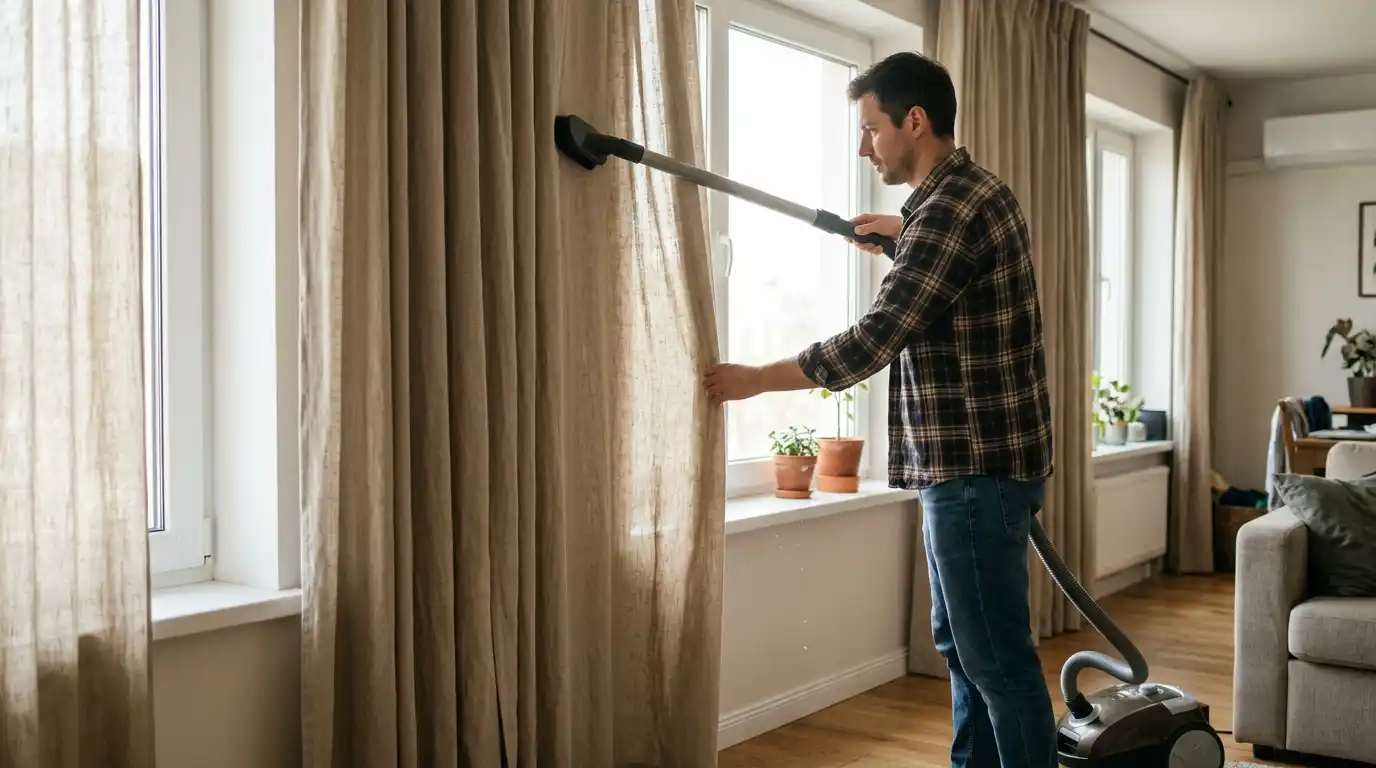
Using a vacuum cleaner is a simple and effective way to remove dust from blinds without taking them down. This method requires minimal effort and only a few basic tools, making it a convenient option for regular blind maintenance. With the right attachment and a gentle approach, you can clean your blinds while they remain fitted to the windows.
Read More: Window Blind Ideas
Note: Vacuum cleaning is suitable for many types of blinds, including mini blinds, Venetian window blinds, vinyl blinds, and How to Vacuum Blinds Safely
Start by attaching a soft brush accessory to your vacuum cleaner and selecting a low suction setting, if available. Gently move the brush across the slats or fabric panels, cleaning one section at a time. Work slowly and carefully to remove dust without bending the slats, pulling the fabric, or damaging the blind’s operating components.
For horizontal blinds, clean each slat individually, paying attention to both sides where accessible. For fabric blinds, use light pressure and avoid pressing the brush firmly against the material. Regular gentle vacuuming can help keep your blinds looking clean and reduce the need for more intensive cleaning.
2. Make Some Feather Magic
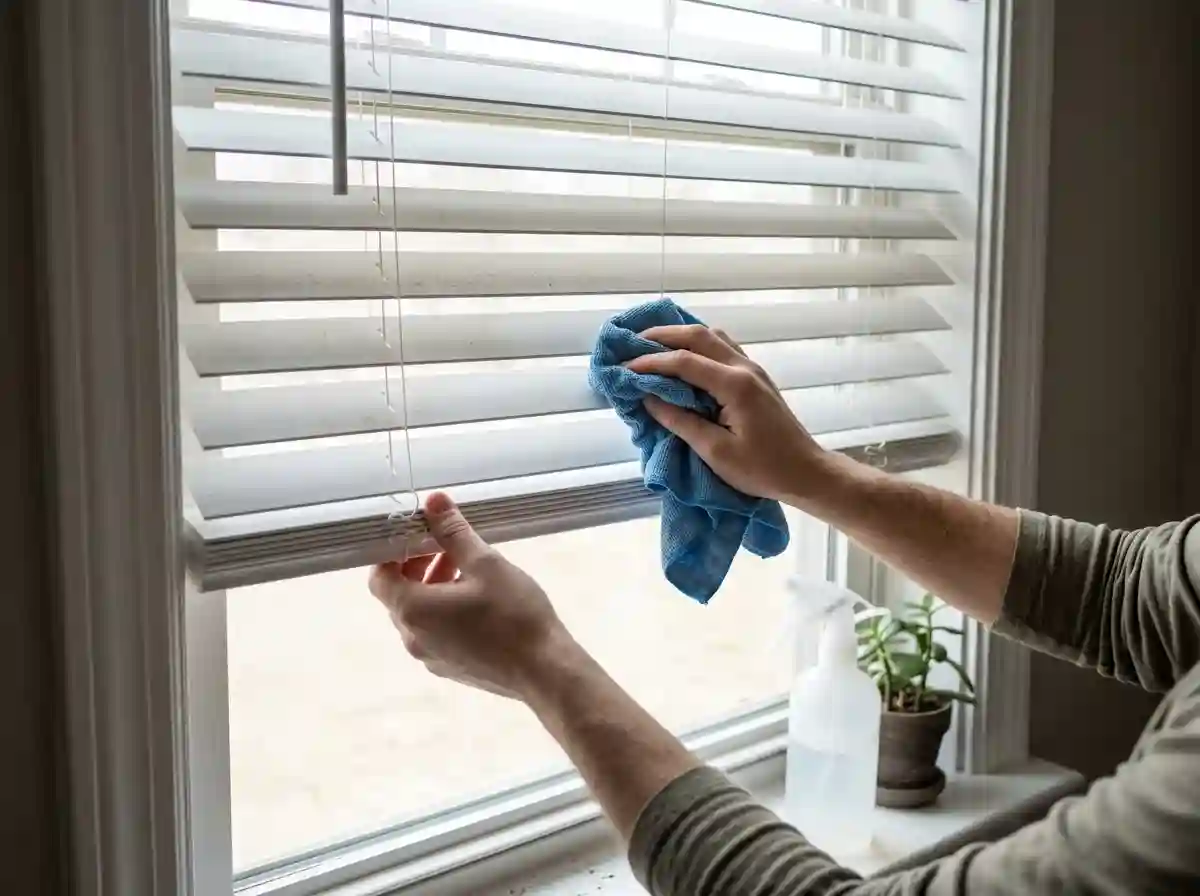
How to Dust Window Blinds CorrectlyAlthough dusting may seem straightforward, using excessive force or rough cleaning tools can scratch hard surfaces, bend slats, or damage delicate fabrics. To clean your blinds safely, use a soft feather duster or a clean microfibre cloth. Both options can help lift dust without putting unnecessary pressure on the material.
Work gently across each slat or panel, moving from one section to the next. For horizontal blinds, clean along the slats carefully and pay attention to the edges where dust can collect. For fabric blinds, use light strokes to avoid snagging or stretching the material. Regular gentle dusting helps maintain the appearance of your blinds and reduces the need for intensive cleaning.
Read More: The Perfect Fabric for Roman Blinds
3. The Good Old Soap Solution
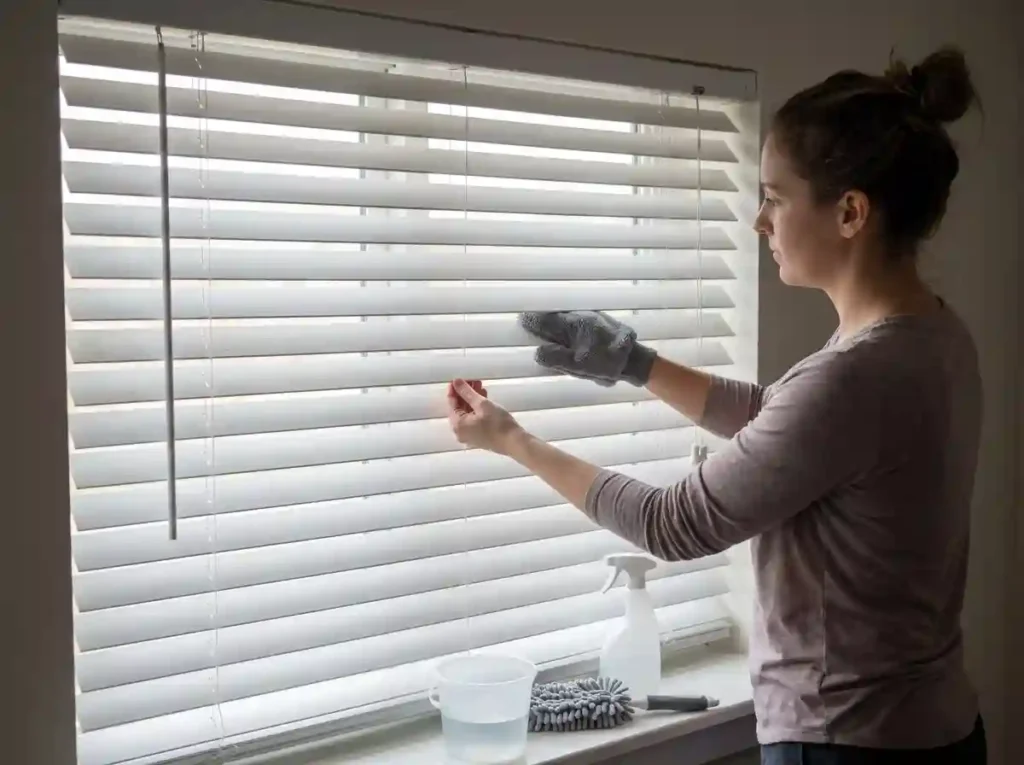
Cleaning blinds with a mild soap solution can help remove stubborn dirt, stains, and spots more effectively than dusting alone. This method is suitable for many How to Prepare the Cleaning Solution
Begin by adding a small amount of mild dish soap or suitable detergent to a container of lukewarm water. Avoid using strong chemicals or abrasive cleaners that could damage the blinds’ finish. Dip a clean, soft cloth into the solution and wring it out thoroughly so that it is damp rather than soaking wet.
Gently wipe each blind slat or fabric panel, paying attention to visible stains and areas where dirt has accumulated. Test the solution on a small, inconspicuous area first to check for any discolouration or damage. Do not saturate fabric blinds or allow excess water to reach the operating mechanisms.
Read More: Blinds for Bay Windows
Wipe and Dry the Blinds
After cleaning, use a separate cloth lightly dampened with clean water, if suitable for the material, to remove any soap residue. Then wipe the blinds with a clean, dry cloth to absorb remaining moisture and prevent streaks or water marks.
Make sure the blinds are completely dry before raising them or closing them against the window. Removing detergent residue is important because leftover soap can attract dust and leave marks on the surface. Always follow the manufacturer’s care instructions to help protect the blinds and maintain their appearance.
4. Beat The Dirt With Baking Soda (Or Some Similar Agent!)
Read More: Common Issues With Window Blinds: How To Fix?
Wipe the entire treated area of the blinds with a clean, dry microfiber cloth to remove any remaining cleaning solution.
Alternatively: You can use vinegar in the same manner, which can also be effective for cleaning suitable blind materials.
Conclusion
Hoping for our effortless window blind cleaning guide to be really helpful for you in dealing with dirty blinds. Once you’ve gone through all of the above-mentioned easy yet effective methods, you’ll get to know that it isn’t always necessary to do it the hard way. And you just need to act a little smart in order to get your desired home maintenance job done.
Over and above, none of our cleanups requires a lot of cleaning tools or a high extent of efficiency, rather all we do is focus on the DIY tips and tricks, using even easier cleaning techniques.
We have high hopes for your next blind cleanup to be the most convenient for you!
Frequently Asked Questions (FAQs)
Though window blind dusting can be one of the most unwanted everyday chores, you still gotta do it, so that your blinds last long. Dusting them at least once a week works pretty well and it’s also a good idea to consider washing them occasionally for a deeper cleanup.
Always start by dusting the blinds first and then you can either proceed to vacuuming or washing. That’s because dusting helps get rid of all the loosened dirt and dust particles, not leaving them to scatter and pollute the surrounding space. It’s also really crucial to dust the blinds first if you’ve got any allergies.
Using a damp cloth is always a way better idea as compared to using the dry one. That’s because a damp fabric attracts dirt and buildup more efficiently and helps in quicker cleaning, whereas dry dusting is the most likely to end up polluting the surroundings even more, as it tends to move the dust particles around.
Always dust/clean the window blinds in the direction of slats so as to avoid creating any mess and most importantly leaving any spaces unaddressed. Besides, doing so lets you clean the entire blind profile with much convenience and with better outcomes.