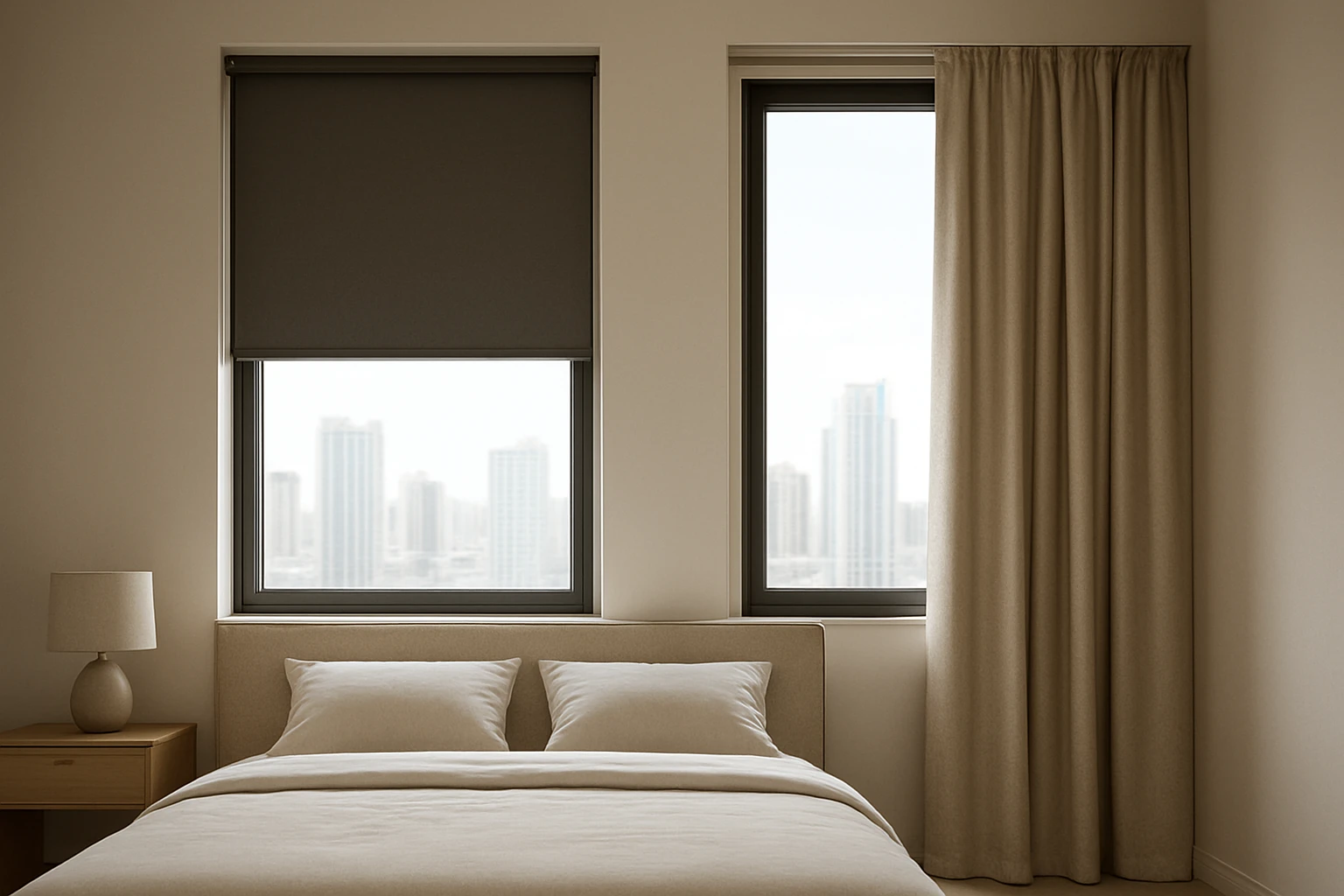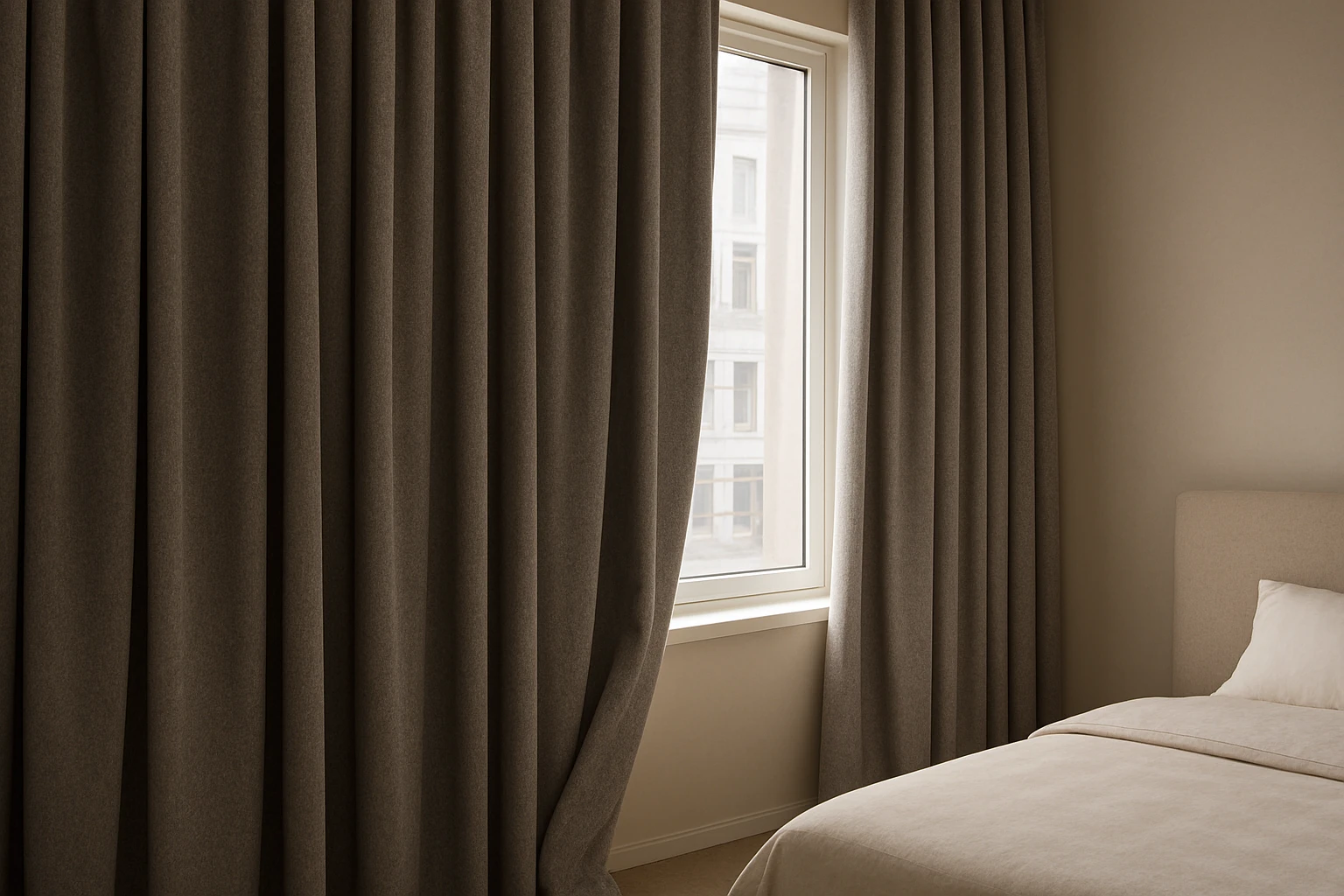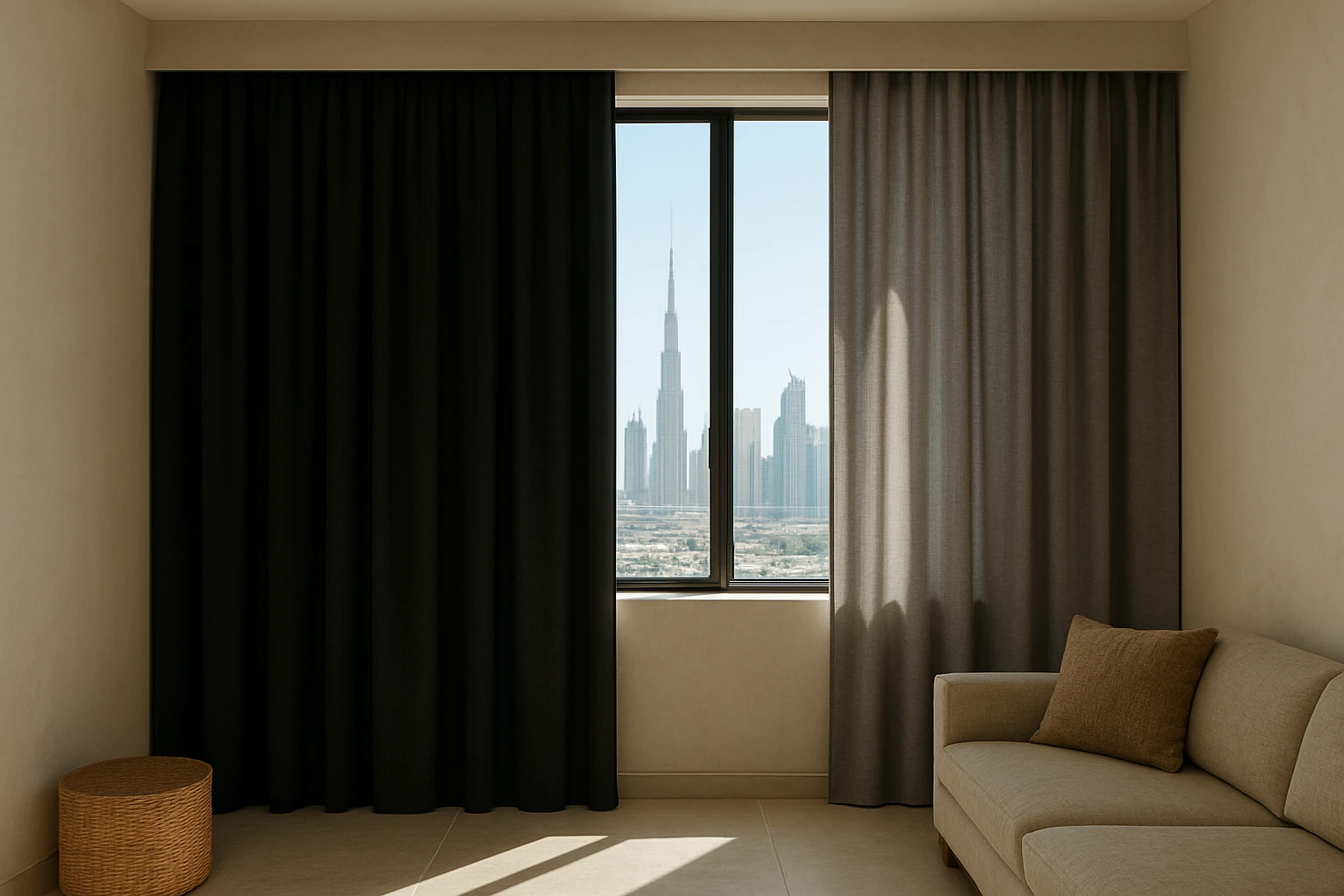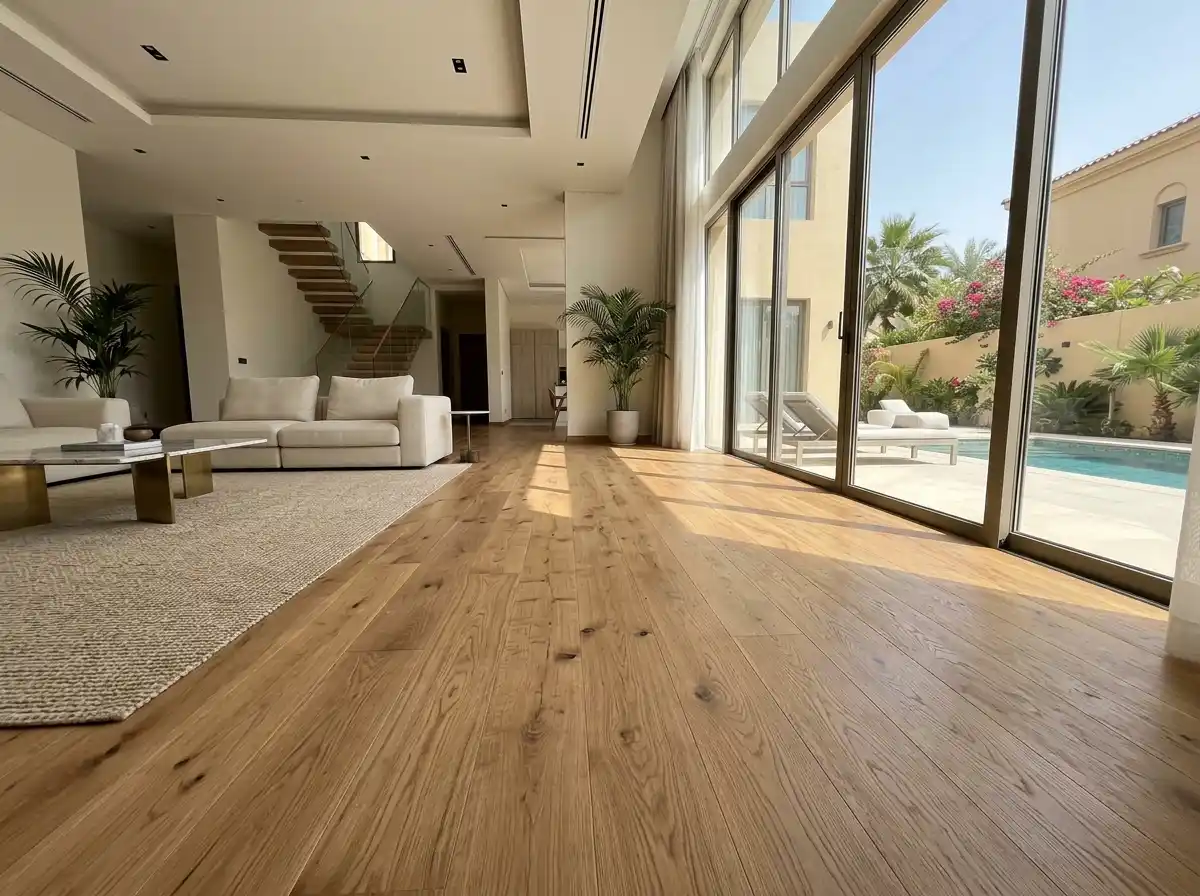
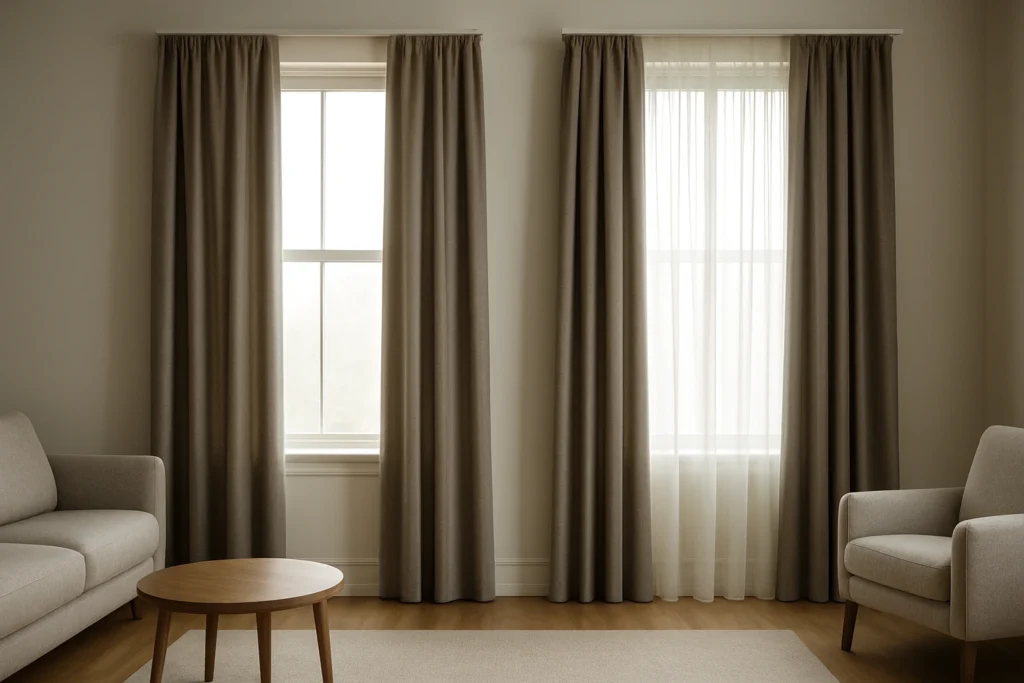
Double layer curtains give you separate control over daylight and privacy, usually with a sheer curtain behind a thicker curtain. Single layer curtains use one curtain treatment, which costs less and takes up less space but offers fewer light settings. Choose double layers when you want soft daylight by day and stronger privacy at night, or choose a single layer when one fabric already meets your needs.

The main question is not simply which setup has more fabric. It is whether you need the window to do different jobs at different times. This comparison from Design Furniture explains what changes with each setup, what affects the price, and which fitting details can make either choice work better.
What Is the Difference Between Single and Double Layer Curtains?
Single layer curtains have one curtain treatment that you open and close, while double layer curtains have two that move separately. The number of panels does not define the setup, so a pair of curtains meeting in the middle still counts as a single layer.
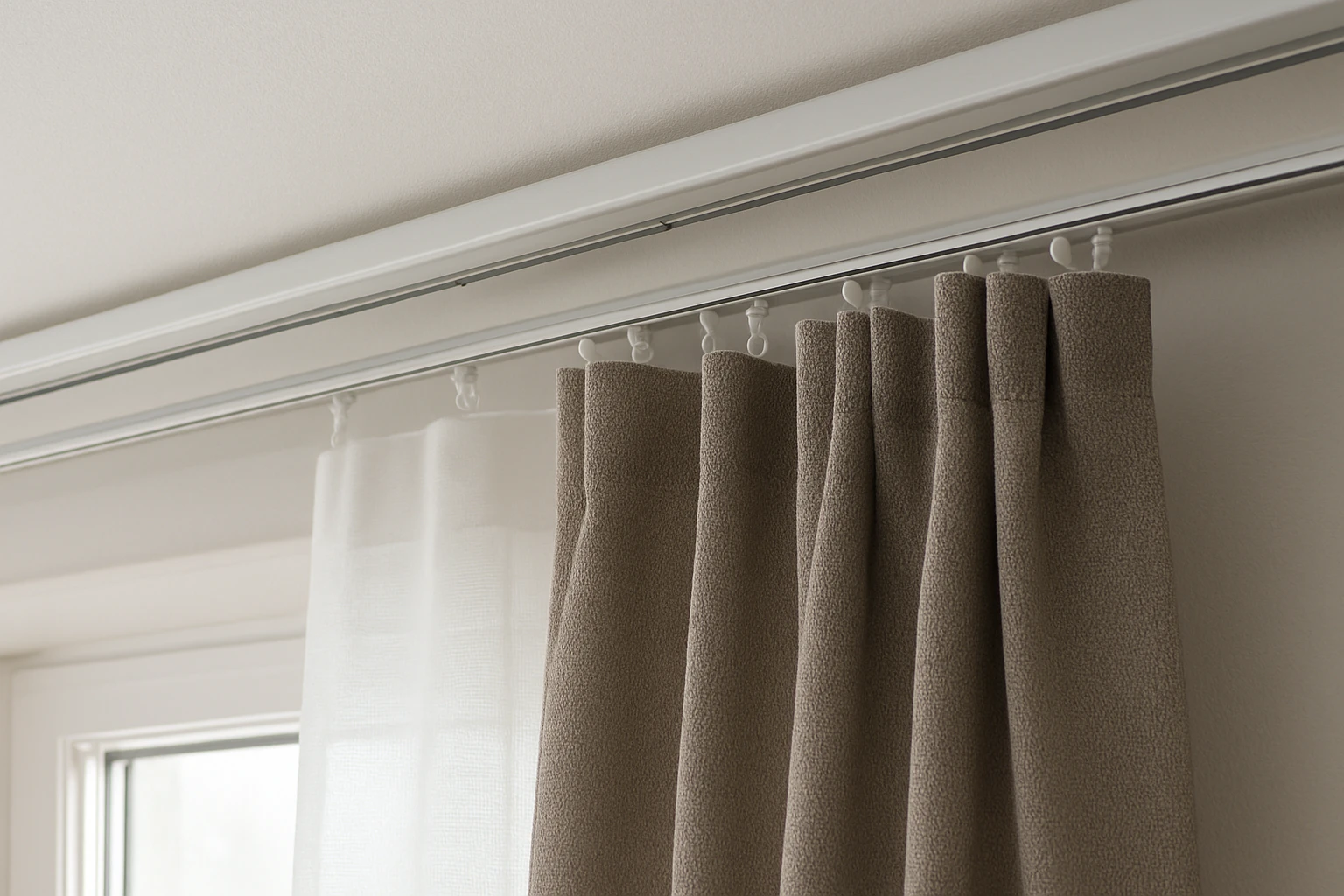
A single curtain can also have a lining sewn onto its back. That lining adds fabric, but it moves with the main curtain rather than giving you a separate light setting. When ordering, ask whether “double layer” means two curtains that move separately or simply a lined curtain, because sellers may use the term differently.
| Feature | Single Layer Curtains | Double Layer Curtains |
|---|---|---|
| Typical setup | One sheer, light-filtering, or blackout treatment | A sheer behind an opaque or blackout treatment |
| Light control | Depends on one fabric | Separate settings for filtered light and darkness |
| Daytime view | Clearer through sheers, limited through opaque fabric | Sheers soften the view while outer curtains stay open |
| Night privacy | Good with a suitable opaque fabric, poor with sheers | Good when the opaque outer curtain is closed |
| Blackout potential | Good with blackout fabric and a careful fit | Good with a blackout outer curtain and a careful fit |
| Space needed | Less track depth and fabric bulk | More clearance and space for gathered fabric |
| Initial cost | Usually lower for a comparable fabric and finish | Usually higher because of extra fabric and hardware |
| Cleaning | One treatment to maintain | Two treatments, sometimes with different care needs |
Neither setup is automatically better. A well-fitted single blackout curtain can darken a room better than two thin decorative layers.
Which Curtains Give Better Light Control and Privacy?
Double layer curtains offer more light settings, but the fabric and fit determine how much privacy or darkness you get. Adding a sheer behind an opaque curtain gives you more choice rather than making the room automatically darker.

Daytime Privacy Is Not the Same as Night Privacy
Sheer curtains soften sunlight and can make a room less visible from outside when it is brighter outdoors. They do not provide dependable privacy after dark, when room lights make the inside brighter than the street.
Fabric density, viewing distance, and the angle from a nearby building also matter. A ground-floor room facing a walkway needs more protection than an upper-floor window with no close neighbours. Before relying on sheers alone, check the view from outside with the indoor lights on. The guide to seeing through sheer curtains at night explains that change in visibility.
Blackout Depends on Fabric and Gaps
Blackout curtains use fabric or backing designed to block light through the material. Light can still enter above the track, around the sides, or through the gap where the curtains meet.
For a bedroom, focus on generous coverage, a good centre overlap, and a fitting that limits side gaps. A sheer layer will not fix those gaps because it lets light through by design.
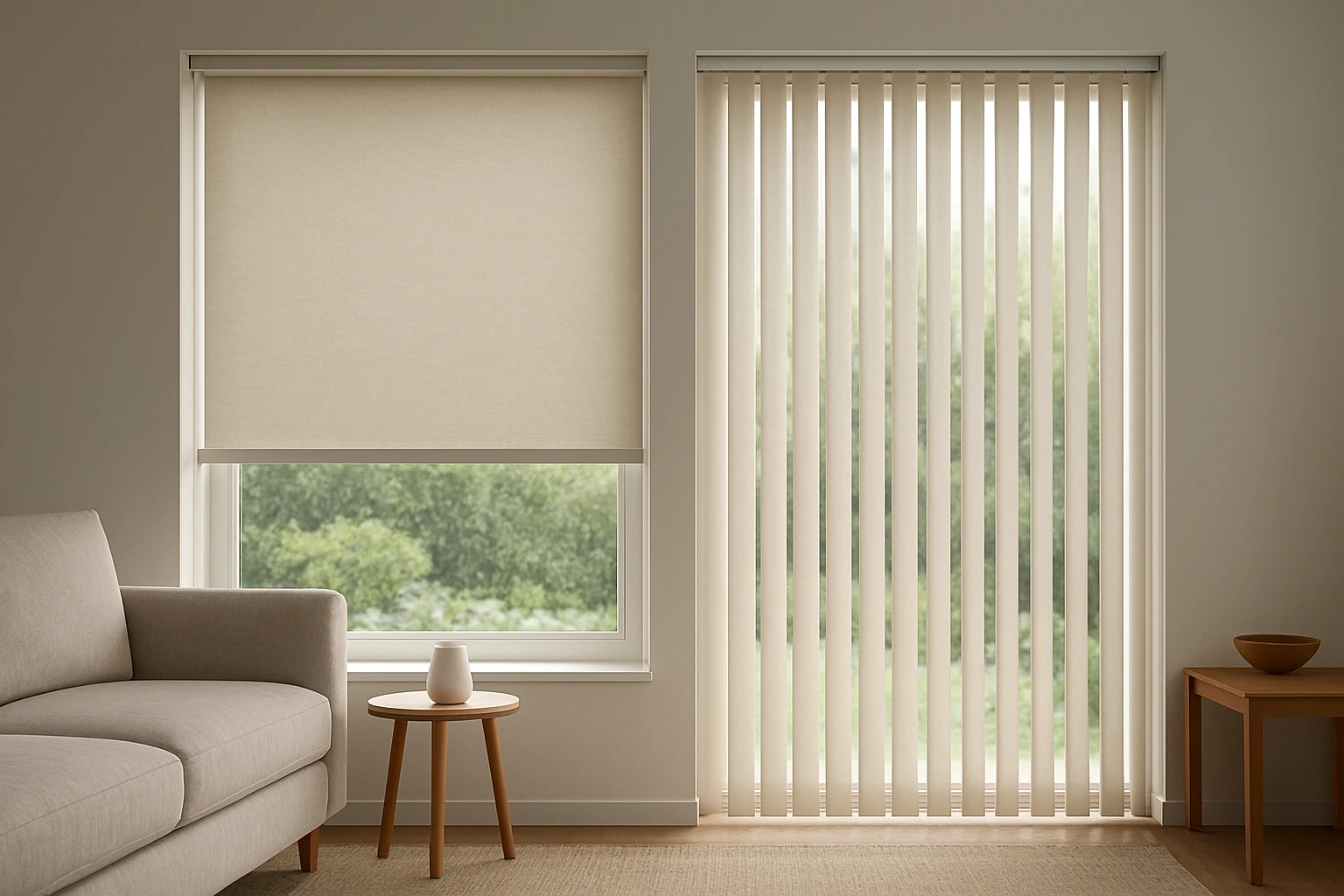
If you need a dark room but have little space for two curtain tracks, blackout blinds paired with a single decorative curtain are another option. Check the blind’s edge gaps too, since blackout fabric does not guarantee a fully dark room.
Heat and Noise Need Separate Checks
A second curtain layer can help slow heat moving through a window, but there is no fixed saving that applies to every home. Fabric, lining, coverage, glazing, and direct sun all affect the result.
For a west-facing Dubai window, close the sun-facing curtain or blind before strong afternoon sun reaches the room. Ask the supplier about a suitable pale lining for the side facing the window. Sheers alone should not be treated as strong heat protection.
Heavy fabric may soften echoes, but ordinary double curtains will not soundproof a room. When comparing soundproof curtains, ask what noise reduction the product has been tested for and under which conditions, rather than judging it by thickness alone.
Which Setup Works Best in Each Room?
Choose curtain layers based on how you use the room, not just its size or style. Double layers make the most sense when your need for daylight, privacy, or darkness changes during the day.
| Room or Situation | Better Starting Choice | Reason and Main Check |
|---|---|---|
| Bedroom used only for sleep | Single blackout layer | Meets the main need with less bulk, provided the edges are well covered |
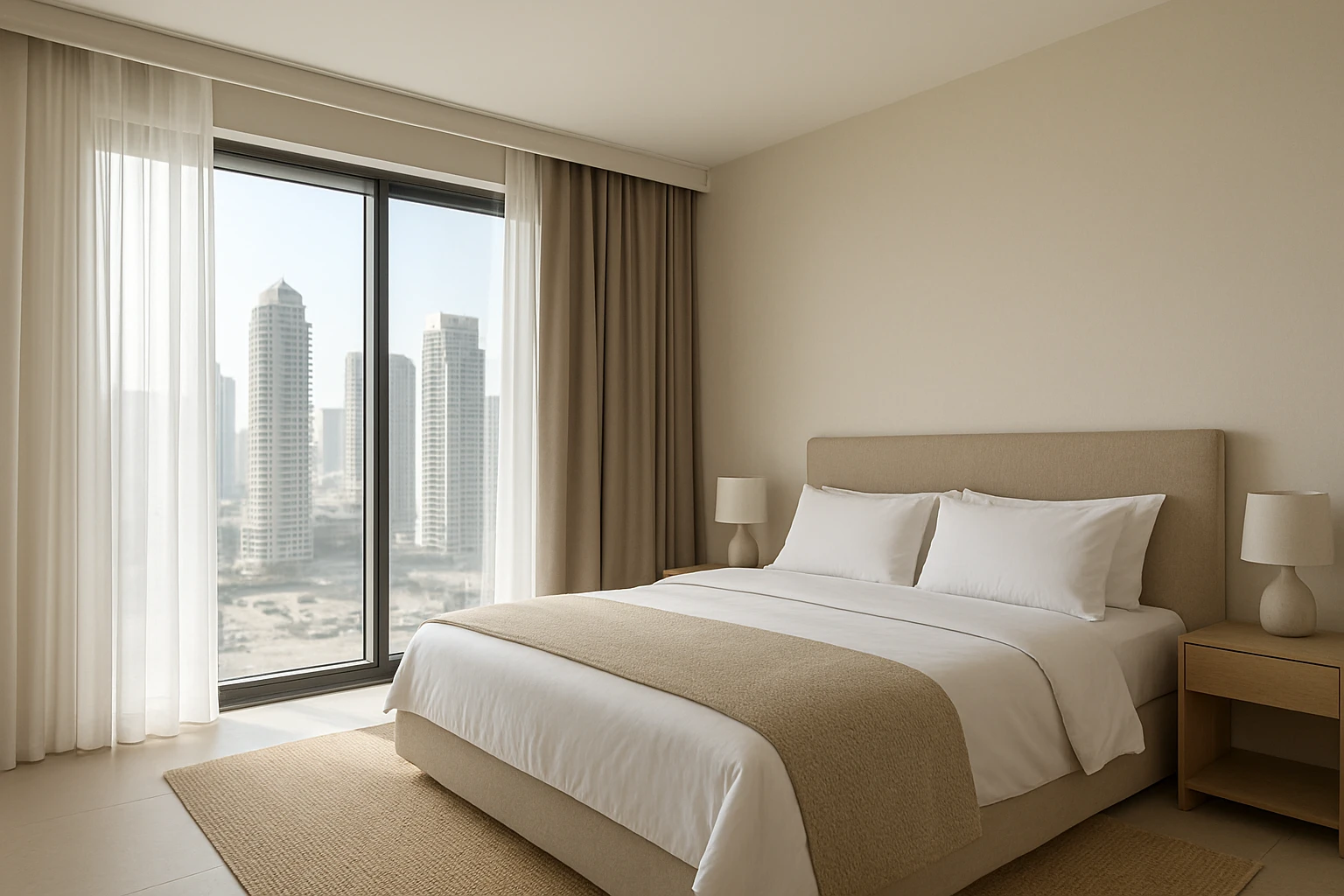
| Bedroom used for dressing or daytime rest | Sheer plus blackout | Allows filtered daylight for dressing and darkness for rest |
| Living room overlooked by neighbours | Sheer plus opaque curtain | Gives daytime screening and stronger night privacy |
| Living room with no close overlooking | Single light-filtering or opaque layer | May meet the need without extra hardware |
| Home office with screen glare | Sheer plus denser curtain | Allows more control as the sun moves, but test glare at desk height |
| Small room with a narrow wall beside the window | Single layer or blind and curtain | Reduces the amount of gathered fabric beside the glass |
| Large sliding balcony door | Either, with careful track planning | Both treatments must move clear of the opening and door handle |
For bedroom curtains, think about when you actually sleep. Someone who works night shifts needs stronger daylight control than someone who only closes curtains after sunset.
A double setup can suit a small room if the tracks fit close to the ceiling and the fabric has room to gather. The problem is not the room size itself, but a cramped fitting that leaves curtains rubbing against each other or covering too much glass when open.
For more help with fabric, colour, and room use, these factors for choosing home curtains can help you narrow the options before ordering.
How Much Space and Fabric Do Double Curtains Need?
Double curtains need two clear paths so each layer can move without catching the other. Measure the full fitting area, including handles and the space beside the window, rather than measuring the glass alone.

Follow these steps before choosing the fabric:
- Measure the intended track width, not just the window opening.
- Check how far any handle, sill, or door fitting sticks out.
- Allow room for the folds of both layers, not just the flat fabric.
- Check where the curtains will gather when open. This gathered width is called the stack-back.
- Measure the drop from the correct track or rod point to the chosen hem position.
- Confirm that the wall or ceiling can support the full weight of the curtains and hardware.
There is no single correct gap between tracks because heading styles and fabric thickness differ. Ask the supplier to show the proposed track spacing with the actual curtain style, especially inside a shallow ceiling recess.
Work Out Fabric for Each Layer Separately
Curtain fullness is the amount of fabric used compared with the track width. Around 1.5 to 2.5 times the track width is a common starting range, but the heading style and fabric can require a different amount.
For example, a 2-metre track at 2 times fullness needs about 4 metres of flat fabric width for one layer. If both layers use that fullness, each needs about 4 metres, giving 8 metres of combined flat width before allowing for seams and hems. This is not the same as buying 8 linear metres of fabric, because roll width, curtain height, seams, and pattern matching affect the order.
A common mistake is dividing one layer’s fabric allowance between two tracks. That leaves both curtains looking flat and can reduce their coverage when closed.
Match the Hardware to the Curtain Style
Eyelet curtains form deep folds around a rod, so the rear layer needs enough clearance to avoid rubbing. Track-mounted headings can be easier to plan where ceiling space is limited, though the exact fit still needs checking.
For motorised curtains, ask how the layers will operate. Separate powered tracks allow independent control, while one powered outer curtain and a manual sheer may meet your needs at a lower cost.
A curtain installation service in Dubai should check that the fixings are strong enough and that there is room for the curtains to move, as well as confirming the width and drop. The guide to layering sheer and blackout curtains explains the arrangement in more detail.
Are Double Layer Curtains Worth the Extra Cost and Care?
Double layer curtains are worth the extra cost when you will use both layers regularly. If the sheer will stay open all day or an existing blind already provides privacy, a second curtain layer may add work without much benefit.
Compare quotes for the same window size, fabric grade, fullness, and fitting method. A single custom curtain in an expensive fabric can cost more than a basic double setup, so layer count alone is not a fair price comparison.
| Quote Item | What to Check |
|---|---|
| Fabric | Separate fabric quantities and grades for each layer |
| Lining | Whether blackout or thermal lining is included |
| Hardware | Single or double tracks, rods, brackets, runners, and end stops |
| Making | Heading style, pattern matching, seams, and hems |
| Installation | Measurement visit, fixing work, access, and fitting charges |
| Motorization | Number of motors, controls, power supply, and setup |
| Final price | Whether VAT and all required work are included |
For Dubai homes, a quote in AED based on your window measurements is more useful than a price “per metre” unless the supplier explains exactly what that metre covers. It could refer to track width, fabric length, or a finished curtain package, which makes advertised prices hard to compare.
Double layers also mean more fabric to remove, clean, and rehang. The sheer and outer curtain may have different care labels, so do not assume they can share one wash cycle. Heavy lined panels may need professional cleaning, while some lightweight sheers can be washed at home according to their labels.
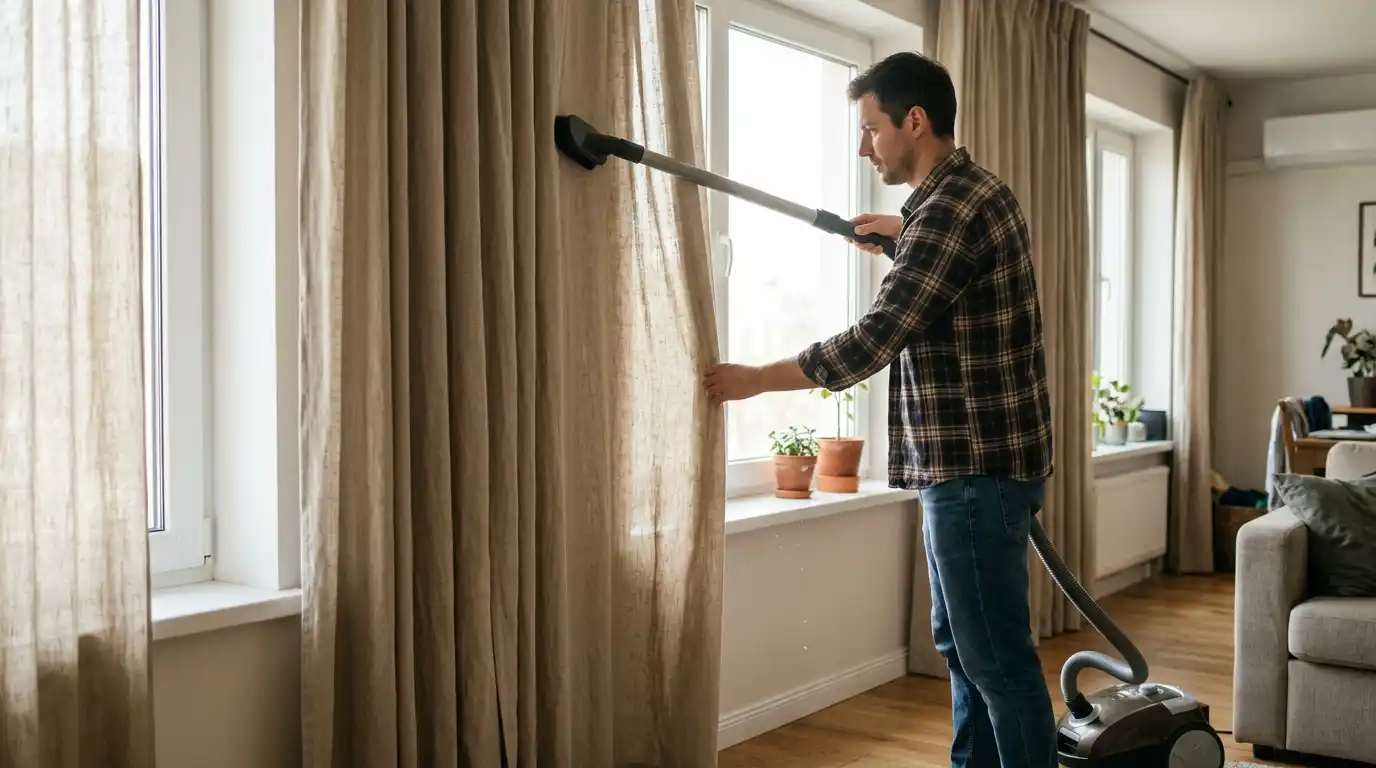
Regular gentle vacuuming can reduce dust build-up, but check the fabric maker’s care advice first. These steps for cleaning dusty curtains cover routine care without treating every fabric the same way.
Should You Choose Single or Double Layer Curtains?
Choose single layer curtains when one fabric can meet your light and privacy needs, and choose double layers when you need to switch between filtered daylight and stronger screening. Spend on the right fabric and fit before spending on an extra layer.
For a bedroom that needs darkness but little daytime screening, a well-fitted single blackout curtain is a sensible choice. For an overlooked living room or a bedroom used throughout the day, a sheer and opaque pair usually gives more useful control.
Before buying curtains, ask yourself what you want the window to do at breakfast, during strong afternoon sun, and after the lights come on. If the answer changes, two independent layers are likely to earn their place.
When requesting a quote, include window photos, rough dimensions, your privacy needs, and any existing blinds or tracks. You can contact Design Furniture to discuss a setup. Final measurements and checks of the fixing points should be completed before the curtains are made.
Frequently Asked Questions
Can I Add a Sheer Curtain Behind My Existing Curtains?
You can usually add a sheer behind existing curtains if there is space for another track and secure fixings. The existing curtain must still clear the new layer, window handles, and sill. Have the track position checked before buying fabric, since a shallow recess or closely fitted rod may limit your options.
Should Both Curtain Layers Be the Same Colour?
Both curtain layers do not need to be the same colour, and a light neutral sheer often works well behind a darker outer curtain. Compare samples together against the window because sunlight can change how the colours look. A very warm cream sheer may look mismatched beside a cool grey outer fabric.
Are Double Layer Curtains Suitable for a Rented Apartment?
Double layer curtains can suit a rented apartment if the existing hardware supports them or your landlord allows suitable fixings. Check the tenancy terms before drilling into walls or ceilings. Avoid assuming adhesive brackets can carry two full curtain layers, since the safe load depends on the product and the mounting surface.
Can Double Layer Curtains Cause Mould Near a Window?
Double layer curtains do not create mould by themselves, but closed curtains can hide condensation and reduce air movement near damp glass. Keep fabric away from wet surfaces and let the window area dry. Repeated moisture needs attention to ventilation, humidity, or the window itself rather than a change of curtain style alone.
Can I Use Two Blackout Layers Instead of a Sheer and Blackout Curtain?
You can use two blackout layers, but this usually gives less useful daylight control than a sheer and blackout pair. It also adds weight and bulk without fixing light leaks around the edges. If darkness is the goal, first improve the curtain coverage, centre overlap, and track position before adding another heavy layer.