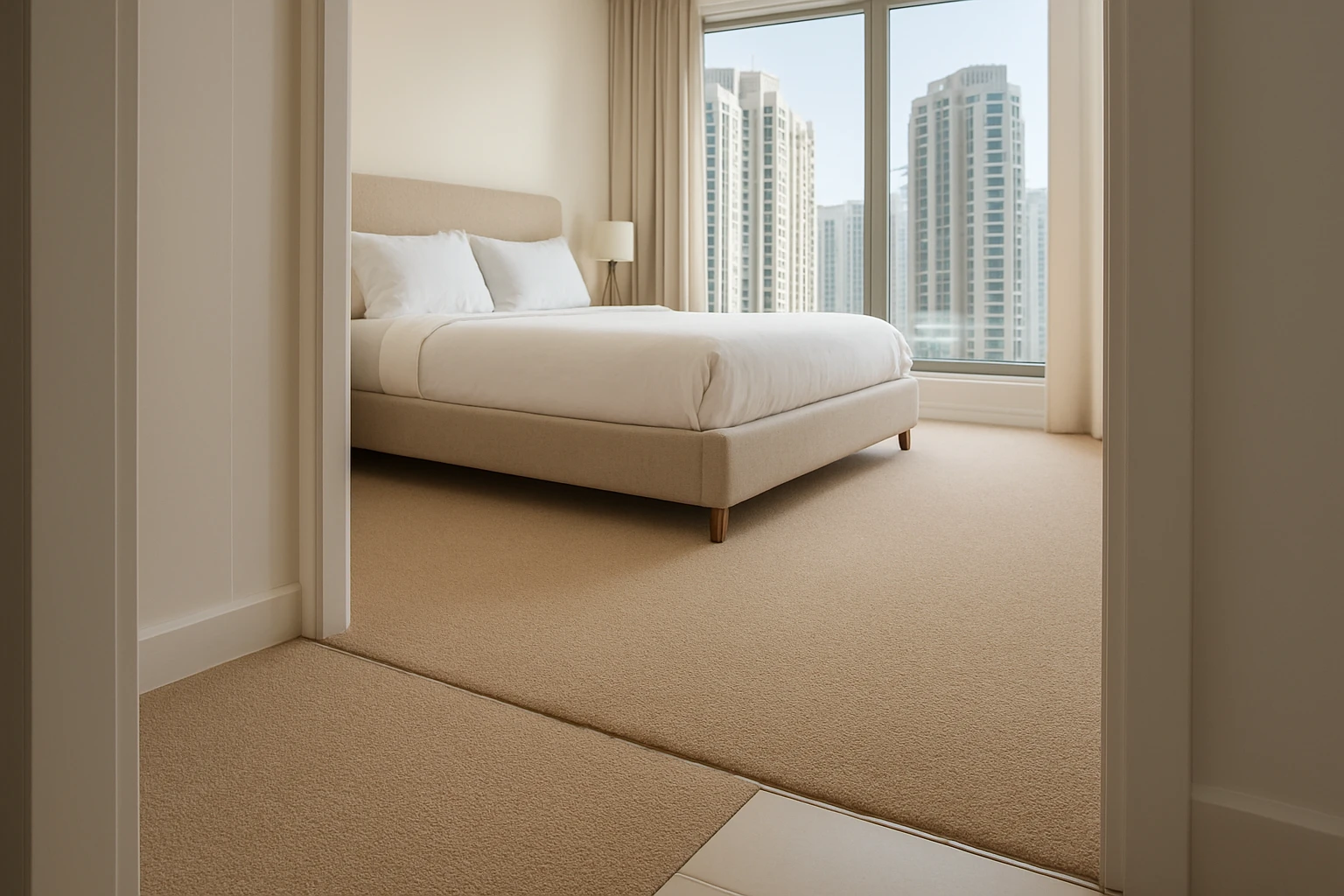
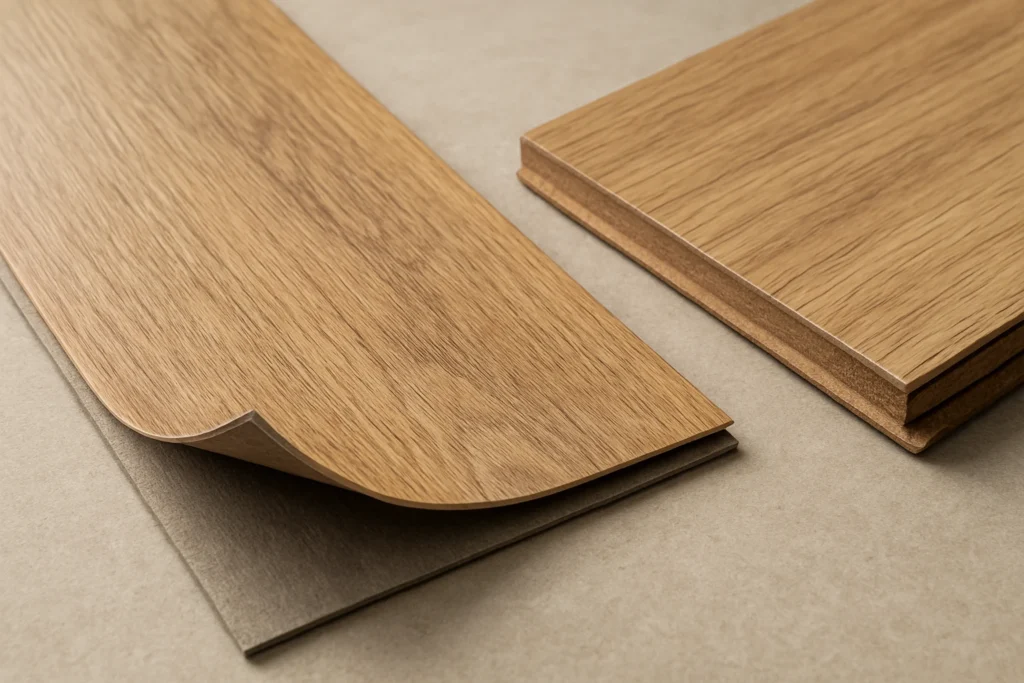
Vinyl flooring is usually the better choice for kitchens, frequent spills, and homes where water reaches the floor, while laminate often suits dry rooms where a firm feel and scratch resistance matter most. Vinyl has a water-resistant core, but laminate usually has a wood-fibre core that can swell if water gets inside. For a Dubai home, compare the Vinyl Vs Laminate Flooring, subfloor preparation, and fitted price rather than choosing by material name alone.
What Is the Difference Between Vinyl and Laminate Flooring?
Vinyl flooring has layers built around a plastic-based or mineral-filled core, while laminate has a dense wood-fibre board beneath a printed design and hard surface layer. Both can look like timber, so the hidden layers often matter more than the pattern you see.
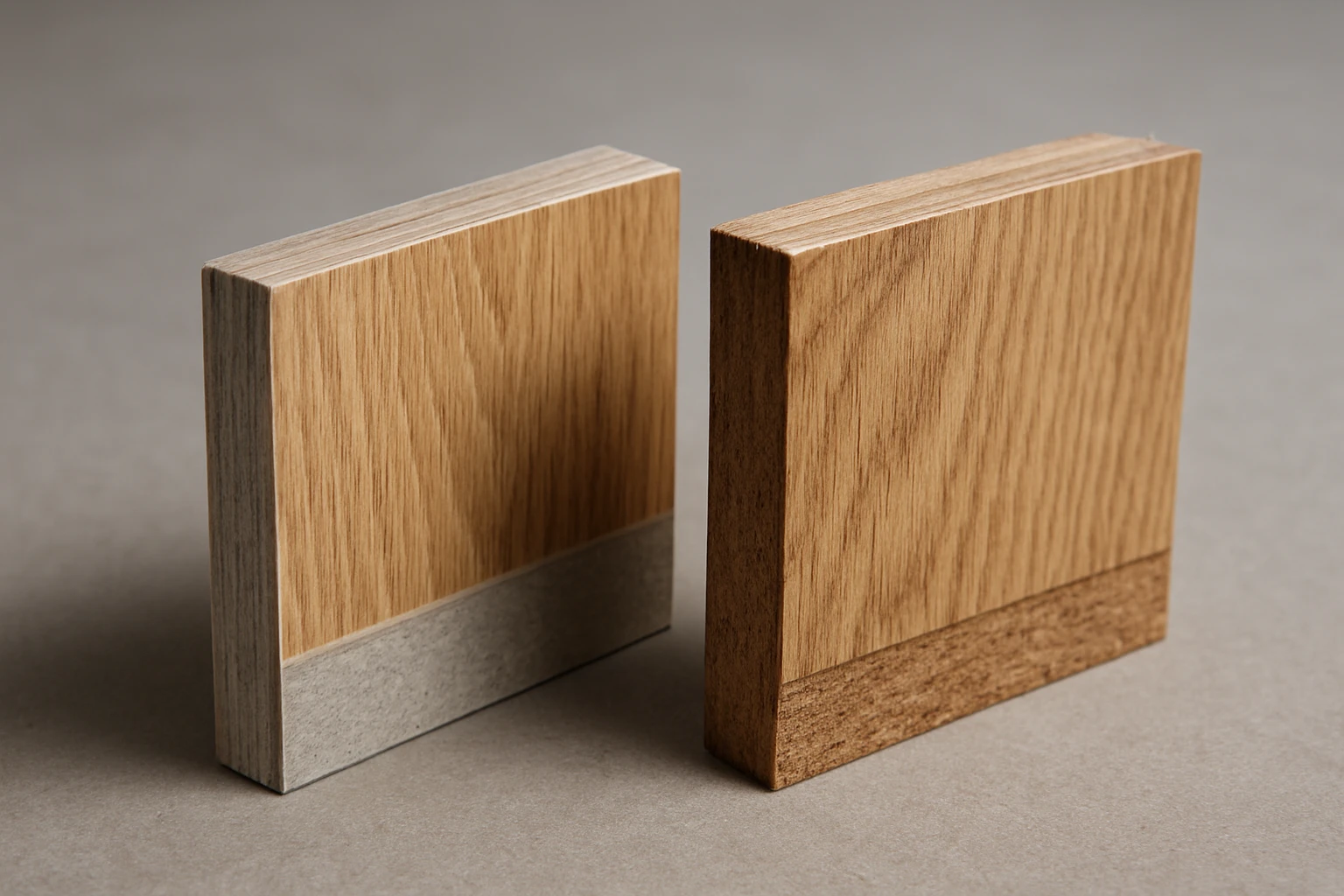
When comparing samples at Design Furniture, check the product sheet too. Two boards with the same oak finish may need different fitting methods, cleaning routines, and protection from water.
Vinyl flooring includes sheet vinyl, flexible tiles, and rigid planks. LVT flooring, short for luxury vinyl tile, is sold as tiles or planks with wood or stone designs. SPC means stone plastic composite, a rigid vinyl core made with mineral filler and plastic. These terms describe different parts of a product, so ask what the floor is made from and how it is fitted.
Laminate flooring normally has a wood-fibre core and click-lock edges. Some products have water-resistant joints and treated cores, but that does not make every laminate floor suitable for a bathroom.
| Buying Point | Vinyl Flooring | Laminate Flooring |
|---|---|---|
| Core material | Plastic-based or mineral-filled, depending on type | Usually dense wood fibre |
| Water exposure | Core usually handles water well, but the floor beneath still needs protection | Water can swell the core unless the product has suitable protection |
| Scratches | Depends on the surface coating and wear layer | A good surface layer often resists fine scratches well |
| Dents | Flexible vinyl can dent under heavy furniture | Firm core resists some dents, but edges can chip |
| Feel underfoot | Flexible vinyl can feel softer; rigid vinyl feels firmer | Usually firm, with comfort affected by underlay |
| Sound | Glue-down vinyl can sound quieter underfoot; floating products vary | Can sound hollow if the base or underlay is poor |
| Fitting | Glue-down, click-lock, or sheet installation | Usually a floating click-lock floor |
| Repairs | Glue-down tiles can be easier to replace one at a time | Click boards may need lifting from a wall to reach damage |
Neither material is solid timber, and neither can normally be sanded and refinished like suitable wooden flooring. A deep scratch that passes through the printed layer usually means replacing the damaged piece.
Which Handles Water Better in Kitchens and Bathrooms?
Vinyl usually handles spills better than laminate because its core does not swell like wood fibre. Still, a waterproof plank does not make the whole floor waterproof, since water can enter around edges, pipes, or poorly joined boards.
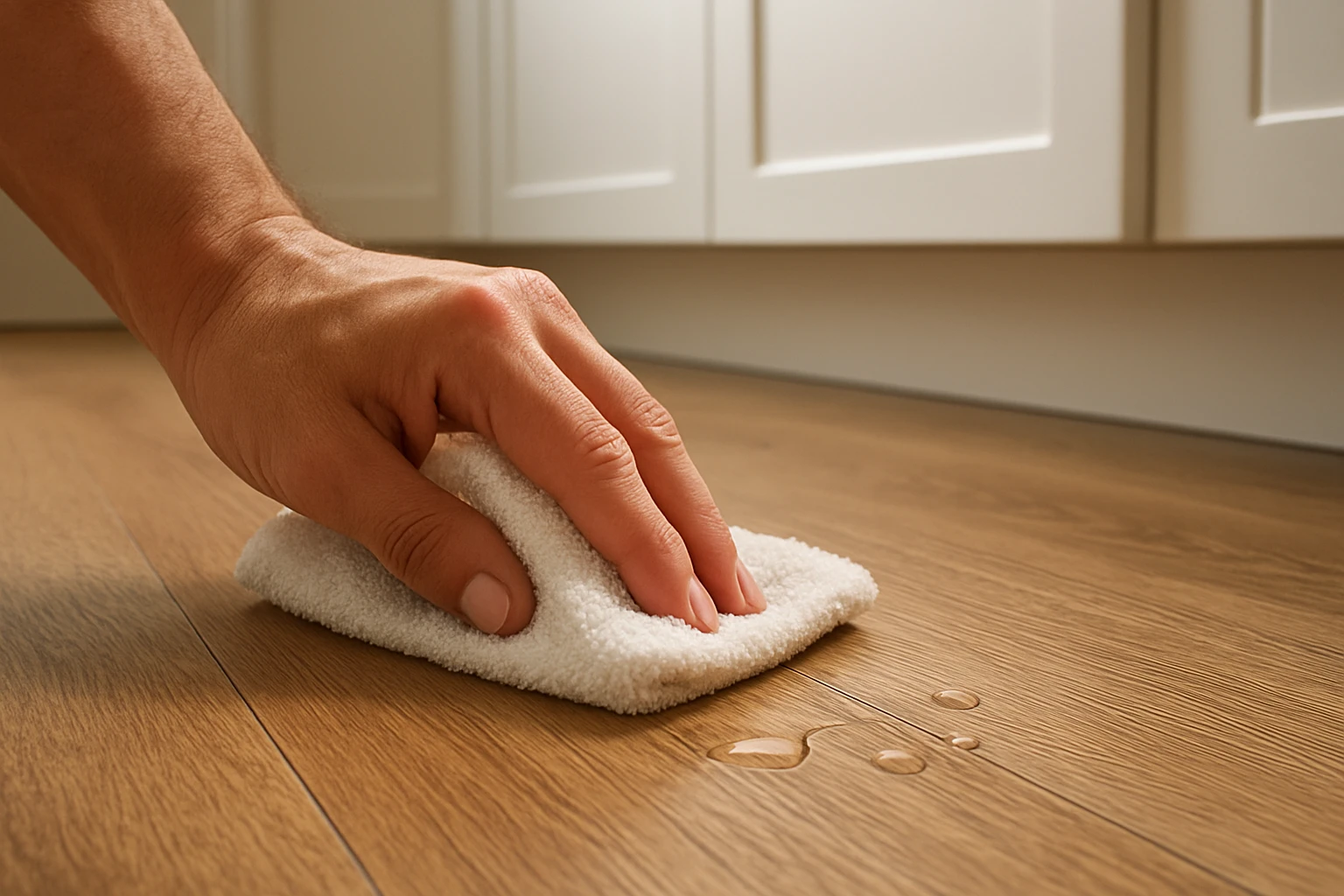
The key difference is between water on the surface and moisture below the floor. A dropped glass of water is not the same problem as a slow dishwasher leak or damp concrete. Water trapped under vinyl can affect adhesive, underlay, or the base even when the planks look unchanged.
For kitchen flooring, vinyl is often the lower-risk choice near sinks, dishwashers, and pet bowls. Water-resistant laminate can work in some kitchens, but only when the manufacturer approves that use and the installer follows the edge-sealing rules.
| Room or Situation | Usually the Better Starting Point | What to Check Before Buying |
|---|---|---|
| Kitchen with regular spills | Vinyl | Appliance leak risks, edge details, and approved cleaning method |
| Dry bedroom | Either | Feel, sound, scratch resistance, and price |
| Living room with pets | Either, with a suitable surface rating | Nail scratches, traction, pet accidents, and repair options |
| Bathroom outside the shower area | Vinyl approved for that room | Wet-area approval, slip information, and perimeter treatment |
| Shower floor or wet room | A purpose-made wet-area system | Drainage, waterproofing, joints, and slip safety |
| Room over damp concrete | Neither until the moisture issue is assessed | Moisture test results and a suitable treatment system |
A common mistake is fitting standard click vinyl into a shower area because the box says waterproof. Wet rooms need a complete system that deals with standing water, drainage, and sealed edges, not just water-resistant boards.
Dubai homes also face air-conditioning leaks and moisture around balcony doors. Fix those faults before fitting either floor, because changing the surface does not fix the source of the water.
Which Looks Better and Stands Up to Daily Use?
Good vinyl and laminate can both give a convincing wood look, while good laminate often has an advantage against fine surface scratches. Vinyl is usually more forgiving of spills, but its resistance to marks depends on the coating, wear layer, and product type.
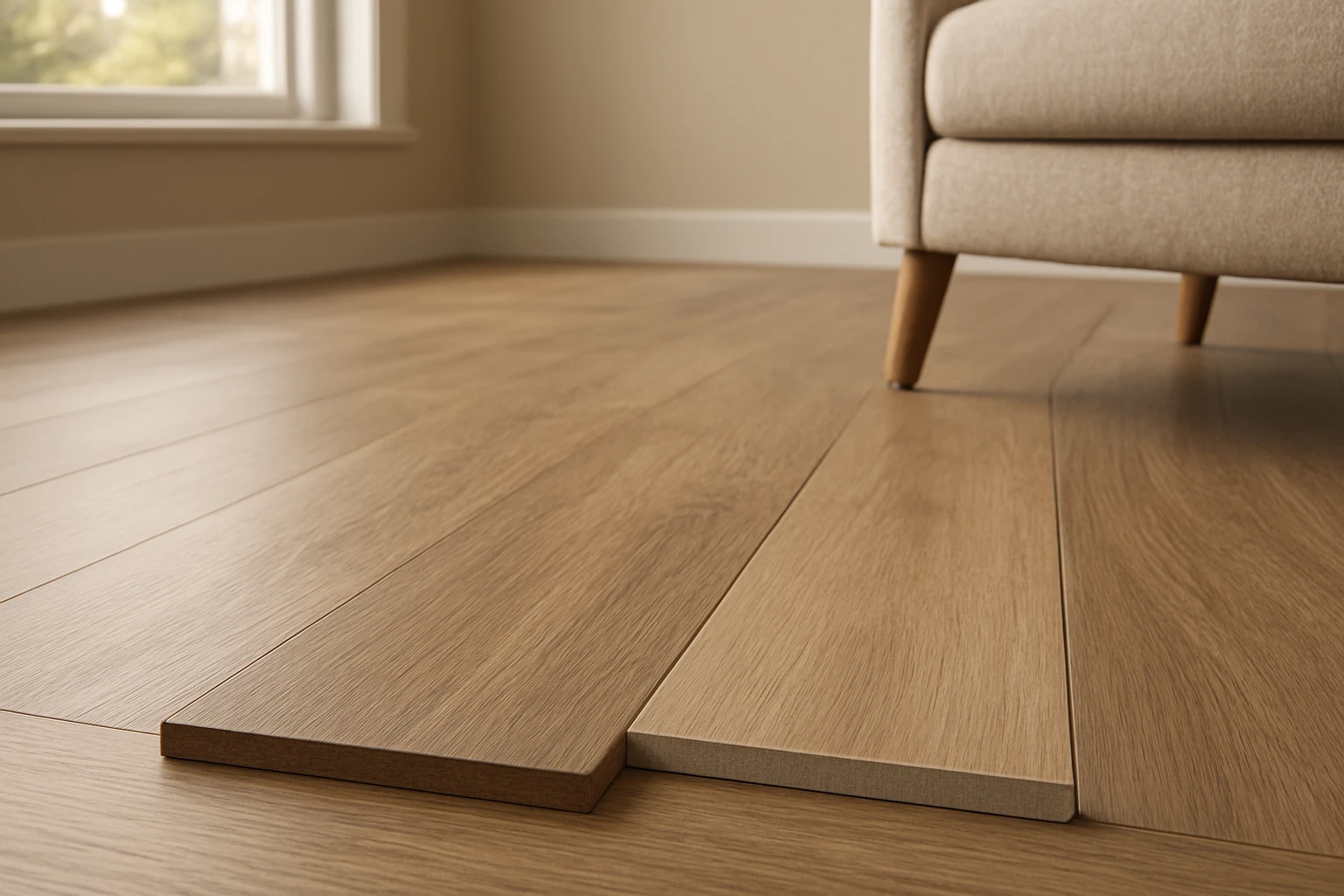
Scratches, Dents, and Product Ratings
For laminate, an AC rating describes resistance to surface wear from rubbing. It is not a promise against every scratch, dent, or water spill, so also check the product’s stated use class and warranty conditions.
For vinyl, the wear layer is the clear protective layer above the printed design. Manufacturer specifications commonly list options such as 0.3 mm and 0.5 mm. A thicker wear layer can help with wear over time, but it does not make a floor scratch-proof, and it says little on its own about the strength of the locking edges.
Sand carried indoors can mark either floor when shoes or furniture drag it across the surface. This matters in Dubai, where a good entrance mat and regular vacuuming may protect the finish more than buying a thicker board.
For pet owners, consider nail scratches and wet accidents separately. A hard laminate surface may resist light claw marks well, while vinyl offers more protection against repeated water spills or accidents. Our guide to flooring for pets covers other useful checks, including grip and ease of cleaning.
Wood Texture, Sound, and Comfort
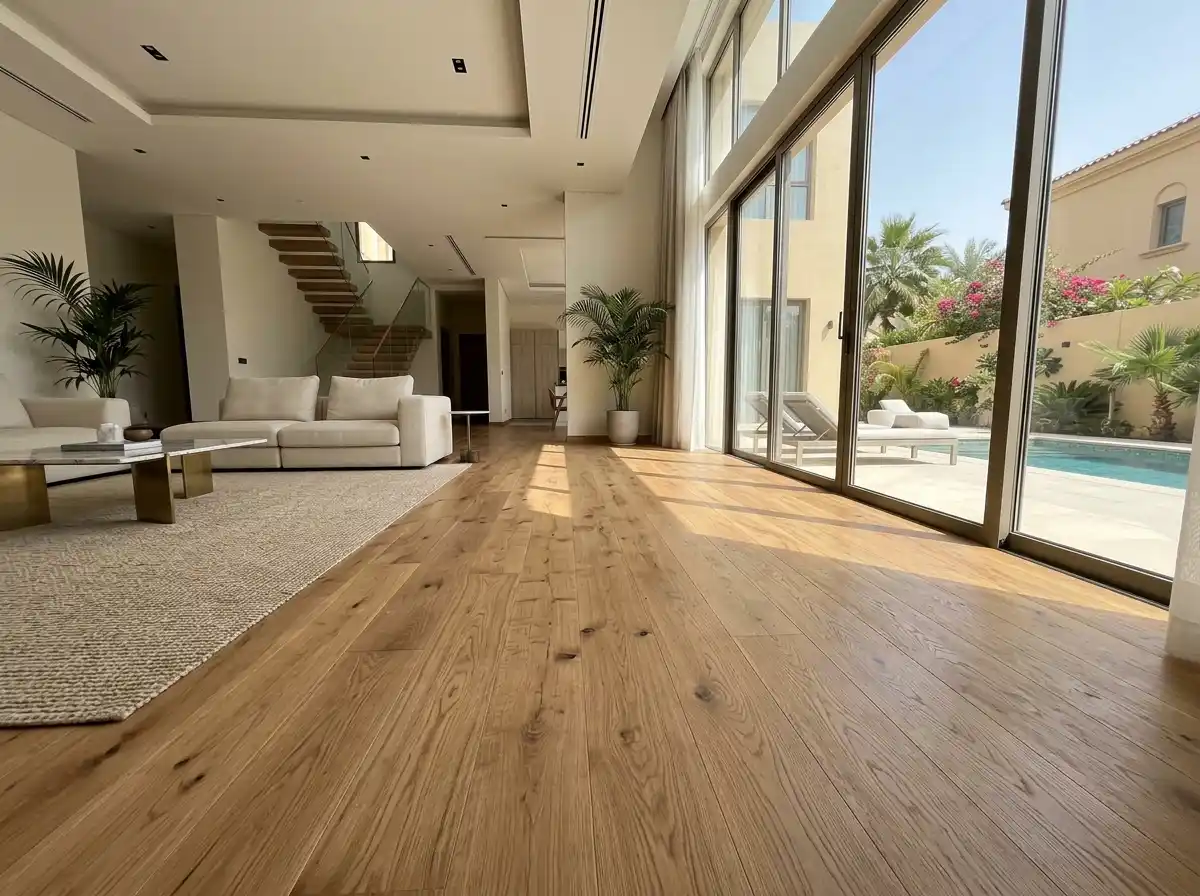
Look at full planks beside a window, not only a small sample under shop lights. Light from the side makes shiny patches, shallow texture, and repeated printed knots easier to spot, especially across a large living room.
A textured surface whose ridges follow the printed grain often looks more natural. Deep grooves can hold dust, though, so a sample that looks attractive in the showroom may need more careful cleaning at home.
Rigid vinyl is not always soft, and laminate is not always noisy. A floating floor rests over the base rather than being bonded to it, so its sound depends on the board, underlay, and flatness beneath it. For an apartment, ask for sound test data for the exact floor and underlay combination rather than relying on a claim that it is quiet.
If you prefer a patterned layout, both materials may be available as herringbone flooring or chevron flooring. Buy a system made for that pattern, because standard straight planks do not necessarily have the right ends or locking edges.
How Much Do Vinyl and Laminate Flooring Cost in Dubai?
Vinyl and laminate prices overlap, so neither is always cheaper. Compare the total fitted cost, including floor preparation, underlay or adhesive, trims, and any changes needed at doors.
The figures below are rough budgeting ranges in UAE dirhams, not a quote or a current price list. Costs vary by supplier, brand, location, order size, fitting method, and site condition. You should also confirm whether VAT is included.
| Item | Rough Budget Range |
|---|---|
| Standard residential laminate, material only | Around AED 40 to AED 100 per square metre |
| Higher-spec laminate, material only | Around AED 100 to AED 180 or more per square metre |
| Standard sheet or flexible vinyl, material only | Around AED 25 to AED 70 per square metre |
| Residential LVT or rigid vinyl, material only | Around AED 45 to AED 140 per square metre |
| Basic installation on a ready, suitable base | Around AED 15 to AED 40 per square metre |
| Levelling, moisture treatment, removal, trims, and door work | Separate costs based on the site |
Lower-priced PVC flooring may be sheet vinyl rather than rigid click planks. PVC is the plastic used in many vinyl floors, so the name alone does not tell you the format, strength, or fitting method.
For example, consider a simple 30-square-metre room. If the chosen floor costs AED 75 per square metre and installation costs AED 25 per square metre, the starting total is AED 3,000 before waste, trims, preparation, and any tax not already included. Adding an example allowance of 7 percent for extra material raises the order to 32.1 square metres and the subtotal to about AED 3,158, assuming installation is charged on the actual room area.
That allowance is only an example. Room shape, plank size, pack size, and laying pattern affect how much extra material is needed, so ask the installer to calculate it from a measured plan.
A cheap board can become the more costly choice if it needs major floor work or has weak locking edges. Ask for an itemised flooring installation quote in Dubai so you can compare what each quote includes, rather than just the headline prices.
What Installation Details Can Make Either Floor Fail?
A flat, dry, stable base is essential for both vinyl and laminate flooring. Underlay cannot fix a floor that dips, and a waterproof surface cannot protect against every moisture problem below it.
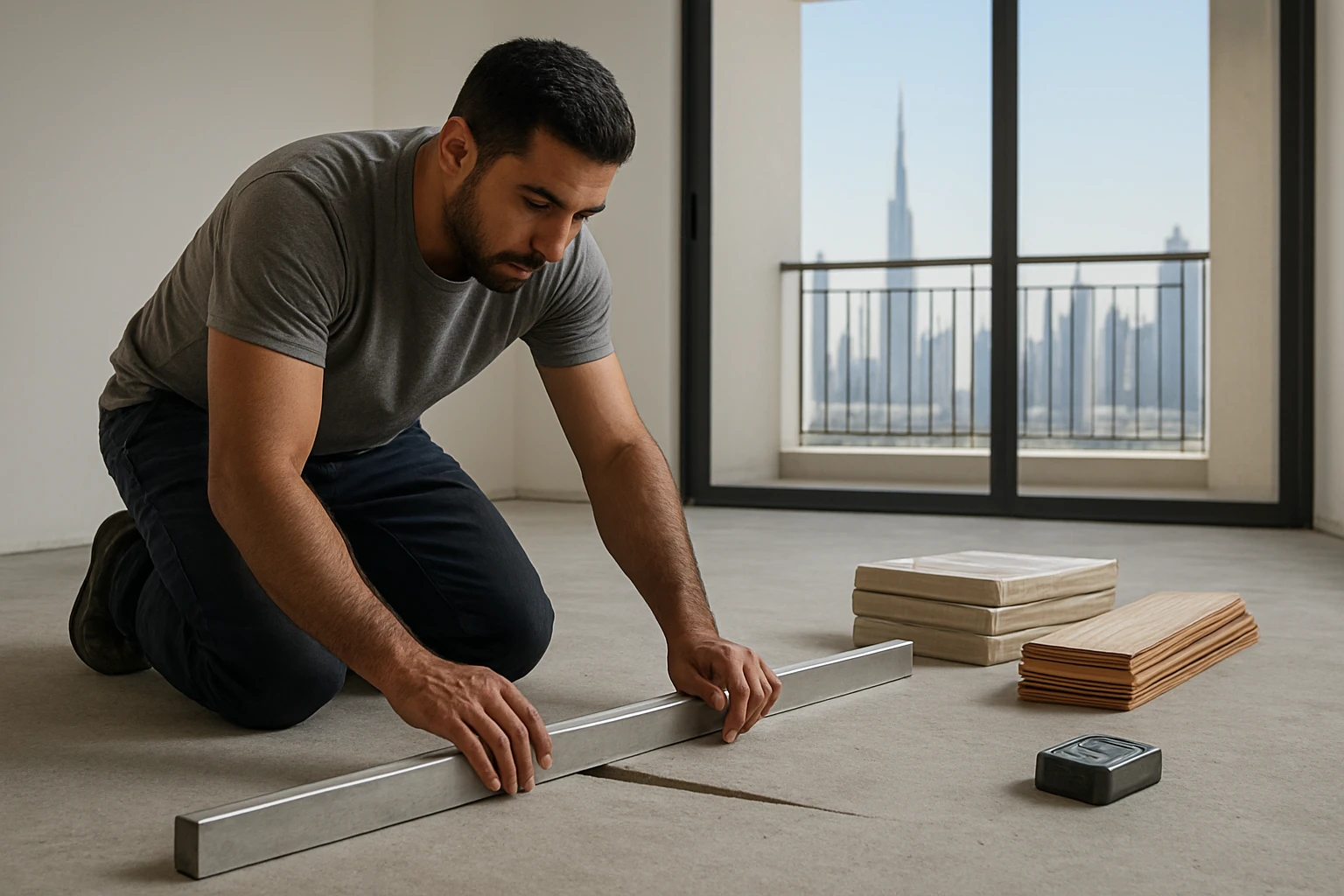
Check the Base Before Choosing the Product
Thin glue-down vinyl can show tile joints, ridges, and other marks through its surface. Rigid click vinyl may hide those joints, but an uneven base can make the boards flex and strain the locking edges. Laminate can also bounce or develop noisy joints over low spots.
The product instructions state how flat the base must be. Ask the fitter to check with a straightedge and test concrete moisture using the method required by the flooring or adhesive maker, rather than judging dryness by touch.
In a Dubai apartment, floor height is another early check. A new floor laid over existing tiles may affect entrance doors, balcony thresholds, appliances, and the change in level at bathrooms. Sorting out those details before ordering helps avoid last-minute door cutting or awkward raised trims.
Allow the Floor to Move as Designed
Floating floors need room to expand and contract around walls and fixed objects. The required gap depends on the product, and long runs may need dividing trims even when you prefer an unbroken look.
A common mistake is trapping a floating floor beneath fixed kitchen units or a heavy built-in island. That can stop the boards from moving and lead to lifted joints or gaps, so follow the manufacturer’s rules about fixed furniture.
Direct sun through large windows can also heat the floor well above the room’s air temperature. For a west-facing Dubai living room, check the product’s heat and sunlight limits, use suitable window shading, and confirm that the adhesive or click system suits those conditions.
Do not assume all boards need the same amount of time to adjust to indoor conditions before fitting. Follow the storage and room-temperature rules for the exact product, with the air conditioning running as required.
Match the Method to the Repair Plan
Glue-down LVT can make a single damaged tile easier to replace, though the old adhesive and base still need careful work. A click floor may need to be taken apart from the nearest wall, and built-in furniture can make access harder.
Keep spare boards from the original batch, because boards from a later order may differ in shade, or the product may no longer be available. If you are planning a small DIY job, this guide to tools for cutting vinyl plank flooring explains why the right cutting method depends on the plank type.
Which Floor Is Easier to Clean and Maintain?
Vinyl is usually more forgiving of damp cleaning, while laminate needs more care to keep water out of the joints. Both last longer when you remove grit often and protect furniture feet.
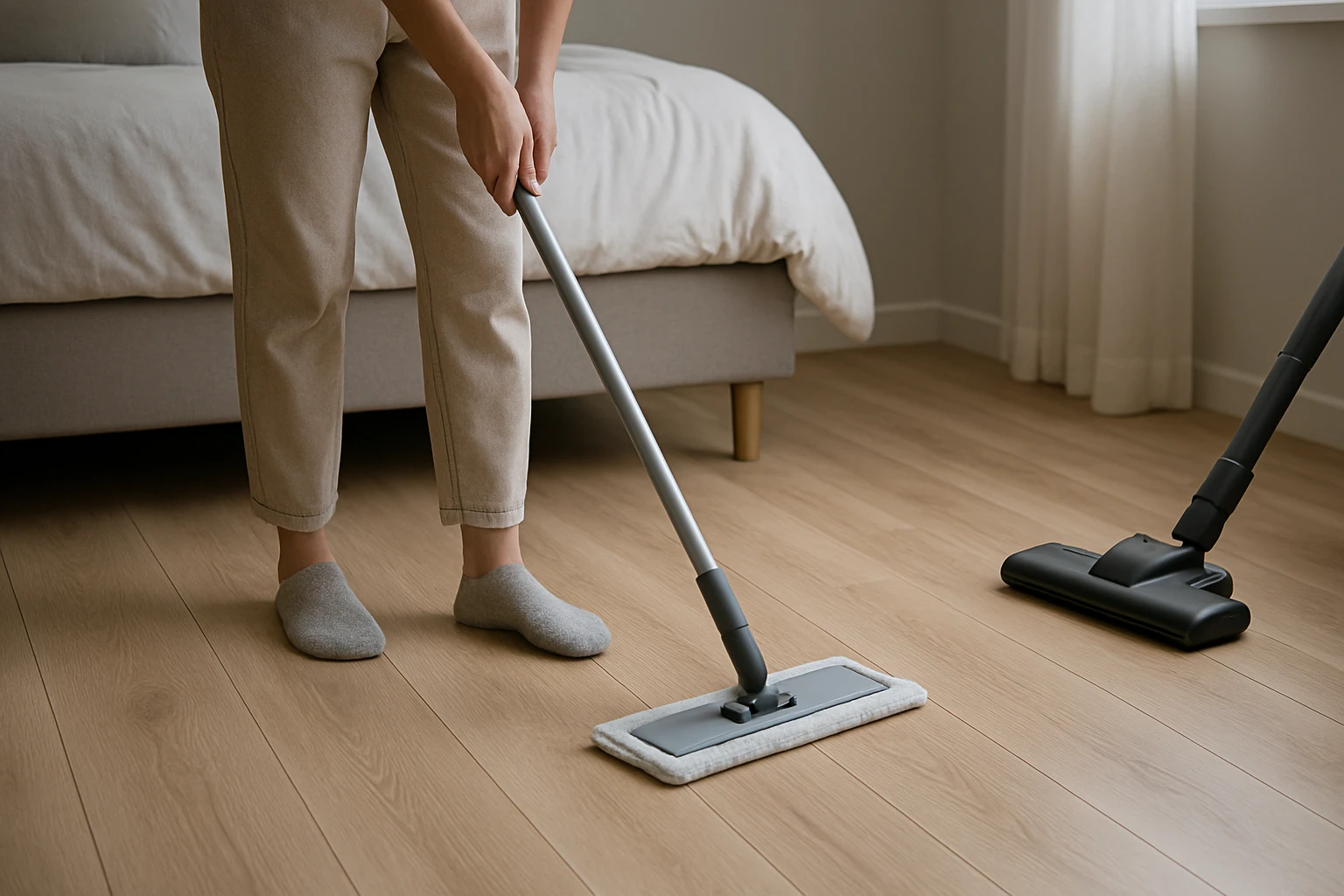
Use a vacuum head suited to hard floors or a soft brush, then clean with a well-wrung mop and a cleaner approved for the product. Avoid leaving puddles, and do not use a steam mop unless the manufacturer clearly permits it. Heat and moisture can harm joints, coatings, or adhesive even when the floor handles ordinary spills well.
The main care differences are simple:
- For laminate, dry spills promptly and avoid soaking the edges. Follow the product rules rather than treating a water-resistant label as permission to wet-mop freely.
- For vinyl, check that mats, furniture pads, and cleaners are approved. Some rubber-backed mats and unsuitable chemicals can stain certain vinyl surfaces.
- For both, lift furniture instead of dragging it, use suitable pads, and replace worn entrance mats that trap grit against the floor.
Our guide on how to clean laminate flooring explains how to remove dirt without leaving too much water behind.
Neither material should need routine polishing or sanding. If a cleaner leaves a dull film, check for product build-up before assuming the finish has worn away, because adding wax can make the problem harder to fix.
Should You Choose Vinyl or Laminate Flooring?
Choose vinyl when spills and moisture are the main risks, and choose good laminate when the room stays dry and you value a firm surface with strong resistance to fine scratches. When both suit the room, let the exact product quality and total fitted cost guide your choice.
For a family kitchen with a dishwasher and a pet water bowl, vinyl approved for kitchen use is usually the more practical starting point. For a dry bedroom or study, laminate may offer better value if you prefer its finish and feel. In a sunny living room, either choice needs a check of heat limits, window shading, and the fitting method.
Before placing an order, ask the supplier to confirm these points in writing:
- The exact product name, core type, and room-use approval.
- The water, heat, and sunlight limits, including warranty exclusions.
- The subfloor checks and any preparation included in the price.
- The underlay or adhesive requirements, plus sound data if needed for an apartment.
- The full cost of materials, waste, fitting, trims, removal, and VAT.
- The method for replacing a damaged board and the amount of spare stock to keep.
If you are still comparing the wider flooring range, take samples home and view them in daylight and evening light. When weighing up vinyl vs laminate flooring, the best choice is not the board with the longest list of claims. It is the one that suits your room, is fitted on a sound base, and has care rules you can follow.
Frequently Asked Questions
Can Vinyl or Laminate Flooring Go Over Existing Tiles?
Both vinyl and laminate can sometimes go over existing tiles if the tiles are firmly fixed, dry, and flat enough for the chosen product. Loose tiles, deep grout joints, and uneven edges need attention first. The installer must also check the new floor height at doors and appliances, and follow the manufacturer’s rules for fitting over an existing surface.
Can I Use Vinyl or Laminate with Underfloor Heating?
Some vinyl and laminate products work with underfloor heating, but the exact floor, underlay, and heating system must be approved together. Check the maximum floor temperature and the combined resistance to heat flow, since thick underlay can reduce heating performance. The heating should be started and adjusted according to the flooring manufacturer’s instructions.
Which Flooring Is Better Under an Office Chair?
Either floor can work under an office chair when the product is rated for that use and the chair has suitable soft castors. Repeated rolling puts pressure on the surface and joints, so a hard-floor chair mat can help. Check mat compatibility with vinyl, since some backing materials can cause stains.
Does Vinyl or Laminate Flooring Add More Resale Value?
Neither vinyl nor laminate guarantees a higher resale value, because buyers also judge condition, appearance, fitting quality, and the rest of the home. A tidy, well-fitted mid-range floor may make a better impression than a costly product with gaps or lifting edges. Choose for the property’s likely use rather than expecting a fixed return.
How Do I Check Indoor Air Quality Before Buying Flooring?
Ask for an independent emissions test or certification that applies to the exact flooring product, not just the brand. For laminate, also ask about formaldehyde emissions, and check adhesives and underlay as separate products. Labels such as low odour or eco-friendly are not substitutes for clear test documents and fitting instructions.