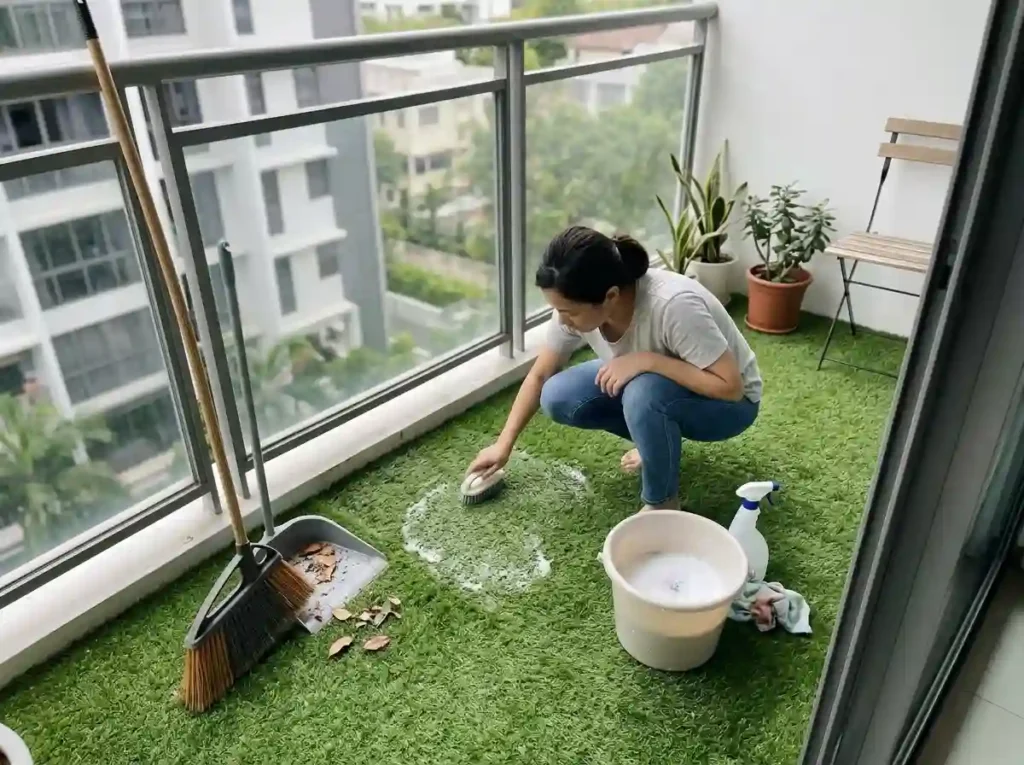
The installation of artificial grass on balconies is trending these days. People who are thinking of decorating their balconies are now considering artificial turf for them because it works as an amazing approach for creating a garden without the need to maintain it too much.
Fake lawns have a number of benefits, such as they are the best alternative to real grass gardens, they remain extremely durable and they don’t need any fertilizers, besides, they can be easily installed in any space, particularly balconies.
If you also have artificial turf on your balcony and want to know how you can clean it, then this article is going to be very informative for you. Today, I am going to tell you how often should you clean the artificial turf, how to clean it the right way, and what are the ideal cleaners to use. So, continue reading this article and you will come across a lot of useful info.
Cleaners to Clean the Artificial Grass
Commercial cleaners are not safe for the cleaning of artificial grass because they have a number of chemicals and preservatives in them, so before starting the cleaning process, I am going to tell you the homemade cleaners for the turf that you can safely use on your balconies.
A vinegar solution is the most common cleaner for the cleaning of artificial turf. Vinegar not only cleans the spots from the grass but also removes the foul smell present in it, in case you have pets. To prepare the vinegar solution, take 1 liter of water, 5 ounces of white vinegar, and 2 to 3 drops of essential oil. Mix all the ingredients well and fill a spray bottle with the solution.
A detergent solution is very easy to prepare, as well, and you can easily find it amongst your laundry supplies. Simply add 2 tablespoons of liquid detergent to a litre of lukewarm water. Mix them well, make a solution, and then use it on the fake grass.
Baking soda can also be used on artificial turf because it is also effective in cleaning stains and removing odour. For this, you just need to sprinkle the baking soda on the grass and then rinse it with water.
2 Methods to Clean the Fake Lawn of Balcony
Although artificial grass requires very little maintenance, there is still a need to clean it because if you leave your grass unattended for a long time, it will lose its beauty and attractiveness.
So, the cleaning of the artificial turf on the balcony is very necessary and there are two ways or methods you can consider for this purpose. One is the regular cleaning and the other is the deep clean up which can be done on an occasional basis, so as to address any major damages to the fake grass and also to ensure its perfect upkeep.
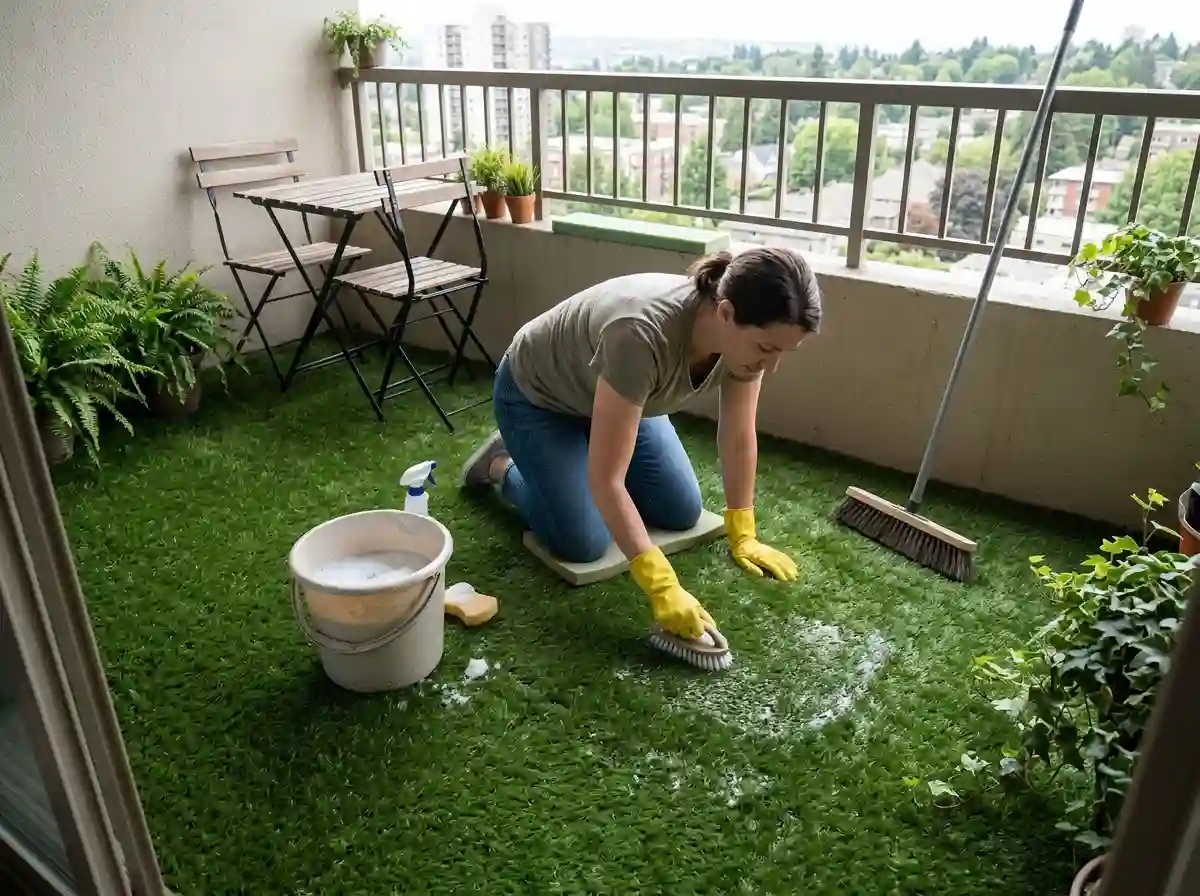
1. Regular Cleaning
Regular cleaning of the grass includes the following steps:
Get rid of Debris using Leaf Blower
The most essential step in the regular cleaning of the artificial grass is the removal of the debris. And this does include any of the stray leaves or other particles that come along with winds and get stuck in your fake green
Use a leaf blower for this purpose. Gather all the leaves and other debris at any of the corners of the balcony, and then collect it. It will make your balcony lawn look neat and clean, and leaf blowers can also remove accumulated dust from the fibres of the grass, so you will feel comfortable while walking on it.
Rinse the Fake Lawn
Leaf blowers are useful for collecting large amounts of debris, but they cannot clean up small dust particles or spills. For the cleaning of small dust particles, the best way is to rinse the lawn. You can use a garden hose for cleaning the artificial turf.
Make sure you are not applying too much water pressure on the grass because it can damage the fibres of the grass. Always rinse the turf lightly so it can clean the lawn and make it appear lively. Start rinsing the lawn from one corner and then move to the other corners, moving the hose in a circular motion to completely clean the grass.
Brush the Grass
This step is very effective for maintaining the beauty of the artificial grass lawn because it will make your grass look like natural grass, not like a flat green carpet. You should brush the grass with a brush or a plastic rake twice a month so the blades of the grass remain pointed upwards.
Always use a brush with soft bristles because hard or sharp bristles can affect the quality of the grass. For the brushing of your balcony grass, start from one corner and move horizontally to the other corner. When you’ve finished one side, take a few steps back and begin brushing from the opposite corner.
2. Removing Spills and Stains
After learning about the regular cleaning of artificial turf, it’s time to explore how to remove stains and spills to maintain its appearance and condition.
Read More: What’s the Price of Artificial Grass? 2025 Installation Costs
Removing stains promptly is an important part of artificial grass maintenance. Spills and sticky residues can affect the appearance of the turf and, if left untreated, may lead to unpleasant odours or hygiene issues. Clean spills as soon as possible to prevent them from spreading or becoming harder to remove. Here are some practical steps for cleaning spills and stains from artificial grass.
Clean Spilled Liquids
The first step is to clean liquid spills from the grass surface. These may include tea, coffee, soft drinks, juice, or other beverages. Try to clean spills as soon as they occur. Use a paper towel or absorbent cloth and gently press it against the liquid to soak it up.
This helps prevent the liquid from spreading to other areas or penetrating deeper into the turf. Once most of the liquid has been absorbed, clean the affected area with a suitable method for your type of artificial grass.
Clean Stains with a Detergent Solution
A mild detergent solution can help remove many common stains from artificial grass. Prepare the solution according to the detergent instructions, using a product suitable for synthetic turf.
Take a clean sponge or cloth, dip it into the solution, and gently dab or rub the stained area. Avoid scrubbing too aggressively, as this may damage the grass fibres. Once the stain has been removed, rinse the area lightly with clean water to remove any detergent residue.
Clean Stains with a Vinegar Solution
A diluted vinegar solution may help clean certain pet stains and lingering odours from artificial grass. Apply a small amount to a clean sponge or cloth, gently dab the affected area, and rinse it with water afterwards.
Before using vinegar, check the artificial grass manufacturer’s care instructions and test the solution on a small, inconspicuous area to ensure it does not affect the material.
Scrape Off Pasty or Sticky Residues
Sticky residues can be difficult to remove from artificial grass, and chewing gum is one common example. Removing these materials carefully helps keep the turf clean without damaging its fibres.
To remove chewing gum, place a few ice cubes inside a sealed bag and hold it against the gum until it hardens. Once firm, gently lift it away using a blunt plastic scraper. This method is similar to the process of cleaning carpets. For other sticky residues, use a soft toothbrush or a suitable plastic tool to loosen the material gently. Avoid sharp tools that could cut or damage the grass fibres.
Maintaining Artificial Garden of Balcony
It’s important to maintain the artificial grass on your balcony so it can last longer and retain its appearance. Following a few simple maintenance practices can help keep artificial turf clean, fresh, and comfortable to use. Here are some useful tips for maintaining artificial grass in your balcony or other outdoor spaces.
Use a Vinegar Solution for Cleaning
To help keep your artificial lawn clean and reduce unpleasant odours, you can use a diluted vinegar solution if it is suitable for your turf. Prepare the solution according to the manufacturer’s care recommendations and apply it lightly to the affected areas. Avoid assuming that vinegar disinfects all bacteria or germs.
After application, rinse the artificial grass gently with a garden hose if the manufacturer’s instructions allow it. This helps remove cleaning residue and keeps the lawn fresh for your family and pets. Allow the turf to dry properly before using the area again.
Clean the Turf at Least Once a Month
Although artificial grass generally requires less maintenance than natural grass, regular cleaning is still important to maintain its appearance and texture. Clean the turf at least once a month, or more frequently if it receives heavy use. Depending on the type of grass, you can use a broom or soft brush, clean water, and a suitable cleaning solution. A toothbrush can help clean small or hard-to-reach areas.
Another useful maintenance tip is to rinse the artificial grass approximately twice a month, adjusting the frequency according to how much dirt and dust accumulate. Use a garden hose with gentle water pressure to remove loose dust and small debris from the fibres. Avoid excessive pressure, as it may disturb the grass or its infill. Regular rinsing helps keep the lawn looking clean and ready to use.
Remove Weeds When Necessary
Artificial grass helps reduce weed growth, but weeds can sometimes appear around the edges or grow through gaps in the backing. Inspect the lawn periodically and remove any weeds as soon as you notice them. Rather than applying weed killer automatically once a year, use a product only if it is suitable for your artificial turf and follow the manufacturer’s instructions carefully to avoid damaging the grass or surrounding surfaces.
Conclusion
Now you know all about cleaning the artificial grass on the balcony, so you can easily maintain it like a pro. I have also mentioned the recipes for homemade cleaners, so you don’t need to buy cleaners from the market.
Just follow all my instructions and I will guarantee you that your grass will last for years without any need to replace it. Also, you can consider these cleanup and maintenance methods for other spaces having artificial grass. And thus can easily make the most out of your investement.
FAQs | Frequently Asked Questions
The best way to clean artificial turf is to use homemade cleaners because commercial cleaners have chemicals that can destroy the texture of the grass. Use white vinegar with water or liquid detergent with lukewarm water to clean the fake grass.
It could be the laminate flooring’s reaction to the cleaner. Many commercial cleaners make the laminate floor sticky and cloudy. Always use vinegar, alcohol, and essential oil solutions to make the flooring clear and clean.
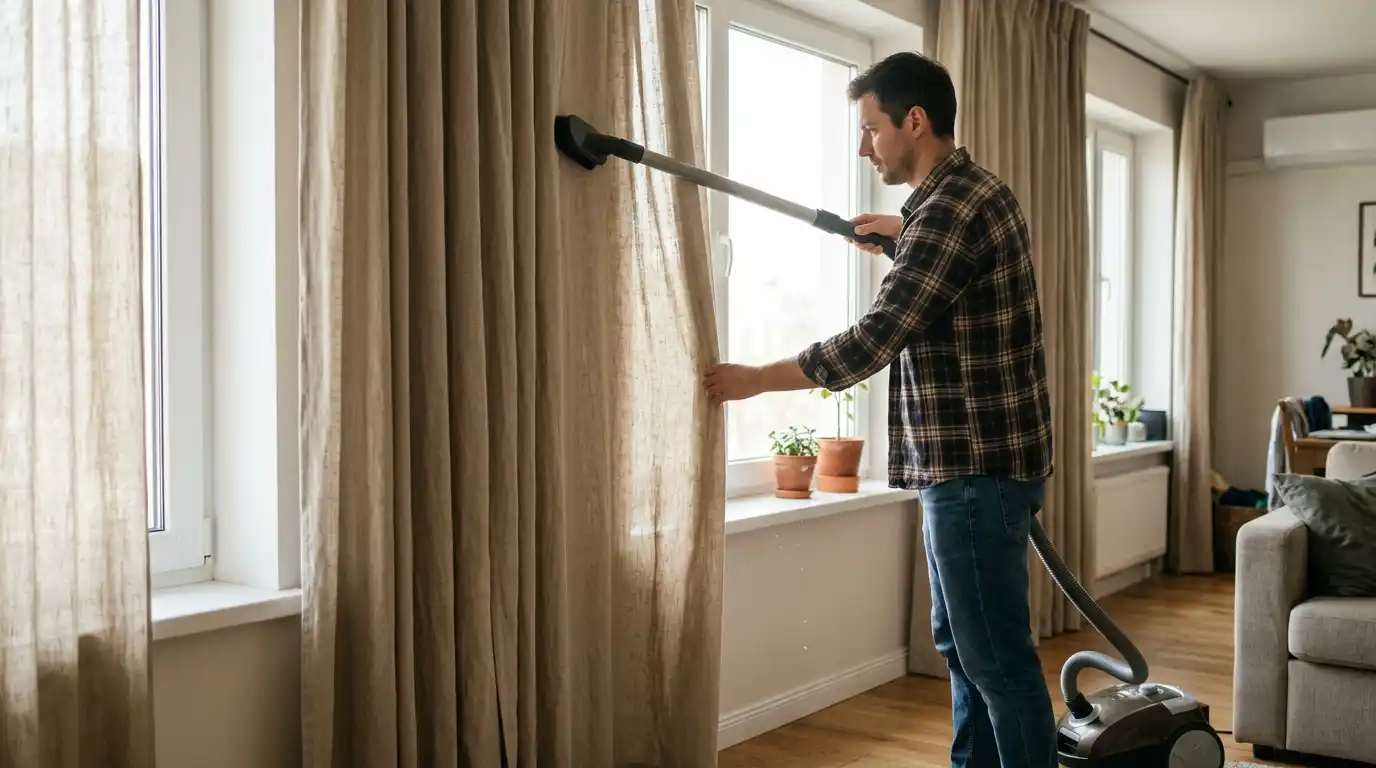
It depends on the quality of the artificial grass. If you have non-infill turf in the garden that is mostly used for indoor areas, then you can easily use a vacuum cleaner on it. But if you have infill grass, then you can never use a vacuum cleaner on it.
Yes, the use of baking soda is safe for fake turf. If anyone wants to remove the smell of pet urine or any other foul smell from their fake garden, then baking soda is very beneficial for them. Sprinkle the baking soda on the grass, leave it for 1 hour, and then rinse it. All the smell will be gone.